
Idols Stolen, Advocates Jailed, Cameras Off
In Faridpur, thieves made off with a Kali idol and its gold while the temple's cameras were out of order. In Kolkata, Indian rights groups counted more than a hundred minority members killed in Bangladesh since early 2025 and four of their defenders jailed or hounded. Dhaka has changed governments. Its Hindus are still waiting for the change.
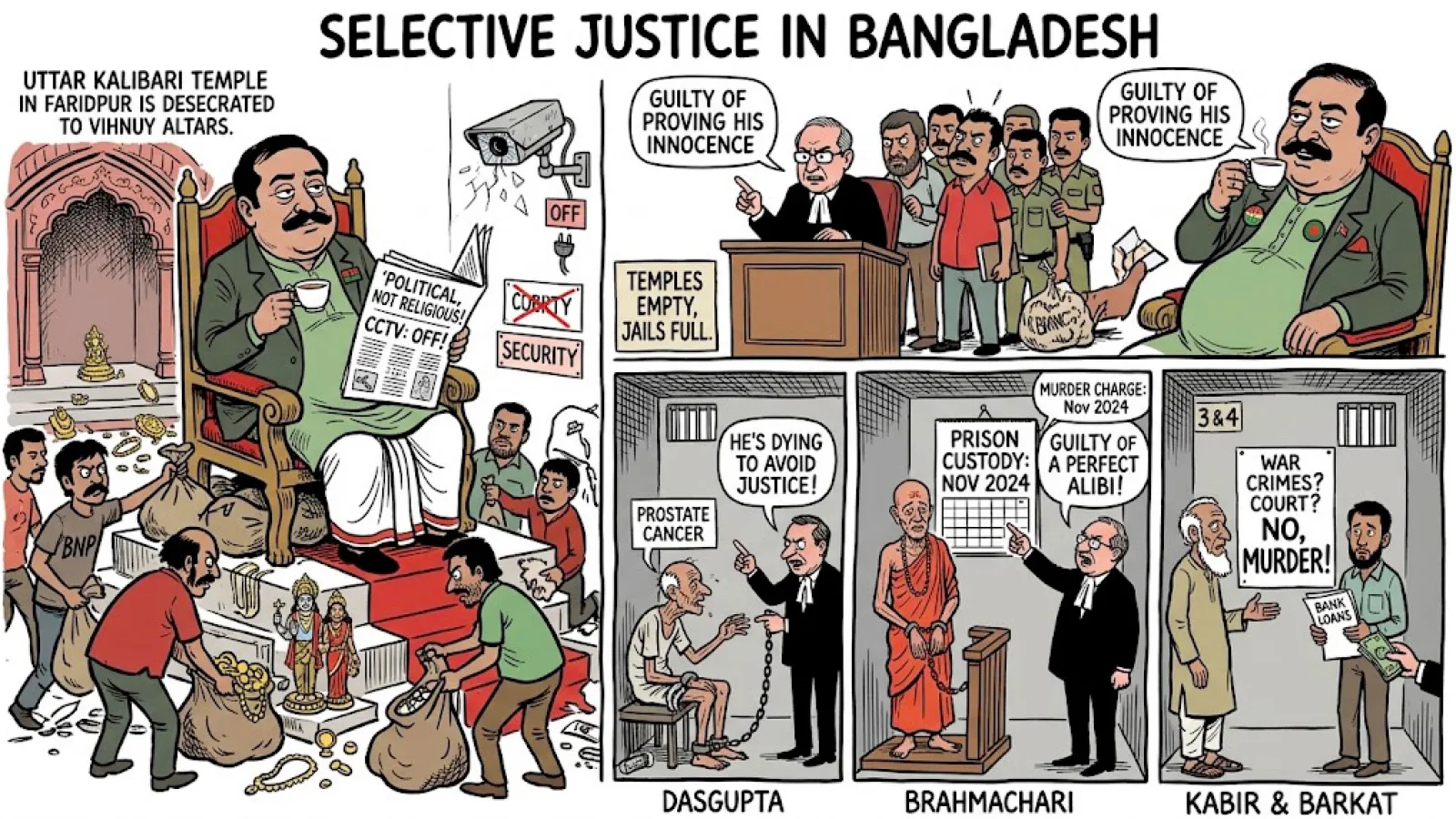
Whoever did it had all night. Between Saturday evening and Sunday morning, September 19 to 20, the Uttar Kalibari Temple in Faridpur was emptied of a Kali idol weighing at least 20 kilograms, the gold ornaments adorning it, small brass idols of Vishnu, Radha-Krishna and Manasa, and a silver snake coiled around a Shiva lingam. The white-marble Shiva on which the goddess stood was left behind. Theology or the price of gold? Police have yet to say. The temple's CCTV cameras, naturally, were not working. Several police teams are on the case; nothing has been recovered.
The IANS news agency places the theft within a surge of attacks on Hindu temples and minorities that began under Muhammad Yunus's interim government and has continued under the current Bangladesh Nationalist Party administration. The ousted Awami League goes further, listing dismissals, blocked promotions, seized homes and land, and the recent killing of a retired Hindu teacher, Ganapati Chakraborty, and his entire family in Rangpur, which it says the BNP government met with inaction. The party knows the subject: Hindus were attacked under its rule too, notably during the 2021 Durga Puja riots.
In Kolkata on August 31, four Indian organisations put numbers on the pattern: 66 members of religious minorities killed in 2025, 44 more in the first half of 2026, plus vandalised temples, seized land and attacked homes. These are activists' figures, not a judicial inventory. Bangladesh's interim authorities described most such attacks as political rather than religious, arguing that Hindus were targeted as presumed Awami League supporters. Meant to reassure, the explanation mostly confirms that in Bangladesh your religion can double as a party card, and your party card as a target.
The groups also demand freedom for four advocates. Shahriar Kabir, 76, jailed since September 2024, faces a murder charge before the International Crimes Tribunal, the very court created to try the 1971 war crimes he spent decades denouncing. Rana Dasgupta, 77, who has prostate cancer, has reportedly been unable to appear in public, and so to get treatment, for nearly two years; supporters say he is being "pushed towards death." Economist Abul Barkat, 72, bailed in June, still faces several cases, including an embezzlement charge over loans at Janata Bank, which he chaired. And Chinmoy Krishna Das Brahmachari, a Hindu monk arrested in November 2024, stands accused of a lawyer's murder in Chattogram although, his supporters say, court evidence shows he was in custody at the time. The perfect alibi: he was already in jail.
The activists want New Delhi to summon Bangladesh's envoy and take the matter to international bodies, warning that silence would humiliate India. Unsafe at home and, according to activist Mohit Ray, unable even to get into India, Bangladesh's Hindus mostly serve as an argument in other people's quarrels.
Governments come and go in Dhaka, and temples are still targeted. In Faridpur, the cameras were off. In Chattogram, the only suspect with a cast-iron alibi is the one behind bars.
Sources: IANS via ap7am (September 21, 2026); WION (August 31, 2026). Additional context: The Business Standard, PTI, Al Jazeera.
Countries
Read also
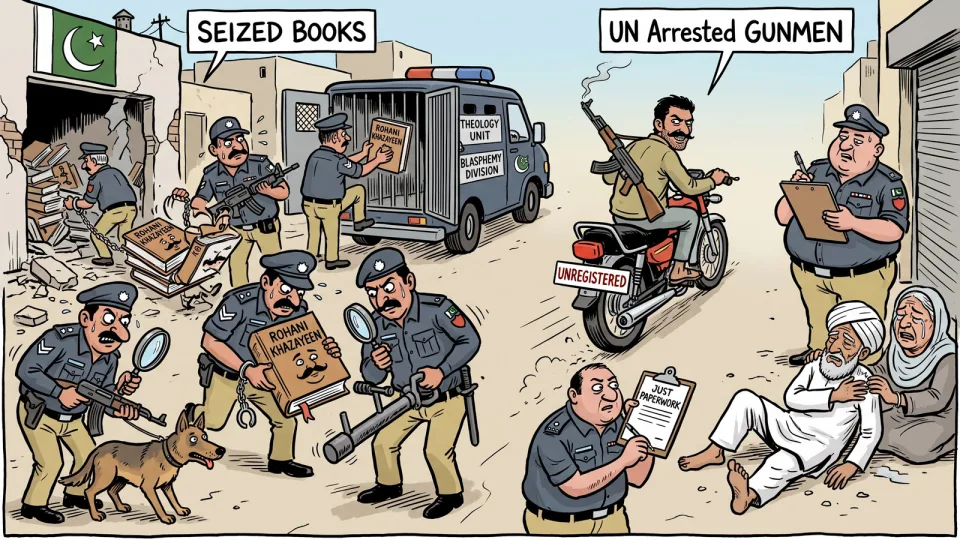
Pakistan Seizes the Books, Not the Gunmen
In September alone, one Ahmadi was shot dead and two others were wounded in Pakistan's Punjab province, with no arrests reported. Meanwhile, the country's Federal Constitutional Court found the time to uphold a ban on the community's sacred texts. Priorities.
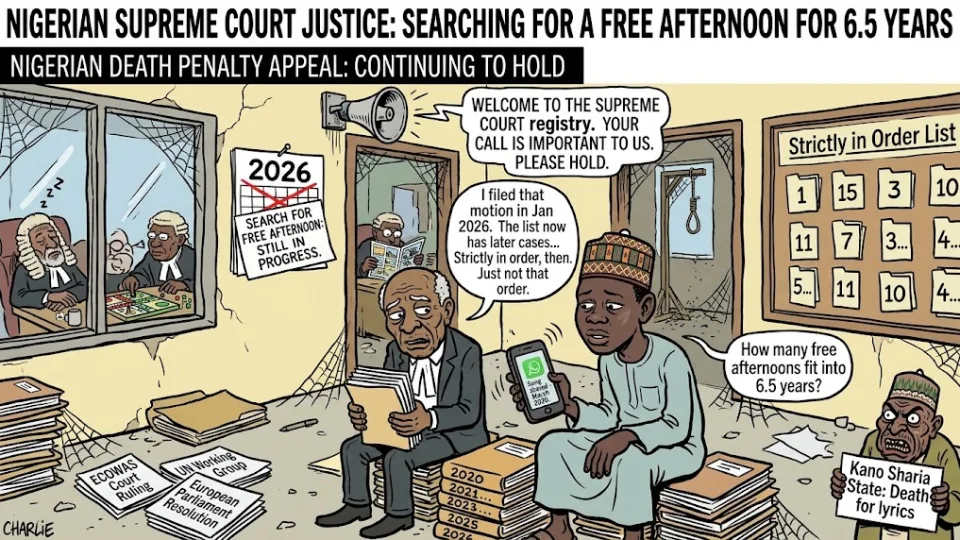
Your Death Sentence Is Important to Us. Please Hold.
Six and a half years after sharing a song on WhatsApp, a young Nigerian musician is still waiting for his country's Supreme Court to find a slot on its calendar.
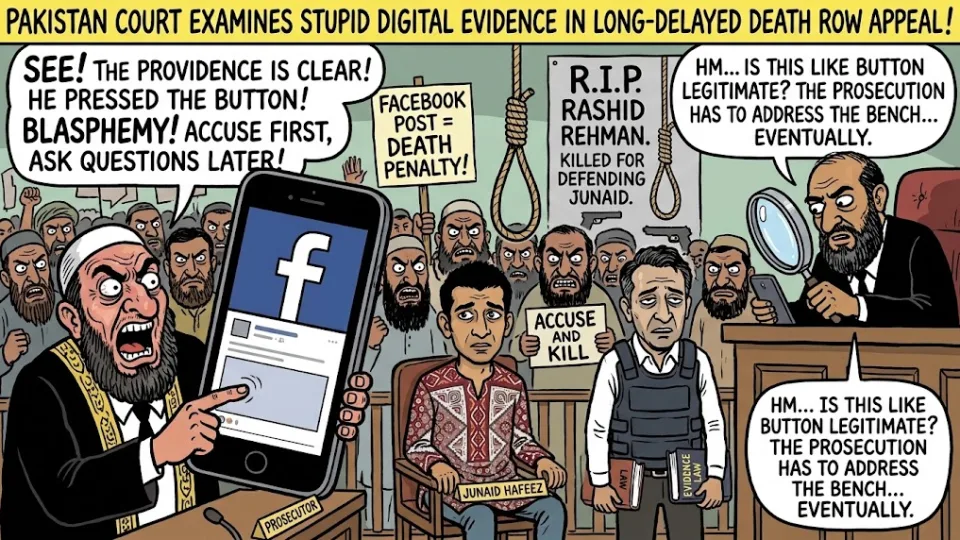
Lahore court finally asks whether Facebook posts count as proof in lecturer’s blasphemy appeal
A Pakistani court has asked prosecutors to justify the admissibility and authenticity of the digital evidence used to convict Junaid Hafeez, a former lecturer on death row for blasphemy since 2019, whose appeal has been pending since 2020.