
Iran Seizes the Rings, the Toys and the Complaints
Sixty-nine Baha'is behind bars, homes raided from Shiraz to Yazd, a woman sentenced to more than five years for offending Islam's sacred law, and security agents walking off with wedding rings and children's toys. In the Islamic Republic, persecuting a religious minority has become both a pious duty and a revenue stream. A modest one, economists say. It's the principle that counts.

Dangerous readers
On September 13, intelligence agents raided two Baha'i homes in Yazd. In one of them, ten young Baha'is had gathered to read books together. Agents confiscated their phones, along with their host's laptop and tablet, without disclosing any legal basis. In the Islamic Republic, a reading group is apparently a cell. The next morning in Shiraz, security forces raided the homes of Sarina Zaeri, 20, Barbad Sepehri, 21, and Arshia Jaberi, 19, and took all three to an undisclosed location, according to Iran International and the rights group HRANA. Agents stayed at Sepehri's home from 6 to 10 a.m. Zaeri has a respiratory condition, and her family fears for her health.
Confiscating the complaints
On September 20, agents searched the homes of five members of the Zare family in Shiraz, and that of Pejman Zare's wife, Nazanin Nikouseresht. They took electronic devices, Baha'i books and images, passports, gold and foreign currency, with discriminatory remarks thrown in for free. They also seized the paperwork from the complaints Pejman Zare had filed over his previous detention. Having confiscated the complaints, the state then summoned the complainants: five family members were ordered to report to the Shiraz intelligence detention centre on September 23. No reason given, no charge disclosed.
The crime: the wrong religion
On September 23, it emerged that Romina Goli, a Baha'i from Sari, had been sentenced to five years, seven months and sixteen days in prison, plus ten years' deprivation of social rights. Five of those years punish educational or promotional activity deemed "contrary to or disruptive of the sacred law of Islam." The rest is for propaganda against the regime. The precision down to the day is the only rigorous thing in the file.
The Baha'i faith was born in 19th-century Persia. Yet unlike Christians, Jews and Zoroastrians, its followers are not protected by Article 13 of Iran's constitution. The Islamic Republic tolerates the ancient minorities and hunts the youngest religion Persia ever produced.
Spies, naturally
Amnesty International says the persecution has intensified since the 12-day war with Israel in June 2025, through a state campaign falsely casting Baha'is as Israeli spies and collaborators. The accusation leans on geography: the faith's world centre and holy sites are in Haifa and Acre. Why there? Because Persia banished its founder in 1853, and the Ottomans shipped him on to Acre in 1868, eighty years before Israel existed. Tehran, in short, delivered the alleged spy to the alleged enemy itself, with an eight-decade head start.
Prison without doctors or charges
As of September 25, the Baha'i International Community counted 69 Baha'is detained or imprisoned for their beliefs, 35 women and 34 men, plus at least 21 serving sentences under electronic monitoring or on temporary leave. Some are held by the Revolutionary Guards or in undisclosed locations, and abuse is reported. Roya Sabet, held in Shiraz's Adelabad prison with serious neck and back injuries after a fall, saw her blood oxygen drop to 70 percent in August. Her requests for treatment outside prison have not been granted, and her request to serve the rest of her ten-year sentence under electronic monitoring remains unanswered. In Isfahan, Sarir Moghen has spent nearly a month in solitary confinement, denied phone calls, with no charge disclosed.
Justice priced in lifetimes
Getting out costs dearly. Elham Khollas Ardestani, 53, was released on September 19 on bail of two billion tomans, with no charges made public. According to Padideh Sabeti, spokesperson for the Baha'i International Community, judges sometimes set bail worth a hundred years of an average citizen's wages, while discrimination already keeps Baha'is from earning a living. Raids add to the bill: rights monitors report agents carting off gold, electronics, work tools, wedding rings and children's toys. For Paris-based journalist Sajjad Khodakarami, seizing a couple's rings or a child's toys is plain barbarism.
Now open to everyone
The method is spreading. Tehran has ordered the seizure of assets belonging to more than 400 people abroad whom it brands enemy supporters, among them actors, athletes and journalists. At home, café chain manager Sadegh Saedinia got twelve years in prison and the confiscation of everything he owns for posting about protests in Qom. For Khodakarami, a tool first tested on the Baha'is is now being turned on society as a whole: "the economization of repression."
Is it at least profitable? Barely. London-based analyst Arezoo Karimi calls the proceeds insignificant next to Iran's budget deficit, and notes that seized property is often auctioned below market value to the politically connected. The persecuted lose their wedding rings. The well-connected get a bargain.
The Baha'is were Iran's test bench. The results are in, and the product is now available nationwide.
Countries
Read also

Idols Stolen, Advocates Jailed, Cameras Off
In Faridpur, thieves made off with a Kali idol and its gold while the temple's cameras were out of order. In Kolkata, Indian rights groups counted more than a hundred minority members killed in Bangladesh since early 2025 and four of their defenders jailed or hounded. Dhaka has changed governments. Its Hindus are still waiting for the change.

Pakistan Seizes the Books, Not the Gunmen
In September alone, one Ahmadi was shot dead and two others were wounded in Pakistan's Punjab province, with no arrests reported. Meanwhile, the country's Federal Constitutional Court found the time to uphold a ban on the community's sacred texts. Priorities.
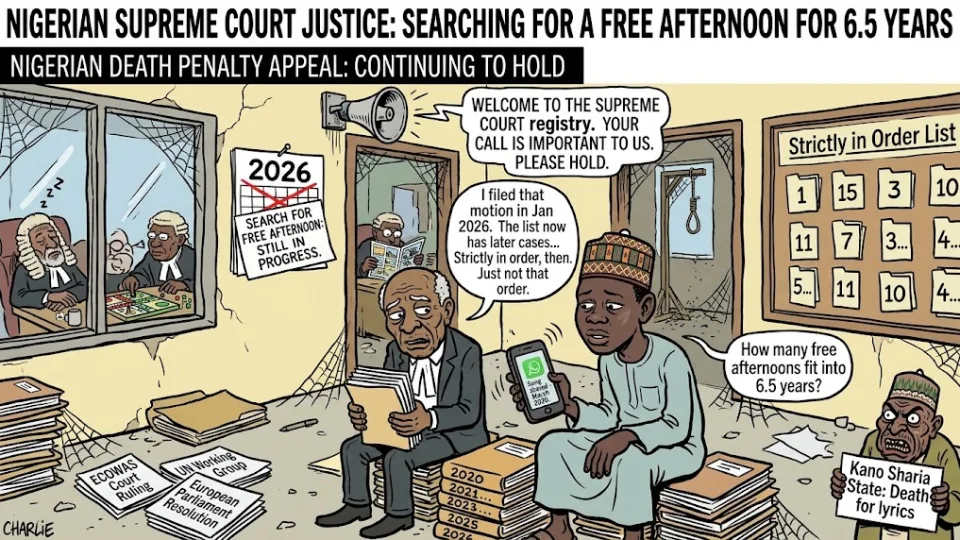
Your Death Sentence Is Important to Us. Please Hold.
Six and a half years after sharing a song on WhatsApp, a young Nigerian musician is still waiting for his country's Supreme Court to find a slot on its calendar.