
In Iran, Burning a Mosque Is a Capital Sin
Iran’s Supreme Court confirmed in eight days the death sentence of a fruit-market labourer accused of setting fire to a mosque and a seminary, although his lawyer had twenty days to appeal. In Mashhad, a lawyer counts at least 20 protesters sentenced to death, many over a fire at a Quran school. In Isfahan, two young men became the eighth and ninth people hanged in a single protest case. Iran’s chief justice asked for speed, and his courts deliver.

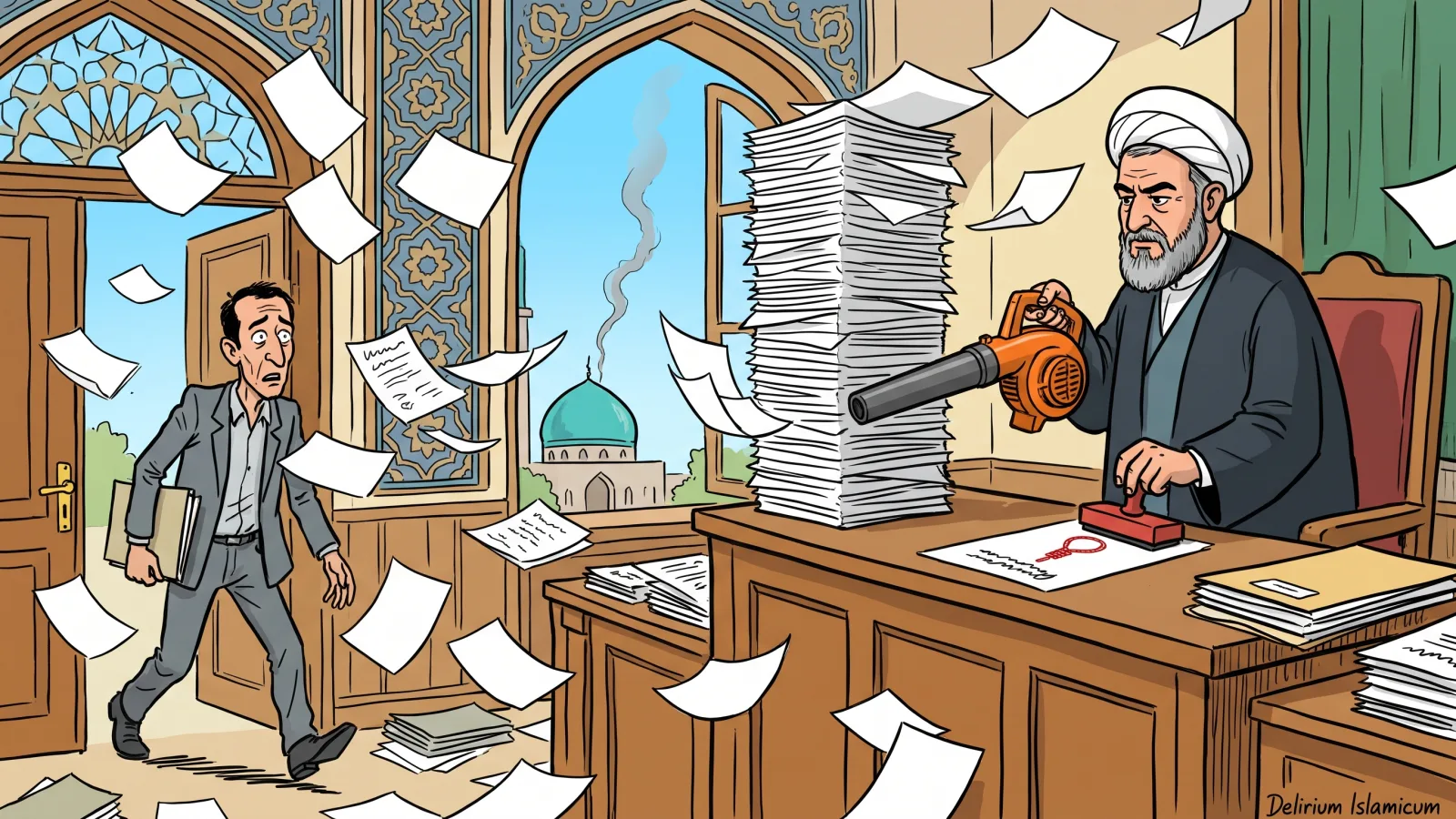
Sacrilege by amendment
Arman Marefati, about 38, worked at Tehran's fruit and vegetable market. Arrested during the January protests, he was first charged with "assembly and collusion" for taking part in them. Judge Abolghasem Salavati then used Article 280 of the Code of Criminal Procedure to add "entering religious premises with the intent to cause destruction" and the arson of a mosque and a seminary, according to HRANA. The protester became a desecrator.
Officials never agreed on the damage to places of worship in Tehran: 44 mosques and hosseiniyehs for the governor, 65 mosques for the head of the city's seminaries, HRANA noted in February. They are more precise about who will hang. The Penal Code punishes arson with two to five years in prison. If the fire is set "with the intent to oppose the Islamic State", the punishment becomes that of moharebeh, "waging war against God": hanging, crucifixion, amputation of the right hand and left foot, or banishment, at the judge's choice. Judges read intentions.
Twenty days to appeal, eight to confirm
According to IranWire, Salavati sentenced Marefati to death on October 25. The court-appointed lawyer appealed, and the Supreme Court confirmed the sentence eight days later, though the defence had twenty days to appeal. His two co-defendants have already been hanged.
"Timely execution of punishment without delay is a key element of deterrence."— Gholamhossein Mohseni-Ejei, head of Iran's judiciary, January 19, 2026, as quoted by IranWire
Shahab Zohdi knows the pace. Tried on February 7 over a fire at a Basij base in Tehran, without his lawyer according to HRANA, he was sentenced to death by Salavati the next day. His four co-defendants were hanged in April. In August, the Supreme Court overturned his sentence. The retrial went back to Salavati, who sentenced him to death again.
The Mashhad production line
In Mashhad, Branch 5 of the Revolutionary Court, under Judge Hossein Yazdankhah, sentenced Matin Shabani to death for moharebeh "through participation in the destruction of public property and setting fire to religious centers", after a mosque and a Quran school burned in Shandiz on January 8 and 9. It did the same to Amir Delshad, accused of arson and of working for an opposition group, and to Matin Farnian, 23, and Vahid Khedrikhah, 34, shot by security forces before his arrest, according to HRANA and Hengaw. Hassan Golshannejad, 36, arrested in a friend's café, got the same sentence for "carrying out operational activities in favor of Israel". Hengaw says beatings during interrogation broke one of his ribs.
Marziyeh Mohebi, a lawyer from Mashhad, told IranWire that at least 20 people have been sentenced to death in the city, half of them with final verdicts, many in the Shandiz case. As for that fire, people who were there told her that "security forces themselves set it ablaze". In the files she has seen, judges reason that protesters who answered a call by Reza Pahlavi, a friend of Israel, were spying for Israel. She cites Pourya Hosseini-Mofrad, sentenced to death for setting fire to boxwood bushes by a bus stop and bending its pole.
Nine hanged, three to go
In Isfahan, Amirhossein Ebrahimi, 19, and Amirhossein Maleki were hanged on November 3, bringing to nine the executions in the Alikhani Square case since July 19, two of them in the square itself, as we reported in September. According to the judiciary's Mizan agency, quoted by AFP, they were hanged for "brutal and atrocious actions (that) led to the martyrdom of four police officers" on January 8. IHR and defence lawyer Shahrzad Shahbazi point out that none of those executed was charged with murder. Four dead officers, nine hangings, not one murder charge. In October, the authorities also arrested Amirsalar Davoudi, one of the best-known lawyers defending protesters in the case, AFP reports.
According to Iran Human Rights (IHR), Ebrahimi was ten days short of his 20th birthday and had been about to start a medical degree when he was arrested. A source told the NGO that his 16-year-old brother was beaten so badly he spent eight days in hospital, to make him say Amirhossein had carried a machete. After the Supreme Court overturned the sentence, an Isfahan court reaffirmed it without a hearing, getting through a file of about 8,000 pages in under 48 hours, the source adds. Three defendants remain at risk, one of whom was 17 at the time of the alleged offence.
"The scale of torture and violations of due process in this case is unconscionable."— Mahmood Amiry-Moghaddam, director of Iran Human Rights, November 3, 2026
Moharebeh comes in several sizes
The Penal Code defines moharebeh as drawing a weapon to create insecurity. Leila Abolhasani, 43, a hairdresser and mother of two teenage daughters, was holding a phone: she was filming a burning supermarket in Shahin Shahr on January 8 when she was arrested. The judiciary accuses her of helping start the fire, and activists say no evidence has been made public. Sentenced to death for moharebeh, she has won a retrial from the Supreme Court.
In Tehran, Judge Iman Afshari sentenced Omran Amani, 21, to death for moharebeh, and one of his two housemates to 30 years on the same charge. The third got five years for "assembly and collusion", like Danial Dabiri, 23. In Semnan, where security forces put snipers on the roof of the Friday prayer leader's office in January, according to Iran International, seven protesters got one to three years each. In Ahvaz, twelve residents accused of shooting at Basij bases in March face moharebeh and baghi, armed rebellion, without lawyers of their choosing. In Ilam, the Supreme Court upheld 68 years in prison and 140 lashes against brothers Amirali and Emad Zakerifard, arrested during the 2022 protests, on charges ranging from "insulting religious sanctities" and illegal weapons to owning satellite equipment and alcohol.
The October count
Rights groups recorded between 71 and 96 executions in October, depending on the count: HRANA, IHR, Hengaw and Iran Human Rights Monitor. By three of these counts, more than 80 per cent were never officially announced. IHR recorded 691 executions in the first ten months of the year, including 34 January protesters, a toll the Isfahan hangings have raised to 36. HRANA counted 22 new death sentences and 194 flogging sentences in October alone, and Iran International says at least 200 more political prisoners face execution.
The Islamic Republic has finally found a public service that runs on time.
Verses and hadiths related to this article
Sources
Countries

Read also

Iran Bans the Inquisition, Then Holds One
Iran’s Constitution forbids investigating anyone’s beliefs and torturing anyone into a confession. Within ten days, rights groups reported a death sentence for a Baha’i in Kerman, 44 years in prison for five of his co-defendants, 26 years for a Baha’i photojournalist and prison terms for Sunni Arabs over their religious activities. Iran’s judges seem to have skipped a few articles.

Iran: Thou Shalt Not Doubt
Within ten days, Iranian rights groups reported death sentences for a man whose username means “James Without Religion” and for a cleric convicted of apostasy. The judiciary announced the arrest of four people selling courses on prayers whose effects it deems unproven, and Parliament voted to punish films and books that question religious rulings. After policing what Iranians wear, the Islamic Republic now polices what they believe.
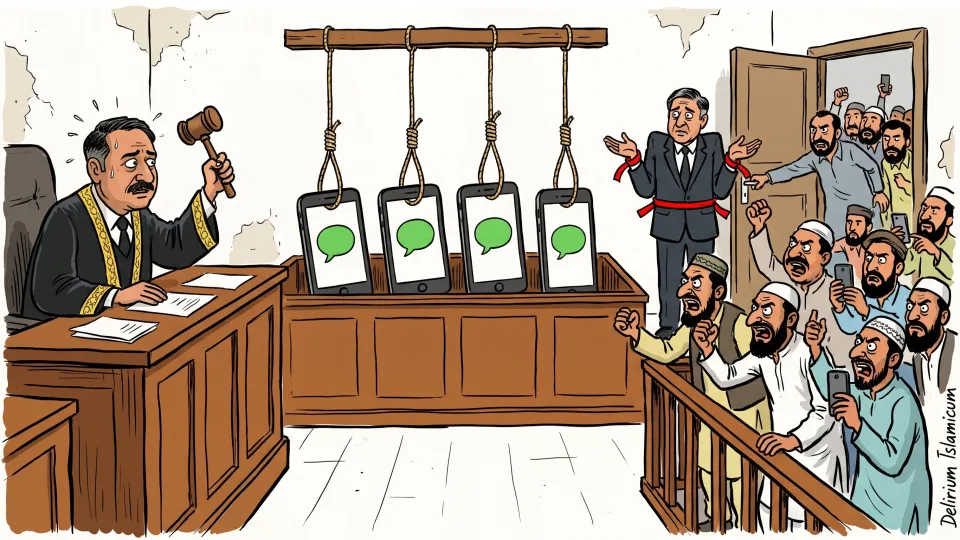
Pakistan: Death Row, WhatsApp Edition
Ten days after Pakistan’s Supreme Court confirmed a Christian’s death sentence for a blog, a Lahore court sent four more men to death row over WhatsApp messages. In Sahiwal, the police charged a man they themselves describe as mentally unstable. At the end of June, 491 people accused of blasphemy were still awaiting trial in Punjab’s prisons.


Comments
No comments yet