
Pakistan: Death Row, WhatsApp Edition
Ten days after Pakistan’s Supreme Court confirmed a Christian’s death sentence for a blog, a Lahore court sent four more men to death row over WhatsApp messages. In Sahiwal, the police charged a man they themselves describe as mentally unstable. At the end of June, 491 people accused of blasphemy were still awaiting trial in Punjab’s prisons.


The appeal after the appeal
On October 7, as we reported on October 20, Pakistan's Supreme Court confirmed the death sentence of Qaiser Ayub, a Christian convicted of running a blog that insulted the Prophet, and acquitted his brother Amoon. Their lawyers now plan to file a review petition, as early as this week according to Fox News, arguing that no evidence ever tied Qaiser to the blog. They will also ask for a presidential pardon. The American Center for Law and Justice, which backs them, fears the ruling will weigh on everyone now jailed for blasphemy, including at least three of its own clients. Fox News cites another death-row case: a young man accused at 16, in 2017, sentenced to death five years later, whose appeal has been postponed again and again since 2022.
According to the ACLJ, mobs often turn up in the courtroom at blasphemy hearings. In one trial, men reportedly filmed themselves threatening to kill the judge unless he handed down a death sentence.
"There is only one punishment for one who insults the Prophet."— Caption of a video reportedly showing a lawyer who handles many blasphemy cases celebrating Qaiser Ayub's sentence, as translated by Fox News, October 2026
One WhatsApp group, four death sentences
On October 17, a Lahore sessions court sentenced four men to death over material insulting the Quran and sacred figures, shared on Facebook and in a WhatsApp group "presented as a Quranic education group". The case was opened in 2022 by the cybercrime wing of the Federal Investigation Agency, and one suspect's home was searched two days before the case was even registered. The judge acknowledged procedural defects but found the forensic evidence sufficient. He did clear the four of conspiracy, having found that each acted separately: one group, four solo blasphemies. On top of death, each got life imprisonment and another twenty years under other sections, to run concurrently. The Lahore High Court must confirm the sentences, and the four have 30 days to appeal.
Dawn does not say whether they claim they were set up. But the state's own National Commission for Human Rights has found that at least 450 people were falsely charged with blasphemy through an organised blackmail and extortion scheme, according to Human Rights Watch. An Islamabad High Court order to investigate this alleged blasphemy business was overruled on review in July 2025, notes the Human Rights Commission of Pakistan (HRCP) in its report on religious freedom, released on October 15. About fifty people caught up in these cases have reportedly been released on bail or acquitted. The alleged entrappers have still not been investigated.
Diagnosis: blasphemy
In Sahiwal, police arrested a man on October 16 accused of opening the Quran and sitting on it. Residents said he also beat his wife whenever she tried to stop him. The district police chief told Dawn that the man appeared "mentally challenged and unstable" and that medical tests had backed this up. The case registered against him concerns the Quran, under a section punishable by life imprisonment, and he was sent to judicial custody.
Disability is no shield either. HRCP describes a visually impaired man of 49, the sole breadwinner of his family, arrested for blasphemy in August 2025 after a park contractor allegedly tried to extort money from him. He was released in June, ten months later.
The waiting room
On June 28, Punjab's prisons alone held 559 people in blasphemy cases, according to HRCP. Seven had their death sentences confirmed, and 491 had not yet been tried. At the launch of the report, the commission's vice-chair for Punjab, Raja Ashraf, warned that blasphemy accusations have become a "means of exploiting and endangering vulnerable people".
Islamabad told UN experts this year that the executive is constitutionally barred from intervening in individual cases. The crowds in the courtroom face no such restriction.
Verses and hadiths related to this article
Sources
Countries
Keywords

Read also

In Iran, Murdered Women Pay the Difference
On October 14, Iran hanged a former lawyer who had murdered his wife, a journalist at the state news agency IRNA. As the Islamic Penal Code values a woman’s life at half a man’s, her family first had to pay him the difference, out of her own marriage portion. At least 20 more men were hanged for murder within three weeks.
In Iran, Anyone Can Wage War Against God
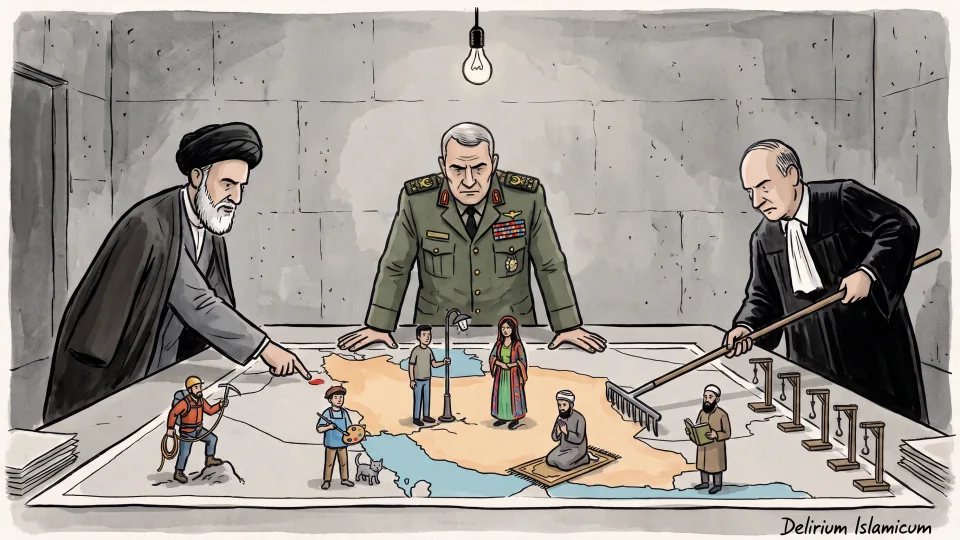
In October, Iran hanged or sentenced to death, as enemies of God or rebels, a mountaineer, an animal-rights artist, an orphan accused of damaging public property, a Kurdish activist, a Baluch seminarian and an Iraqi Quran teacher. Two UN experts responded by joining the prisoners’ hunger strike.
Pakistan: The Mob Rules Faster Than the Supreme Court
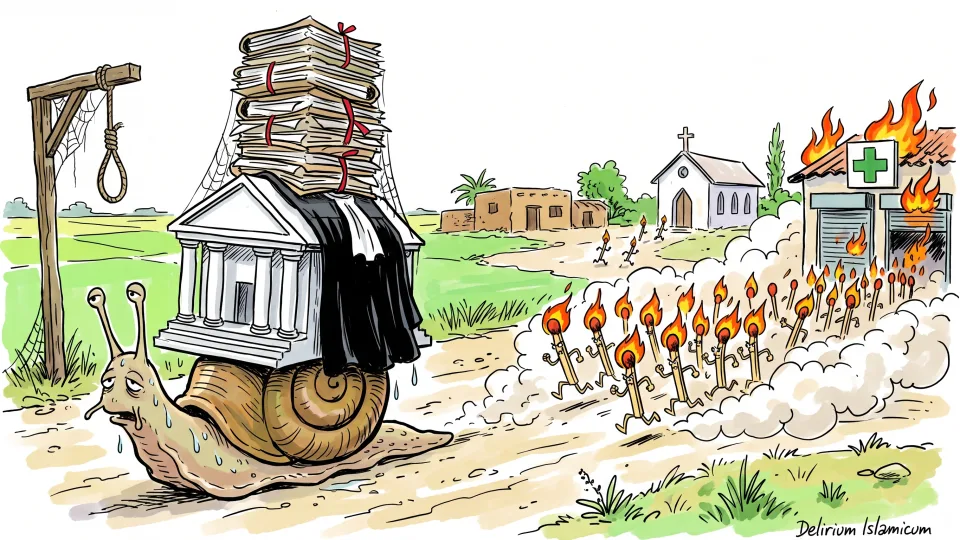
In Punjab, a mob burned the clinic and home of a Christian pharmacist accused of blasphemy over a WhatsApp video, less than a day after his arrest. The Supreme Court, for its part, needed thirteen postponements to free one Christian brother and keep the other on death row. In Sindh, two Hindu sisters aged 13 and 14 waited seven weeks to go home, while on the Afghan border the army fights khawarij it calls Indian-sponsored and Taliban-protected.


Comments
No comments yet