
In Iran, Murdered Women Pay the Difference
On October 14, Iran hanged a former lawyer who had murdered his wife, a journalist at the state news agency IRNA. As the Islamic Penal Code values a woman’s life at half a man’s, her family first had to pay him the difference, out of her own marriage portion. At least 20 more men were hanged for murder within three weeks.

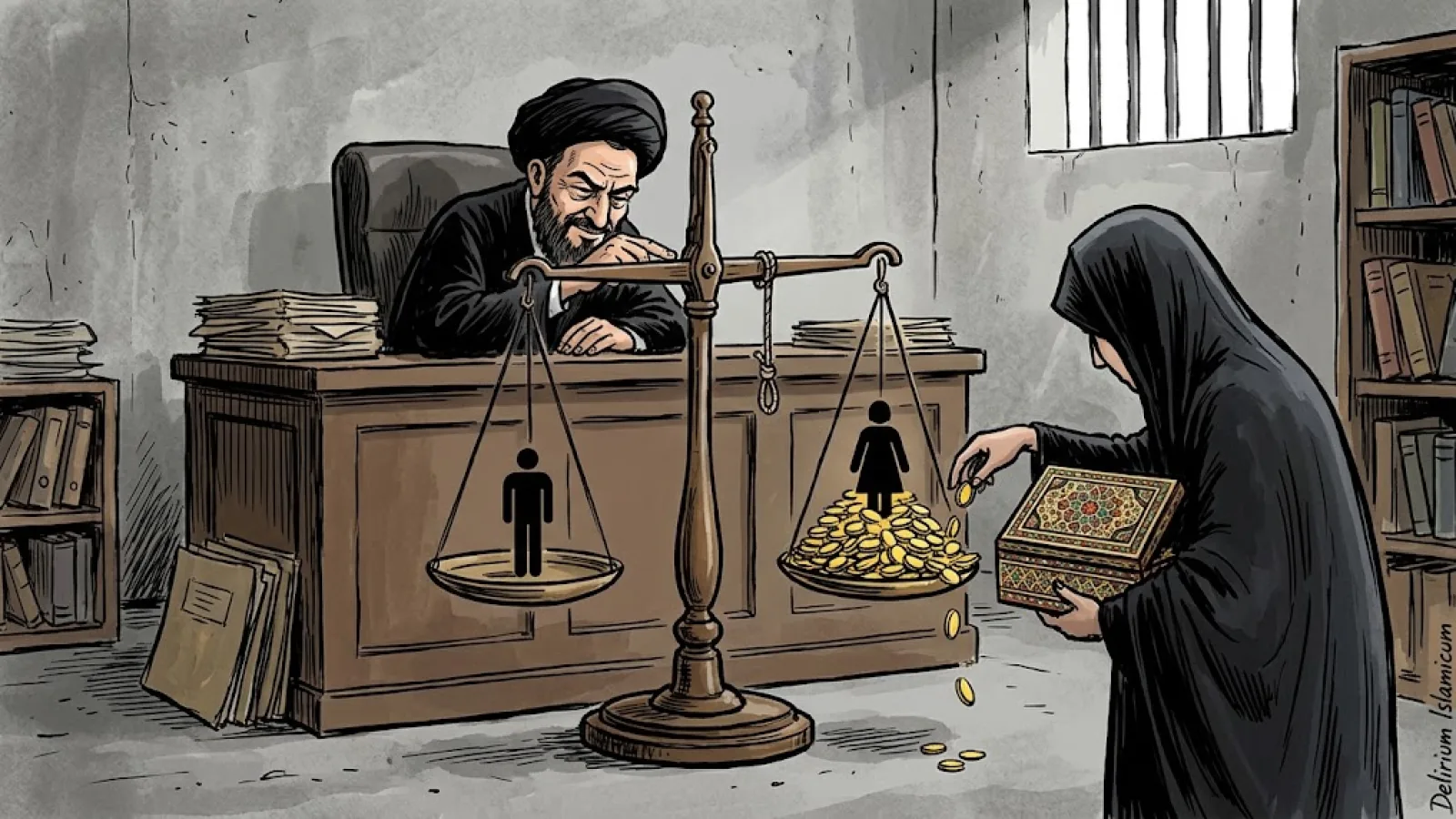
A wife at half price
Mansoureh Ghadiri Javid was a journalist at IRNA, the state news agency. In November 2024, her husband, Ahmad Parviz, a former lawyer, killed her at home in Tehran. Her mother demanded qisas, retribution in kind, and he was hanged in Ghezel Hesar prison on October 14.
Article 550 of the Islamic Penal Code sets a woman's blood money at half a man's, and Article 382 draws the conclusion: a man who kills a woman can be executed only once her family has paid him the missing half. According to Iran Human Rights, the sums needed to clear the way to the gallows came out of her mehrieh, the marriage portion owed to a wife. Her marriage portion bought her family the right to see her killer hanged.
When the killer of Elaheh Hosseinnejad, 24, whose murder had outraged the country, was hanged in May, the judiciary paid the difference itself, as her family could not. The state treasury can step in when a case causes severe public disorder, a Supreme Court judge explained. A murdered woman is worth a man when the country is angry enough.
Cash only, no schools
In Bandar Abbas, Hamidreza Mohammadi, a 42-year-old father of two, was hanged on October 19 for a death in a group fight. His family had offered to pay any blood money requested and to fund a school or a clinic in the victim's name. The next of kin refused. In Gorgan, Hossein Ali Baranzehi, a 50-year-old Baluch father of three, was hanged on September 30 because his family could not raise the sum demanded. He had already been taken to the gallows at least three times.
The judiciary publishes an indicative price every year, but there is no legal ceiling on what families can demand, Iran Human Rights notes. Those who choose death are encouraged to attend the hanging, and even to carry it out themselves. Justice, in Iran, can be self-service.
Intentional, whatever the intent
The Penal Code knows only one kind of intentional murder, punished by retribution whatever the circumstances, Iran Human Rights explains. Mehdi Mirzayi, a 22-year-old Lor, was hanged in Malayer on October 12 for a knife blow during a fight, unintentional according to a source. He had been arrested "just after he had turned 18", and his father was advised not to hire a lawyer, so as not to upset the victim's family. Reza Rajabian, a 23-year-old Kurd, was hanged in Shirvan on October 15 for a death in a clash when he was just over 18; his cousin was hanged in the same case in June.
In Ahvaz on October 21, Atiyeh Jamei, a 40-year-old Arab, was hanged although, Hengaw's sources say, he had been defending his family against two armed men: the court ignored his plea of self-defence.
Martyrs of the road
On October 11, Danial Jahanian, 37, was hanged in Bandar Abbas for the death of police officer Reza Ehterami in 2022. According to Mehr News Agency, the "martyr" fell in a clash with fuel smugglers; the prosecutor, Aref Akbari, said the sentence was passed at his family's request. Iran Human Rights tells another story: plainclothes officers shot Jahanian in both legs, he lost consciousness, and a second car ran over the officer. The page of the police report on that second collision was blanked out with correction fluid, the NGO says.
The next day in Minab, Abolhassan Ranjbar, a 39-year-old Baluch, was hanged for the death of a traffic policeman at a checkpoint in 2023: an accident during a stop that turned violent, says Iran Human Rights, which also cites false witnesses. Iran International reports that Aref Akbari announced this hanging too.
"Those who disrupt society's security in any way will be dealt with firmly."— Aref Akbari, prosecutor in Bandar Abbas, to Mehr News Agency
Firm, but discreet
Between September 30 and October 21, rights groups reported at least 21 hangings for murder, most of them never announced. According to Iran Human Rights, official sources announced fewer than 7% of the 747 executions for murder it counted in 2025, 48 of them women, a record since 2010. In 566 other cases, families chose money or forgiveness.
The Islamic Republic lets families set the price of a life. It only fixes the discount for women.
Verses and hadiths related to this article
Sources
Countries
Keywords

Read also
In Iran, Anyone Can Wage War Against God
In October, Iran hanged or sentenced to death, as enemies of God or rebels, a mountaineer, an animal-rights artist, an orphan accused of damaging public property, a Kurdish activist, a Baluch seminarian and an Iraqi Quran teacher. Two UN experts responded by joining the prisoners’ hunger strike.

Not a Court, Says Padua’s Sharia Tribunal
Since March, an association in Padua has promised Muslims a path to “Islamic justice in Italy”, under the immutable principles of the sharia. It has not handled a single case. That was enough to earn it a prosecutor’s file, two ministers and an election campaign.

In Iran, Even Your Hallucinations Must Be Halal
Iran hanged 2,003 people in twelve months, according to HRANA, mostly for murder and drug offences. The past few weeks show where the regime’s real zeal lies: a death sentence for a post about the Prophet, decades in prison for Baha’is and Christians, the gallows for protesters convicted of “waging war against God.” Even Tehran’s cafés are now under suspicion.


Comments
No comments yet