
Not a Court, Says Padua’s Sharia Tribunal
Since March, an association in Padua has promised Muslims a path to “Islamic justice in Italy”, under the immutable principles of the sharia. It has not handled a single case. That was enough to earn it a prosecutor’s file, two ministers and an election campaign.

The path to Islamic justice runs through Armistice Street
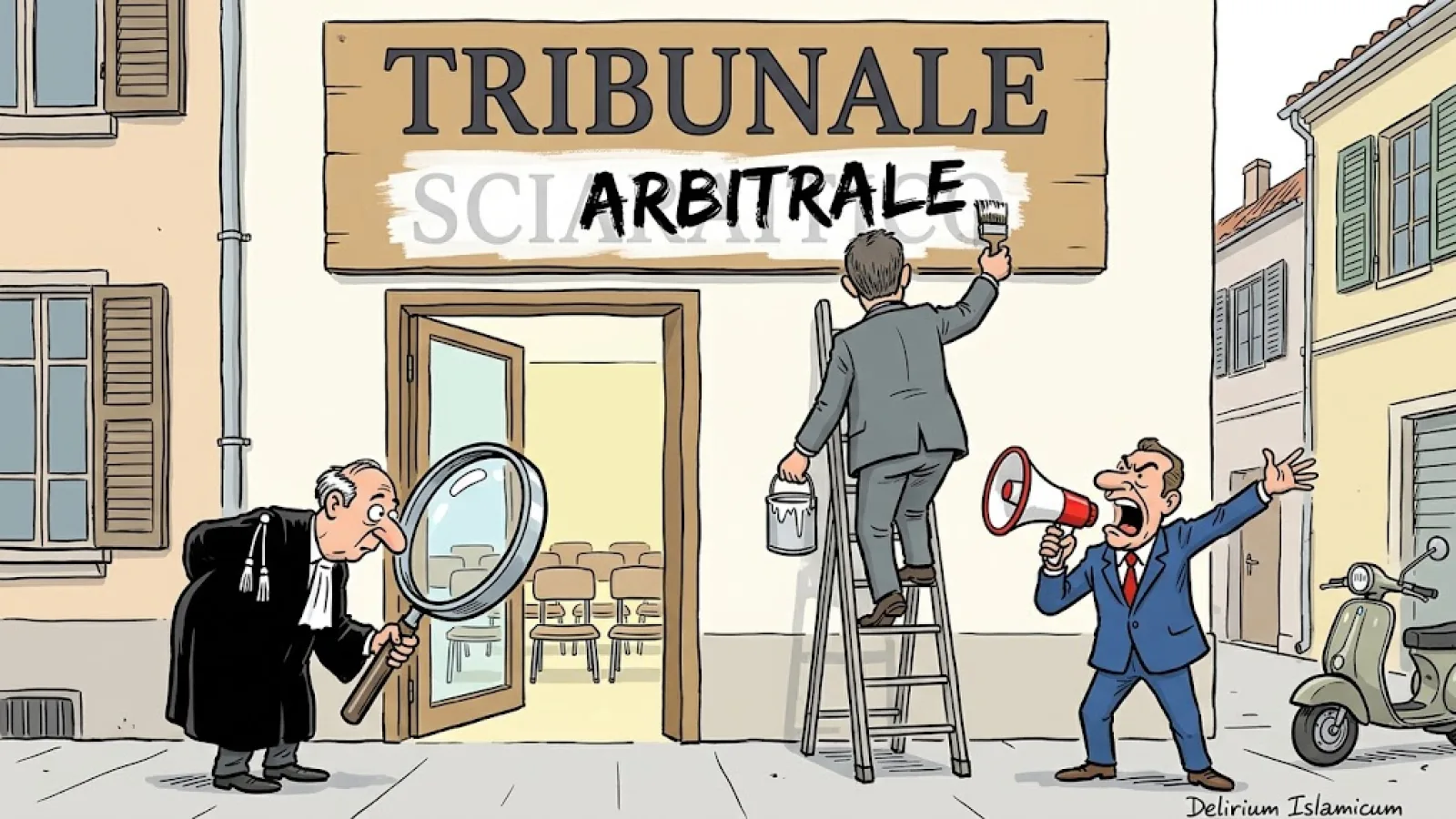
The Italian Islamic Arbitration Chamber was founded in Padua on March 3, 2026, as an unrecognised association. Its seat, at 13 Via Armistizio, Armistice Street, is the law office of its founder, Omar Vanin, an adjunct lecturer in international law at the University of Padua. Its slogan: "Your path to Islamic justice in Italy". Its homepage promises binding awards with little room for appeal, and arbitrators "bound to decide the dispute according to the immutable principles of the sharia". When the parties share a country, they get the sharia as interpreted back home: for two Afghans, the sharia of Kabul, that is, of the Taliban.
Its founder insists it will only handle commercial and property disputes, since Italian law bars arbitration on family matters. The homepage nonetheless praises its discretion, notably in family affairs, offers arbitrators versed in inheritance law, and lists among its foreign peers Britain's Islamic Sharia Council, whose own website offers "confidential services in Islamic family matters". Discretion has its limits: at a party's request, the rules allow the award to be sent to the Islamic cultural associations where the losing party lives, and published in bulletins and periodicals at the loser's expense. Cases handled so far, according to its founder: zero.
"The Italian Islamic Arbitration Chamber is not a court."— Omar Vanin, its founder, in Il Gazzettino, October 9
A file with no suspect for a court with no case
For seven months, nobody noticed. In early October, Francesco Minutillo, a lawyer from Futuro Nazionale, the party of former general Roberto Vannacci, filed a complaint, saying he was raising a strictly legal question, not judging a religion. The League followed. Its MEP Anna Maria Cisint wrote to the prosecutors, announced it in Strasbourg on the day the European Parliament debated "Islamic entryism", and wants Vanin struck off the bar. Its leader, Deputy Prime Minister Matteo Salvini, vowed to stop the chamber from operating. Brothers of Italy wants a Senate inquiry, Italia Viva filed a parliamentary question, and a Green-Left MP worried about the constraints such arbitration could impose on women.
On October 8, Padua's chief prosecutor, Angelantonio Racanelli, opened a "model 45" file, the register for cases with no suspect and no offence. Police checks have found nothing irregular so far, according to sources in his office, and the city's security councillor says the association operates lawfully. The Union of Islamic Communities of Italy called the chamber "self-styled" and its promoters unknown to Italian Muslims. Padua's Islamic community said its members did not use it and had been warned against it: in Italy, justice belongs to the state.
On October 15, Salvini came to Padua with Cisint and the League's likely candidate for next year's mayoral election. As a backdrop, he chose not the chamber but a Muslim prayer hall in Via Turazza. He also found time for the Highway Code, the flat tax and 121 million euros for a tram extension.
"No one can administer justice in the name of the Koran."— Matteo Salvini, in Padua, October 15
The minister's metaphysics
Justice Minister Carlo Nordio called the idea of an alternative system inspired by Islamic law "metaphysics", then added that arbitration and conciliation within Italian law were another matter. The law is indeed more down to earth. Arbitrators may only rule on rights the parties can freely dispose of, which excludes family and personal status. Since a 2022 reform, the parties may even choose the "rules" governing the merits, wording meant for international trade that, according to Il Politico Web, does not exclude the sharia. An award that discriminates between men and women can be annulled for breaching public order, but only if the injured party goes to court. On inheritance, the sharia gives a son twice a daughter's share. An award applying that rule could be challenged before an Italian judge, provided the daughter dares to go.
A whole judicial system
Quebec settled the matter in 2005, when its National Assembly unanimously voted to shut the door on sharia-based arbitration. The motion came from Fatima Houda-Pépin, a Moroccan-born Liberal lawmaker, who warned that such a parallel system would infringe on Muslim women's rights.
"Shariah law is not only a question of family mediation."— Fatima Houda-Pépin, Quebec MNA, May 26, 2005
In Padua, the chamber tidied up quickly. Its rules, as quoted by Libero on October 7 and in a parliamentary question tabled the next day, called the deciding panel the "Tribunale Sciaraitico", the Sharia Tribunal, and had it apply "the precepts of the sharia common to Islamic nations". An archived copy of the rules page shows that by the afternoon of October 8, the day the prosecutor opened his file, they read "Arbitral Tribunal" and "Islamic law".
On the homepage, the principles of the sharia remain immutable.
Verses and hadiths related to this article
Sources
Countries

Read also

In Iran, Murdered Women Pay the Difference
On October 14, Iran hanged a former lawyer who had murdered his wife, a journalist at the state news agency IRNA. As the Islamic Penal Code values a woman’s life at half a man’s, her family first had to pay him the difference, out of her own marriage portion. At least 20 more men were hanged for murder within three weeks.
Wanted in The Hague: Afghanistan’s Ministers of No Education
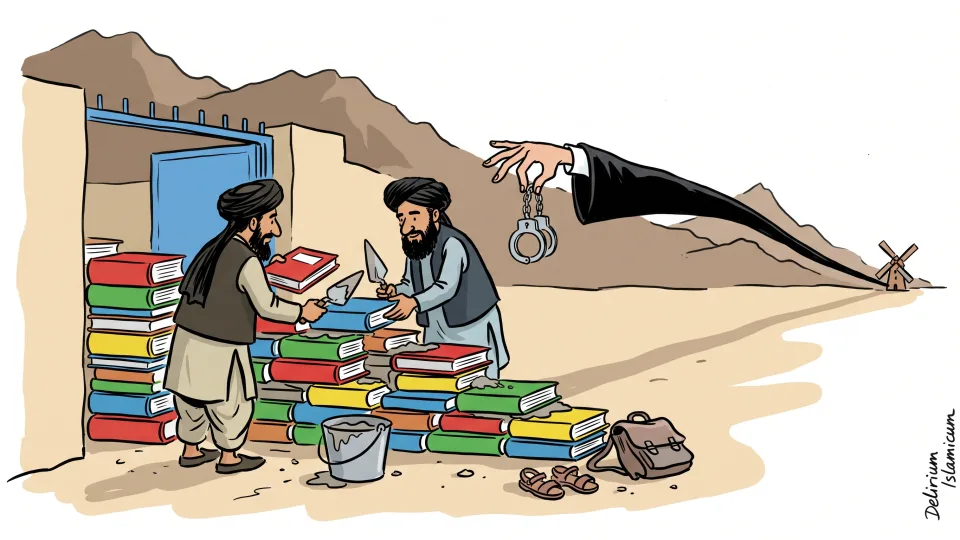
On October 5, the International Criminal Court unsealed arrest warrants against the Taliban’s supreme leader, his chief justice and his two education ministers, accused of persecuting women and girls. The same day, the UN Human Rights Council agreed that their treatment of women should shock humanity. The Taliban replied that only Sharia may judge them, as they interpret it.
German Teachers Check the Quran Before Stopping a Bully
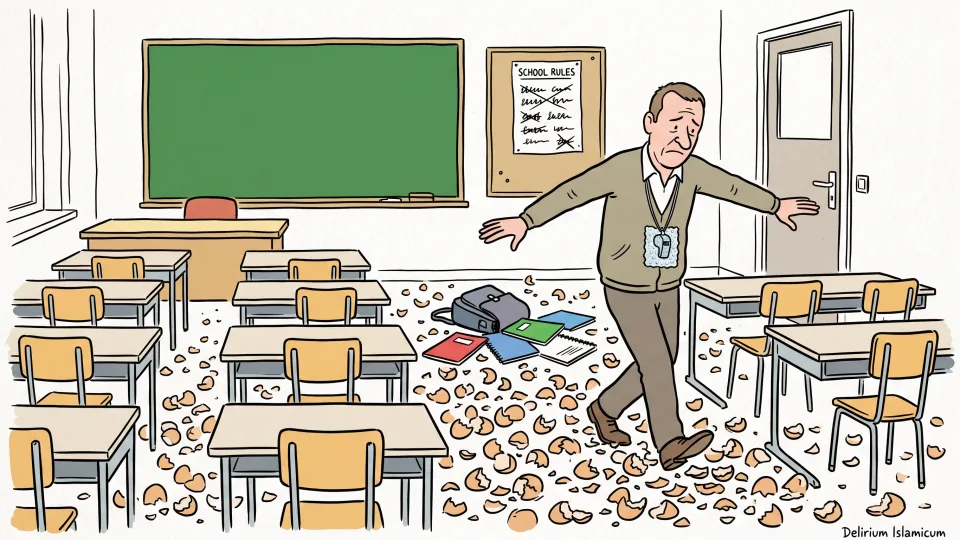
Some German teachers do not step in when strictly Muslim pupils bully their classmates: unsure what the Quran says, they find the conflict too delicate, a researcher reports. In Berlin, 41% of Muslim ninth-graders rank religious rules above school rules. After an Islamist attack on Pride, the mayor found the cure: Islam classes.


Comments
No comments yet