
German Teachers Check the Quran Before Stopping a Bully
Some German teachers do not step in when strictly Muslim pupils bully their classmates: unsure what the Quran says, they find the conflict too delicate, a researcher reports. In Berlin, 41% of Muslim ninth-graders rank religious rules above school rules. After an Islamist attack on Pride, the mayor found the cure: Islam classes.

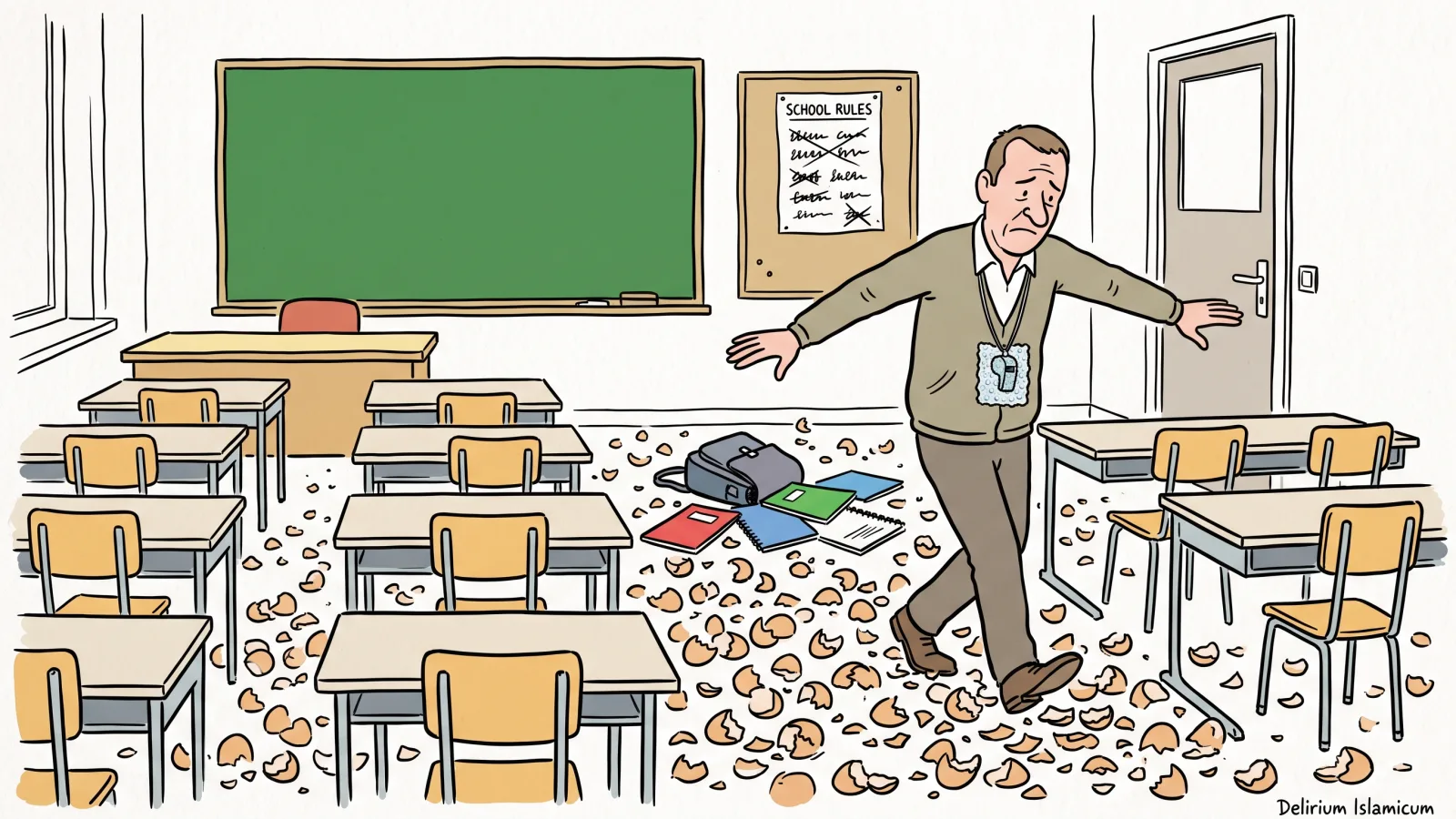
Too delicate
Margit Stein, a professor of education at the University of Vechta, surveyed some 700 teachers across Germany, plus other school staff. About a quarter reported Islamist remarks or acts at school, such as antisemitic statements or homophobic ones justified by religion. Teachers also told her that children are bullied by fundamentalist classmates, and that some teachers do not step in, because they are not sure what the Quran says about it.
"Going into conflict with strictly Muslim pupils is then too delicate for them."— Margit Stein, professor of education, to Die Welt, August 2026
Girls, both ways
Girls get it from both sides: some are attacked for wearing a headscarf, others for dressing the Western way and not wanting to fast. Some confide in teachers that their parents do not want them to study or learn a trade. Cases of forced marriage came up again and again in Stein's research. Even women's shelters, she says, are often not ready for them.
Religious rules first
Berlin took years to ask the question. Neukölln's district mayor first wanted an office to record such cases, and a pilot study found many examples of Muslim pupils pressuring liberal Muslims and pupils of other faiths. Critics branded the survey one-sided and anti-Muslim. The education department broadened it, to meet scientific standards and be harder to attack.
The result, a study of school violence published in June, covers more than 14,000 pupils and 2,500 school staff. More than one pupil in ten says some classmates try to dictate what others wear, eat or how they pray. In ninth grade, 41% of Muslim pupils say religious rules should come before school rules, as do 33% of Christian pupils and 19% of those with no religion. Muslim pupils are targets too: 16% link violence they suffered to their religion, against 7% of Christians and a third of the few Jewish pupils surveyed.
The cure: Islam classes
On July 25, a 21-year-old German-born Islamist drove a van into the crowd at Berlin Pride, then attacked people with what was probably a machete. A woman was killed and 31 people were injured. Convicted in May of trying to join the Islamic State, he was free on probation and, according to German media, had attended two of his 26 deradicalization sessions.
Four days later, Mayor Kai Wegner, who had already withdrawn as his party's candidate for the September election, found the remedy: Islam classes under state control, to shield youths from "so-called backyard mosques". Berlin has had Islam classes since 2001. The Islamic Federation of Berlin runs them on its own, and is regarded as the local branch of Milli Görüş, a Turkish movement founded by the Islamist leader Necmettin Erbakan.
Stein backs such classes in principle, as one tool among many, though there is no long-term study showing that they curb radicalization. Some youths ask her whether they must now all be gay-friendly, or even be raised gay. Her answer: they may find it morally wrong, as long as they leave others alone.
School rules, for everyone
On September 3, Berlin's education senator, Katharina Günther-Wünsch, announced common rules for all schools and a single list of sanctions, religious pressure included.
"At Berlin schools, the school's rules apply, and to everyone."
Katharina Günther-Wünsch, Berlin education senator, September 2026
On September 20, her party, the CDU, fell to 18.8%, far behind the Left Party. On October 8, the Left, the Greens and the SPD agreed to open exploratory talks. Whether the rules, or the Islam classes, survive the change remains to be seen.
Until then, school rules apply to everyone. Unless the teacher is not sure what the Quran says.
Sources
Countries
Keywords

Read also
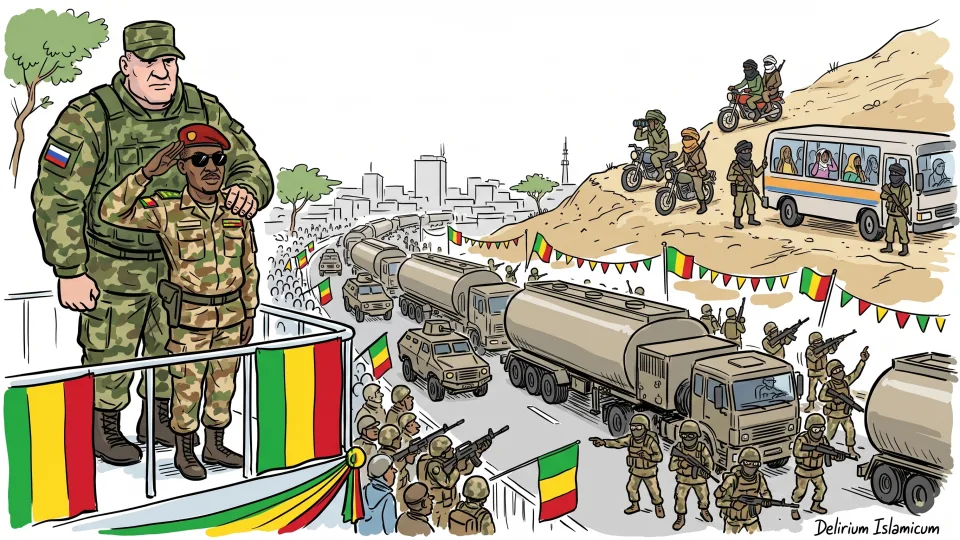
Mali Celebrates Its Independence, Under Military Escort
Sixty-six years after independence, Mali's capital needs an army escort to receive its fuel, its defence minister has been killed in a jihadist offensive, and an Al Qaeda affiliate dictates how women must dress on the buses. The junta, which seized power in 2020 to restore security, says the situation is under control.
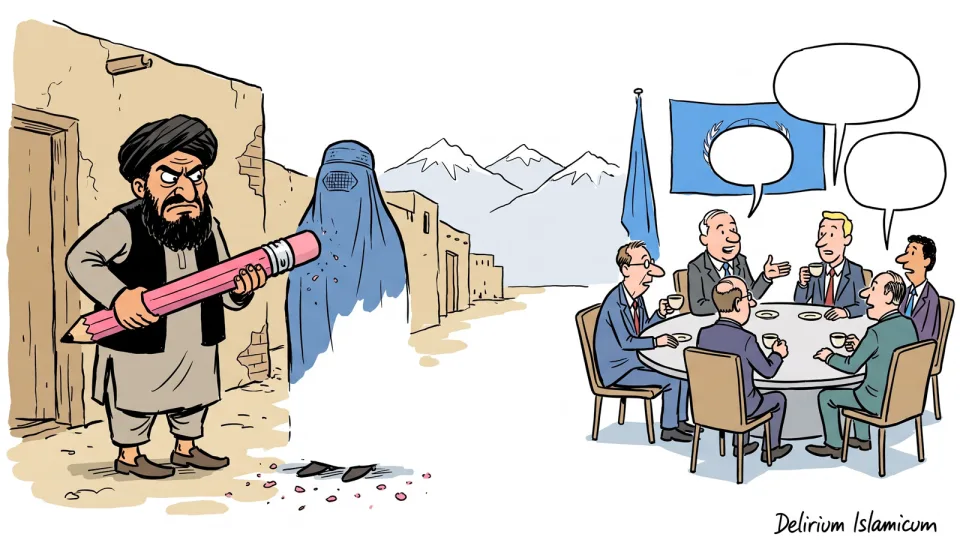
Kabul Decrees, Geneva Dialogues
Five years after the Taliban's return, a civil society speaker told the UN Security Council that being a woman in Afghanistan is now a crime. In Geneva, NGOs are pleading with the Human Rights Council to at least keep talking about it: renew the rapporteur, keep the dialogues, launch the investigative mechanism. The rapporteur, for his part, has been banned from the country since 2024.
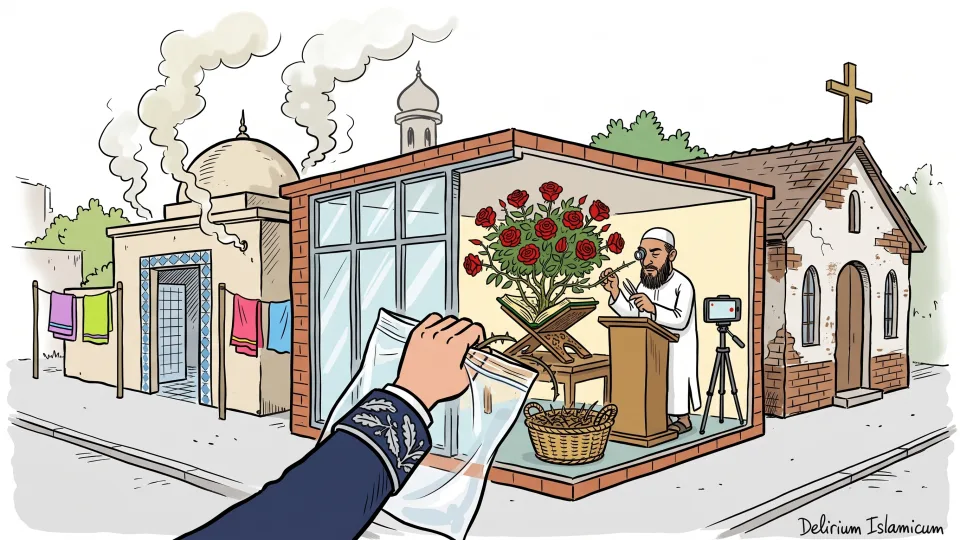
Aulnay's Imams Didn't Just Quote the Quran. They Curated It.
A prayer hall in Aulnay-sous-Bois, north of Paris, was ordered shut for six months, and the association running it has since been dissolved. Its preachers justified the killing of a Quran burner, attacked Jews and nonbelievers, and ranked Shiites below pigs and dogs. The mosque's lawyer suggests France now punishes quoting the Quran. The court disagreed.