
Mali Celebrates Its Independence, Under Military Escort
Sixty-six years after independence, Mali's capital needs an army escort to receive its fuel, its defence minister has been killed in a jihadist offensive, and an Al Qaeda affiliate dictates how women must dress on the buses. The junta, which seized power in 2020 to restore security, says the situation is under control.

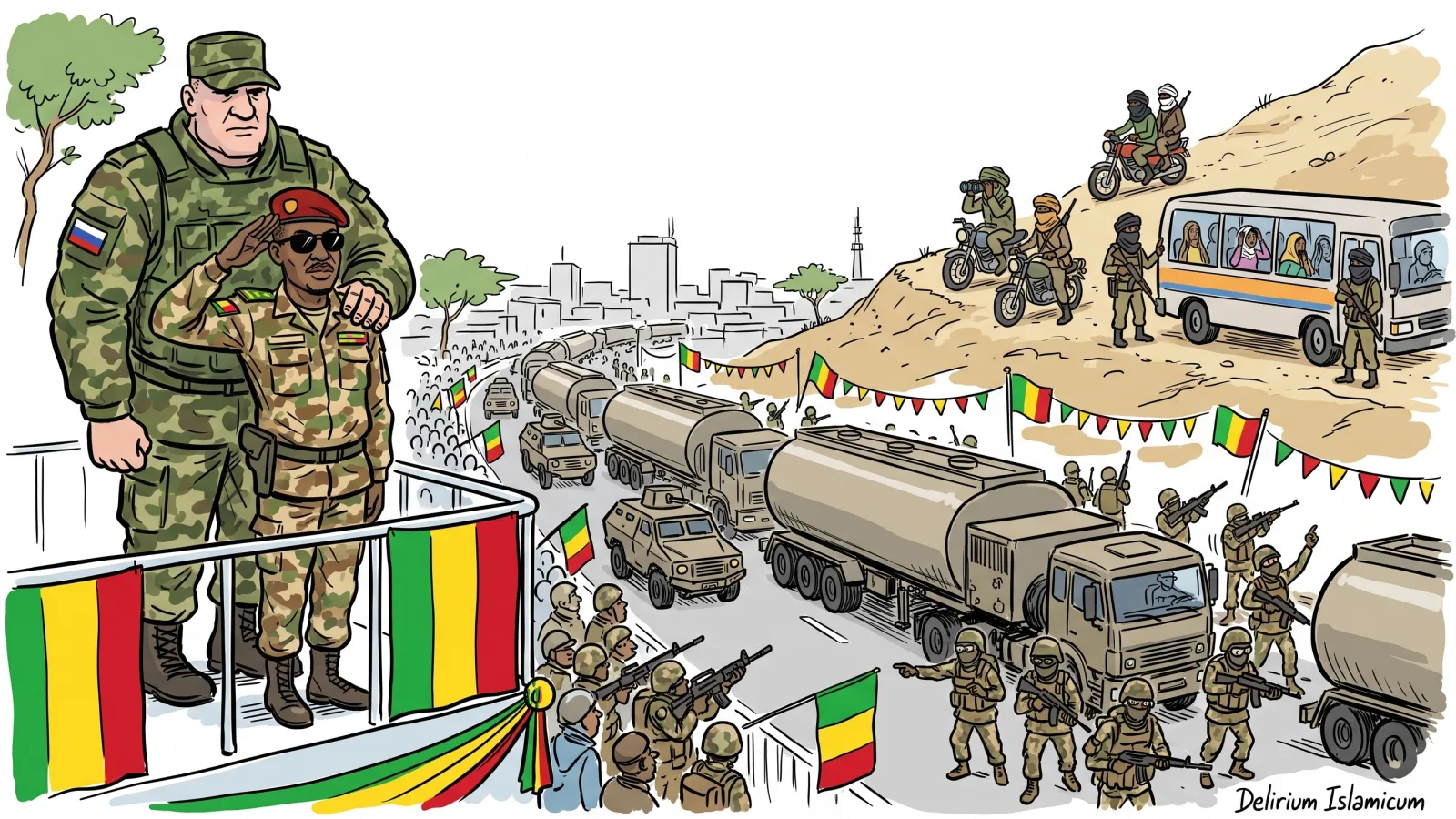
Fuel, under escort
On September 22, Mali celebrated 66 years of independence. A week earlier, its capital had received a birthday present: more than 900 fuel tankers, escorted into Bamako by the army. Since September 2025, the Al Qaeda-affiliated group JNIM has been attacking the tankers and highways that bring fuel from Senegal and Ivory Coast, causing severe shortages, power cuts and disrupted schooling in the capital. Delivering petrol to Bamako now takes a military operation. Over 400,000 Malians, meanwhile, have been driven from their homes.
Security, as promised in 2020
The junta seized power in 2020 promising to restore security. Since then, it has dissolved political parties and granted its leader, Assimi Goïta, a five-year renewable mandate without an election. Security has been less obliging. In April, JNIM and the Tuareg-led Azawad Liberation Front (FLA) launched coordinated attacks on military and strategic sites in Bamako, Kati, Mopti, Gao and Kidal. The defence minister, Sadio Camara, was killed, and Malian and Russian forces were pushed out of positions in the north. On September 10, JNIM struck an army camp in Dioura. The government says the situation is under control. One Bamako resident told Al Jazeera that people are now wondering what "under control" actually means.
Sovereignty, Russian-made
In the name of sovereignty, Mali left ECOWAS in January 2025, announced its withdrawal from the International Criminal Court and turned its back on its Western partners. Security is now provided by Russia's Africa Corps, which took over from the Wagner Group. Human Rights Watch has documented serious abuses against civilians by armed groups, Malian forces and their Russian allies alike.
"Less like an assertion of independence and more like a switching of alliances."— Abubakar Abubakar Usman, international relations scholar, on Mali's new partnerships
The other government
JNIM, for its part, has its own vision of sovereignty: nationwide Sharia, which its spokesman calls the only condition for peace. In October 2025, the group ordered women travelling on Mali's roads to cover their hair and men and women to be separated on public transport, and women in Bamako were seen complying. In Farabougou, a town it captured in 2025, residents were allowed back on condition that women follow a strict dress code, taxes are paid, and secular music and alcohol disappear. Some bus companies have even publicly apologised to JNIM to keep their routes open. In the Mopti region, Christian pastors were told to supply fighters or money, convert and close their churches, or leave.
JNIM's rules also target a population that is overwhelmingly Muslim, and that practised its faith perfectly well without Kalashnikovs. As one Malian woman put it to Afrik.com, a veil worn at gunpoint is a matter of fear, not faith.
Between a junta that leans on Moscow and jihadists who answer to Al Qaeda, Malians are still waiting for their independence.
Countries
Keywords
Read also
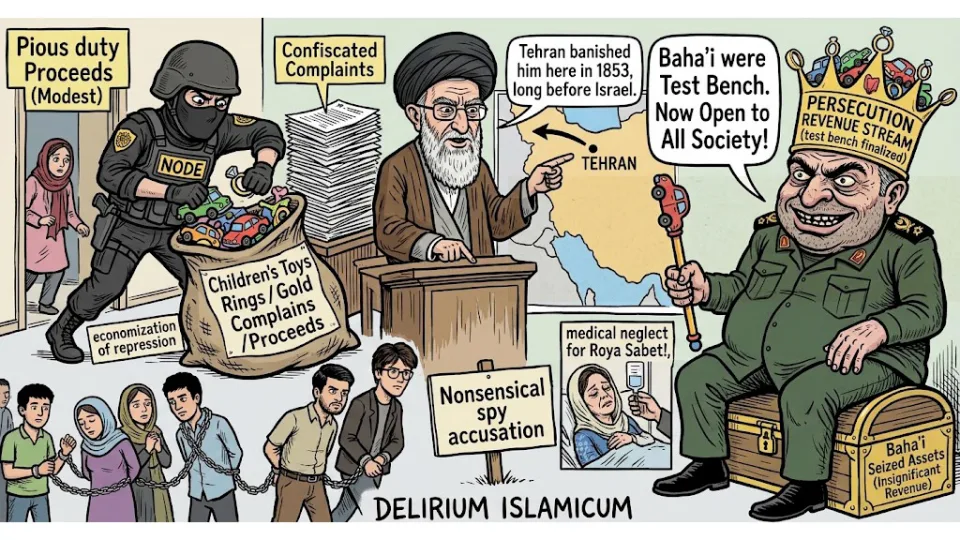
Iran Seizes the Rings, the Toys and the Complaints
Sixty-nine Baha'is behind bars, homes raided from Shiraz to Yazd, a woman sentenced to more than five years for offending Islam's sacred law, and security agents walking off with wedding rings and children's toys. In the Islamic Republic, persecuting a religious minority has become both a pious duty and a revenue stream. A modest one, economists say. It's the principle that counts.
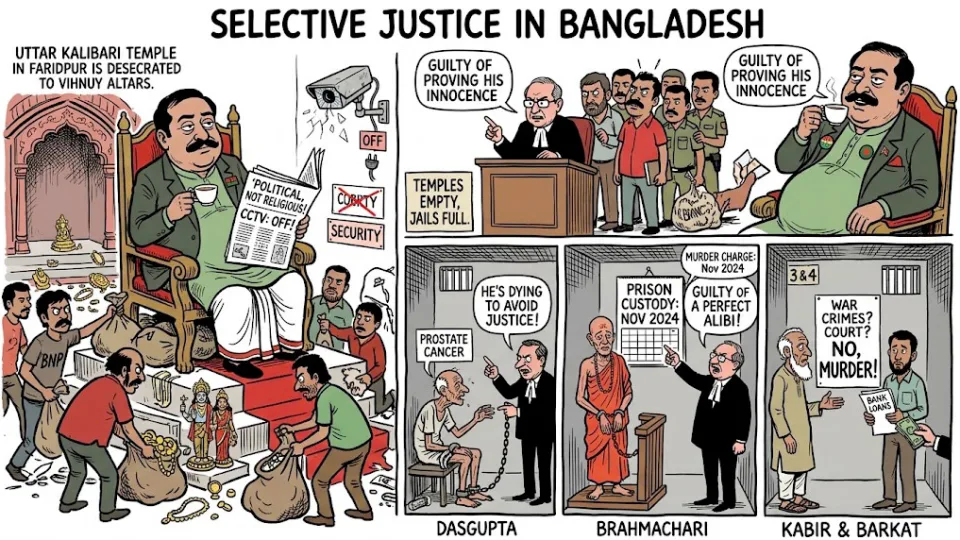
Idols Stolen, Advocates Jailed, Cameras Off
In Faridpur, thieves made off with a Kali idol and its gold while the temple's cameras were out of order. In Kolkata, Indian rights groups counted more than a hundred minority members killed in Bangladesh since early 2025 and four of their defenders jailed or hounded. Dhaka has changed governments. Its Hindus are still waiting for the change.
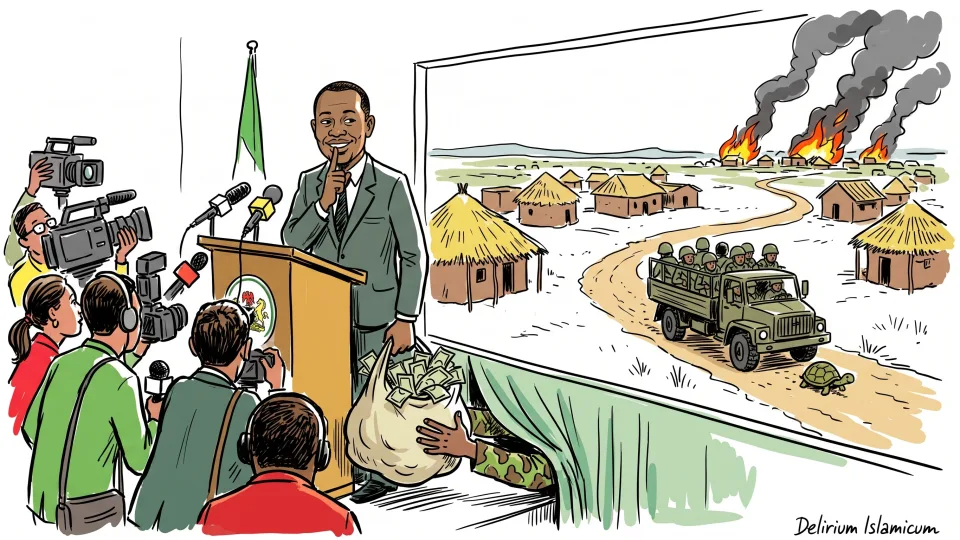
Shh, There's a Ceasefire
Since June, Abuja has reportedly been observing a secret truce with Boko Haram, sealed after an alleged five-billion-naira payment that the government denies making. In Adamawa, gunmen described as Boko Haram fighters spent seven hours killing twelve villagers and abducting a ten-year-old girl. Soldiers arrived twenty hours later. Discretion, at least, was assured.