
Kabul Decrees, Geneva Dialogues
Five years after the Taliban's return, a civil society speaker told the UN Security Council that being a woman in Afghanistan is now a crime. In Geneva, NGOs are pleading with the Human Rights Council to at least keep talking about it: renew the rapporteur, keep the dialogues, launch the investigative mechanism. The rapporteur, for his part, has been banned from the country since 2024.
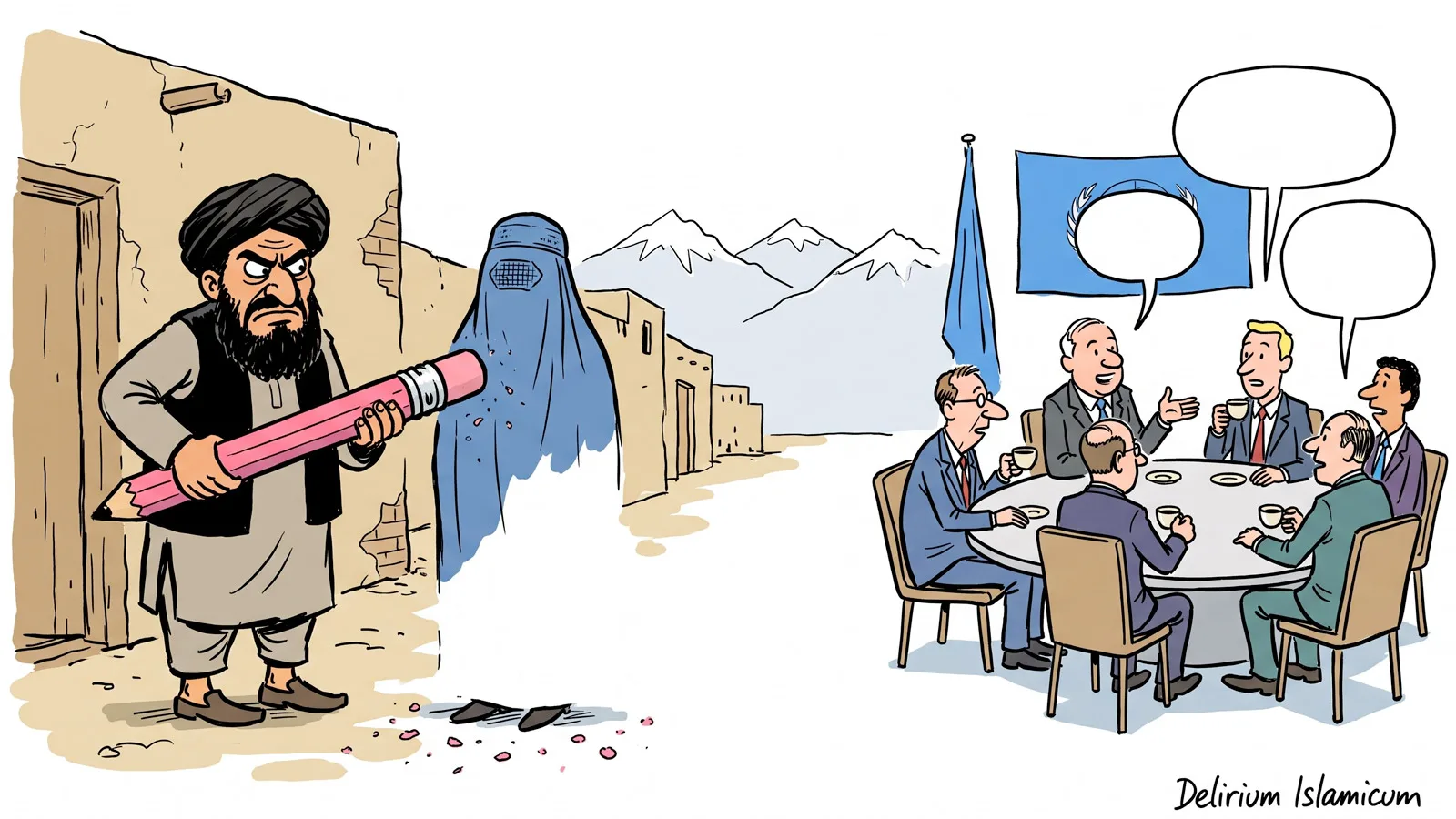
Being a woman, a crime
Five years after the Taliban's return, the inventory is long. Girls are barred from secondary school and university, and more than two million girls and women have been shut out of education since 2021. Women are excluded from most paid work, public office, parks and gyms. In 2026, new decrees went further: they stripped women of legal equality with men, narrowed the cases in which domestic violence can be prosecuted, erased any minimum age of marriage from the law on judicial separation and entrenched male guardianship, while carefully preserving men's unilateral right to divorce.
"Being a woman is a crime in Afghanistan."— A civil society briefer, UN Security Council, September 16, 2026
Afghanistan is now the only country in the world where girls are formally barred from education beyond primary school. A world first, at last.
Beards, music and floggings
Men are not spared. The Office for the Propagation of Virtue and Prevention of Vice arrests people for their dress, the length of their beard, or playing and listening to music. At least 449 people were subjected to corporal punishment in the first half of the year, according to the UN, after trials that rights groups say fall far short of due process. Journalists, human rights defenders, protesters and former officials face arrest, torture and disappearance. Even Islam has been brought into line: a 2026 Law on Preachers makes a single interpretation of it the only permissible basis for religious teaching, bad news for Shia Hazaras and Ismailis.
The Taliban, for their part, point to security and economic gains after five years in power. It is certainly easier to keep order once half the population has been sent home.
Geneva's answer: an enhanced interactive dialogue
At the UN Human Rights Council, which sits until October 7, delegations listened to the special rapporteur, Richard Bennett, on September 7 and 8, then asked what more they could do. Nearly 90 Afghan organisations, joined by Human Rights Watch, Amnesty International and others, answered in a joint letter: renew his mandate in full, keep the dedicated reporting on women and girls and the enhanced interactive dialogue where Afghan women can speak, add a report on ethnic and religious minorities, and finally activate the Independent Investigative Mechanism the Council created by consensus in October 2025. A year later, it is still waiting to be operationalised.
"[An] increasingly codified project to erase women and girls from public life."— Joint letter of Afghan and international NGOs, September 18, 2026
The vocabulary may sound thin against the Taliban's decrees, but the rapporteur's documentation feeds the International Criminal Court's investigation and could support a case before the International Court of Justice. Bennett himself, who describes the situation as gender apartheid and wants it codified as a crime against humanity, has one small handicap: the Taliban have barred him from Afghanistan since 2024, accusing him of propaganda. The world's monitor of Afghanistan monitors it from abroad.
New York demands results
On September 16, the Security Council took its turn. The US envoy said Washington would not let the Taliban use American citizens as bargaining chips and urged the Council to demand results. Afghanistan's UN envoy, who does not speak for the Taliban, warned that the absence of all-out war should not be confused with lasting peace. Council members agreed that the treatment of women is the main obstacle to Afghanistan's recovery, and disagreed on whether engagement or pressure works best.
Meanwhile, the engagement is happening. Rights groups note growing diplomatic and economic contacts with the Taliban, including talks aimed at facilitating forced returns, as Afghans are sent back from Iran, Pakistan, Türkiye and Europe. Some capitals condemn gender apartheid in Geneva, then negotiate deportation flights with its architects.
Five years on, Kabul produces decrees and Geneva produces dialogues. The Council will soon vote on whether to keep the dialogues going for another year. The decrees, unfortunately, need no renewal.
Sources
Countries
Read also
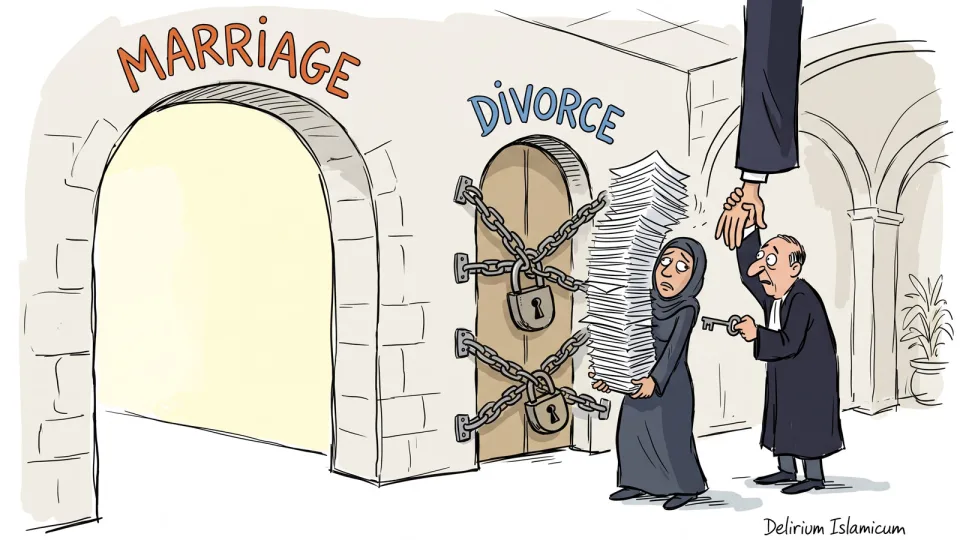
In Iraq, Marrying a Girl Takes Less Paperwork Than Leaving a Husband
Since 2025, Iraqi couples can trade the civil family law for a Shia religious code. It sets marriage at puberty, accepts weddings with no witness and no register, hands children to their fathers at seven, and lets a woman divorce only if she is abandoned, unpaid or repeatedly beaten. Iraqi women fought to make the reform less terrible. Six months later, parliament made it worse.
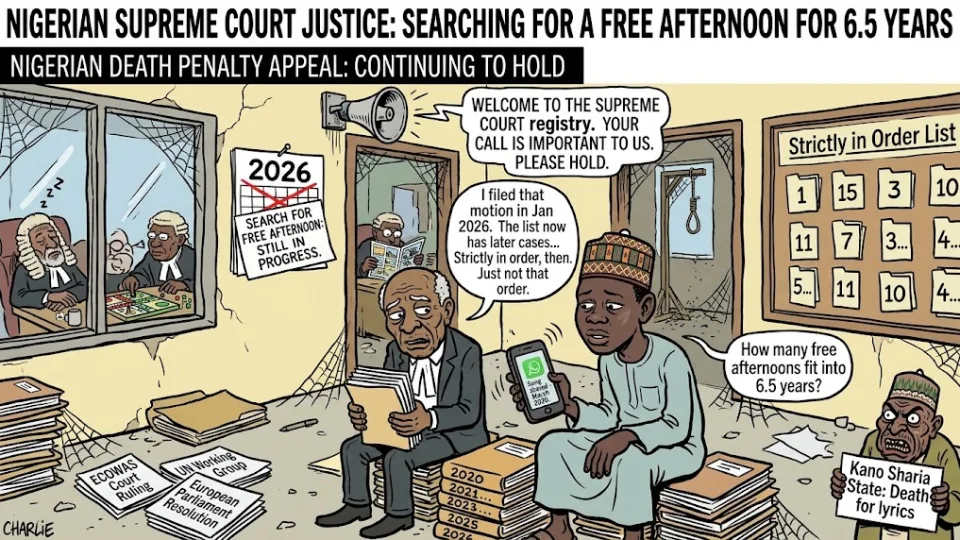
Your Death Sentence Is Important to Us. Please Hold.
Six and a half years after sharing a song on WhatsApp, a young Nigerian musician is still waiting for his country's Supreme Court to find a slot on its calendar.
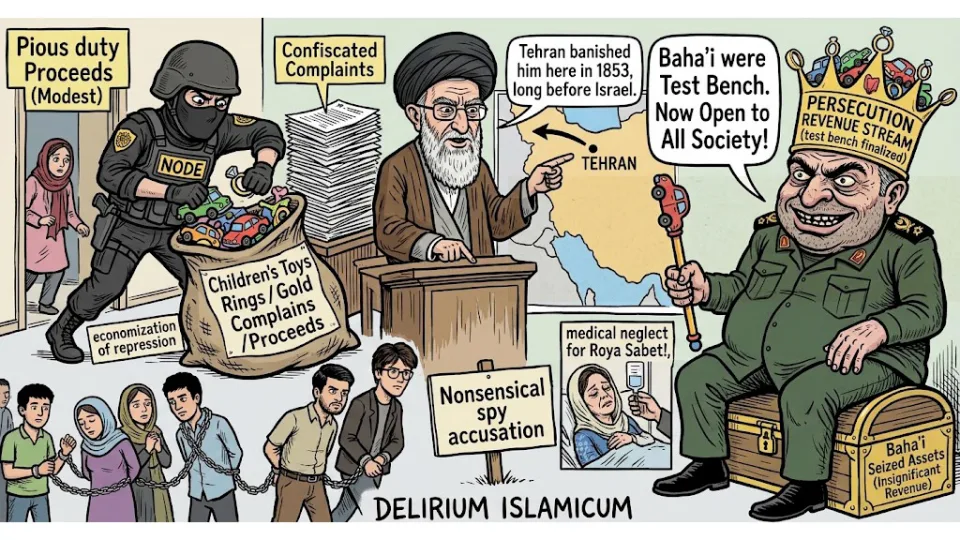
Iran Seizes the Rings, the Toys and the Complaints
Sixty-nine Baha'is behind bars, homes raided from Shiraz to Yazd, a woman sentenced to more than five years for offending Islam's sacred law, and security agents walking off with wedding rings and children's toys. In the Islamic Republic, persecuting a religious minority has become both a pious duty and a revenue stream. A modest one, economists say. It's the principle that counts.