
In Iran, Anyone Can Wage War Against God
In October, Iran hanged or sentenced to death, as enemies of God or rebels, a mountaineer, an animal-rights artist, an orphan accused of damaging public property, a Kurdish activist, a Baluch seminarian and an Iraqi Quran teacher. Two UN experts responded by joining the prisoners’ hunger strike.


The mountaineer, the artist and the orphan
Ali-Sina Mostafavi, a 38-year-old mountaineer and musician from Kerman, was hanged on October 14 for moharebeh, "waging war against God", a charge taken from verse 5:33 of the Quran. The judiciary called him a monarchist who had joined the January protests and accused him of shootings that wounded a civilian and a young girl; rights groups say his confession was forced. Two days later, his memorial in Kerman was cancelled under pressure from the authorities, Iran International reports. Mourning him, apparently, would have been another act of war.
Homayoun Shabankareh, a 22-year-old artist and animal-rights activist, was arrested at home on May 14 in connection with the war, according to HRANA. After months in solitary confinement, he was told on October 17 that the Karaj Revolutionary Court had sentenced him to death for moharebeh and espionage. In Isfahan, Ilya Ben-Rashid, a 22-year-old Arab from Ahvaz who has looked after his younger sister since their parents died, was sentenced to death for moharebeh over the destruction of public property during the January protests, with 20 lashes in a separate case. That crackdown killed between 3,117 people, by the state's own count, and more than 30,000, according to rights groups.
Fighting the Islamic State is rebellion
Varisheh Moradi, a 41-year-old Kurdish activist from Sanandaj, has now been sentenced to death twice by the same judge, Abolqasem Salavati of the Tehran Revolutionary Court. Her original indictment cited an article of the Penal Code capped at 15 years in prison. The Supreme Court quashed the first death sentence in December 2025 and ordered further investigation. Instead, her lawyer says, the court changed the charge and, in a ruling served on October 14, sentenced her to death again for baghi (armed rebellion), as a member of the East Kurdistan Free Women Society. Her only fighting, her lawyers say, was against the Islamic State in northern Syria. She refused to appear before a court she does not recognise, and was given six more months for her open letters.
Prayer, then the gallows
Omar Dorostaran, a Baluch seminary student arrested after prayers in Rask in April 2024, was hanged in Zahedan on October 12 for baghi through membership of Jaish al-Adl, a Sunni Baluch armed group. The judiciary says he helped prepare attacks in Rask and Chabahar; Iran Human Rights says he was held incommunicado and flogged to extract confessions. He is the 14th political prisoner executed this year for alleged links to banned groups, the NGO counts.
The day before, Iran had quietly hanged Ayoub Mohammad Nabil, a 28-year-old Iraqi from Haditha, in Rasht. The Revolutionary Court convicted him of moharebeh "through espionage for Saudi-backed groups", which he denied. According to Hengaw, the case rested on his Sunni identity, his appearance and the Quran lessons he gave local children.
Hunger strike on Tuesdays
In 66 prisons, inmates refuse food every Tuesday to protest executions, a campaign born in Ghezel Hesar prison and now in its 143rd week. On October 13, Gina Romero, the UN special rapporteur on freedom of assembly, joined them for 24 hours.
"This is the highest concentration of political executions in Iran in nearly 40 years."— Gina Romero, UN special rapporteur, October 12
On October 20, it was the turn of Leopoldo Maldonado, the UN rapporteur on freedom of expression, who counts at least 46 political prisoners and protesters executed since mid-March and more than 100 others at imminent risk. Over twelve months, the Kurdish news agency Kurdpa counts 67 political executions, nine times the annual average of the previous 14 years.
"No one should be sentenced to death for expressing opinions."— Leopoldo Maldonado, UN special rapporteur, October 19
In the Islamic Republic, even teaching the Quran can amount to waging war against God. It all depends on who teaches it.
Verses and hadiths related to this article
Sources
Countries

Read also
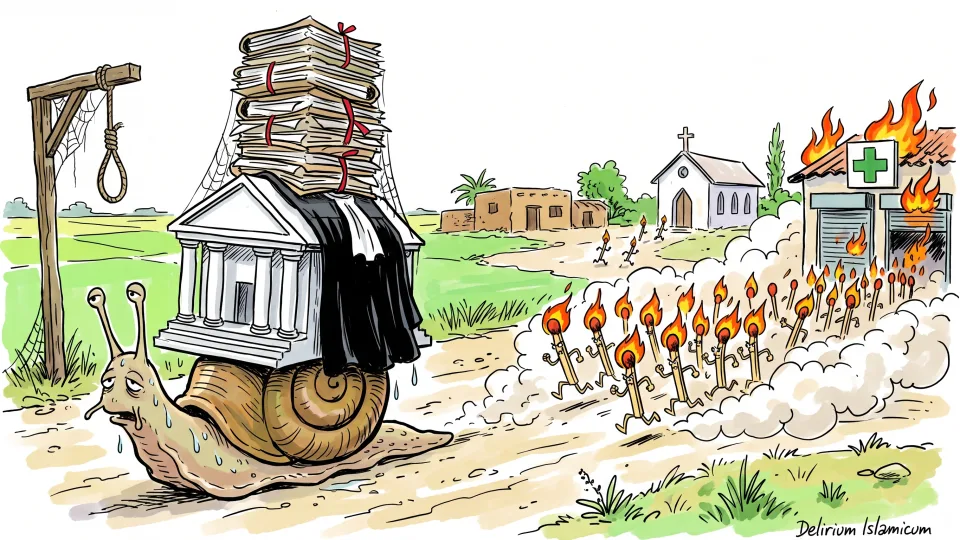
Pakistan: The Mob Rules Faster Than the Supreme Court
In Punjab, a mob burned the clinic and home of a Christian pharmacist accused of blasphemy over a WhatsApp video, less than a day after his arrest. The Supreme Court, for its part, needed thirteen postponements to free one Christian brother and keep the other on death row. In Sindh, two Hindu sisters aged 13 and 14 waited seven weeks to go home, while on the Afghan border the army fights khawarij it calls Indian-sponsored and Taliban-protected.

In Iran, Even Your Hallucinations Must Be Halal
Iran hanged 2,003 people in twelve months, according to HRANA, mostly for murder and drug offences. The past few weeks show where the regime’s real zeal lies: a death sentence for a post about the Prophet, decades in prison for Baha’is and Christians, the gallows for protesters convicted of “waging war against God.” Even Tehran’s cafés are now under suspicion.
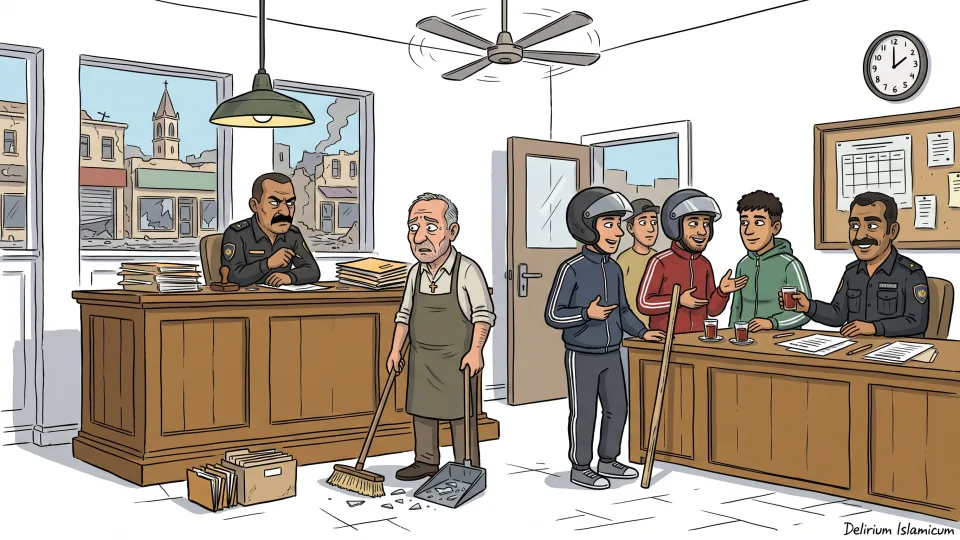
Syria: Christians Attacked by a Mob, Then Summoned by the Police
On October 3, a mob from a neighbouring Sunni town raided Suqaylabiyah, a Christian town in central Syria, once again. The security forces then summoned sixteen of its young men for questioning. The same week, at least ten Alawites were killed in two separate shootings. In the new Syria, justice is even-handed: it also takes an interest in the victims.


Comments
No comments yet