
In Iran, Even Your Hallucinations Must Be Halal
Iran hanged 2,003 people in twelve months, according to HRANA, mostly for murder and drug offences. The past few weeks show where the regime’s real zeal lies: a death sentence for a post about the Prophet, decades in prison for Baha’is and Christians, the gallows for protesters convicted of “waging war against God.” Even Tehran’s cafés are now under suspicion.

Blasphemy under the influence
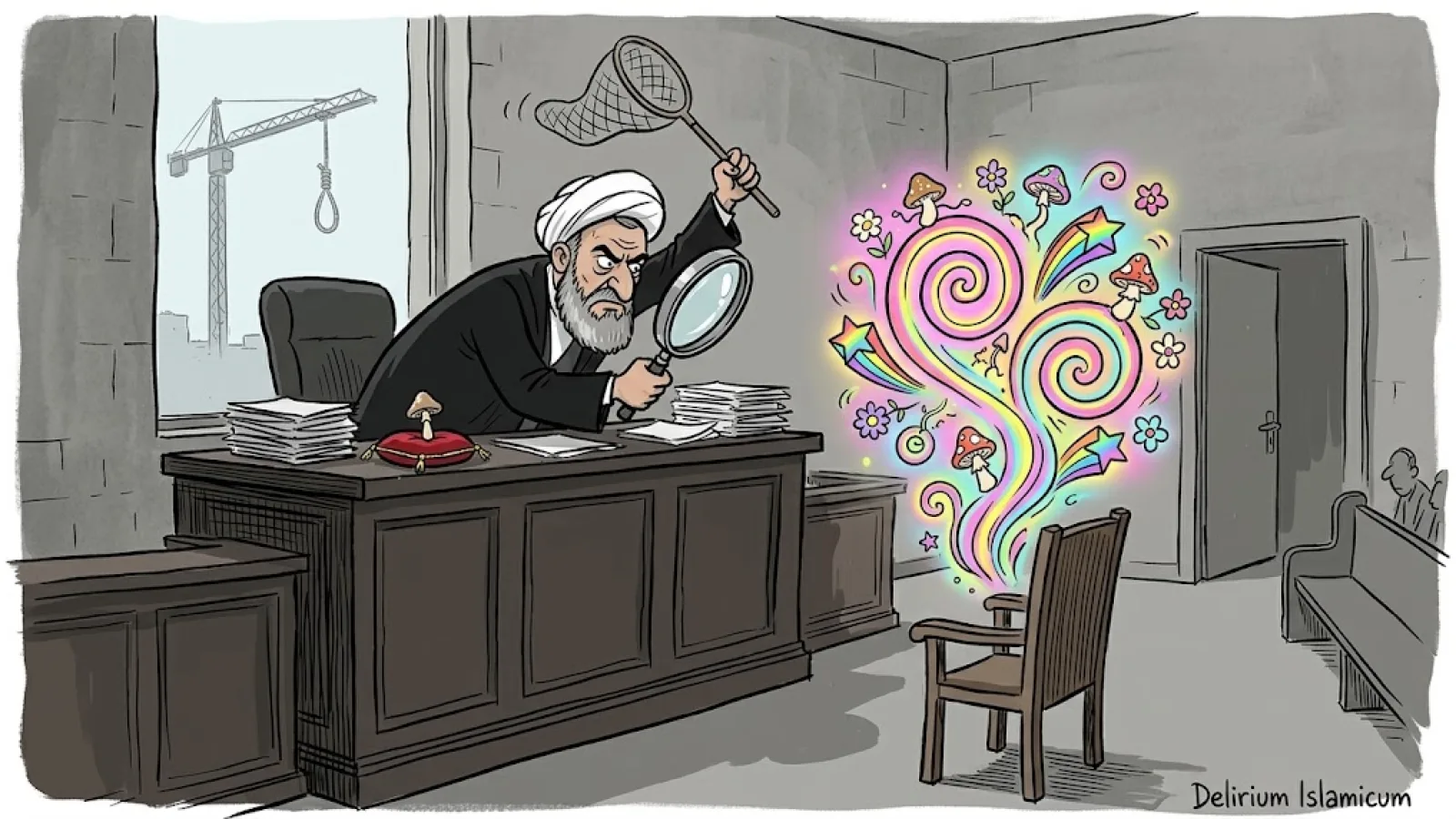
Najmeh Amini, a 23-year-old accounting student, was arrested in Mashhad on January 31, during the protest crackdown. Accused of "moharebeh", "collaboration with Israel" and insulting the Supreme Leader and the Prophet, she got 12 years, 6 months and 1 day in August for acting against national security, Hengaw reports. On October 7, Iran International reported a second verdict: death, for "sabb al-nabi", insulting the Prophet, and for insulting the Shia Imams, in an online post whose content has never been disclosed.
Article 262 of the Islamic Penal Code prescribes death for this crime. The next article spares those who spoke in error, in anger or while intoxicated: 74 lashes at most. Her lawyer pleaded a slip of the tongue. She said she had taken hallucinogenic mushrooms with friends. The judge was unconvinced, according to the Iranian daily Khorasan, quoted by The Week and Minute Mirror: why, in "that same hallucinatory state", had she not insulted other people, or the regime's enemies, such as America and Israel? And how had she known where to post? First accused of collaborating with Israel, she is now reproached for failing to insult it.
The verdict can still be appealed. Iran last hanged two men for blasphemy in 2023. Mahmood Amiry-Moghaddam, director of Iran Human Rights (IHRNGO), calls the sentence "an extremely alarming development."
Not guilty, but not Sharia-compliant
In Shiraz, 26 Baha'is prosecuted since 2016 were sentenced in 2022 to a combined 85 years in prison, then acquitted in January 2023. The province's chief justice objected under Article 477 of the Code of Criminal Procedure, which allows a final verdict to be reopened if it is "manifestly contrary to Sharia." The 26 were summoned back for October 11, before the judge who first convicted them (Iran HRM, VOA Persian).
The penal code wears its theology openly. Article 500 bis punishes "deviant educational or propaganda activity contrary to... the sacred Sharia of Islam." Citing it, Judge Abolghasem Salavati recently gave three Baha'is in Tehran a combined 35 years, and five others in Shahriar got a year each (Iran HRM). In Shiraz, Roya Sabet, 59, serving ten years of a 25-year sentence for "membership in groups and organizations opposed to the state (Baha'ism)", was refused a last visit to her dying mother on October 5, then her funeral (Hengaw, IranWire).
Christians fare no better. Lida Alexani, a 58-year-old grandmother, has been summoned to begin 13 years in prison for "deviant proselytising contrary to the holy religion of Islam." Her husband, Armenian pastor Joseph Shahbazian, is serving 16. With three converts tried alongside them, the total exceeds 70 years (Article 18).
Waging war on God, one protester at a time
For protesters, the judiciary borrows from the Quran itself: "moharebeh", waging war against God, and "efsad-fil-arz", corruption on earth, both from verse 5:33. Two people who resisted a farmland seizure in November 2025 are on death row for corruption on earth (Iran International). On October 5, Alireza Sepahi, 24, and Alireza Raeisi, 21, were hanged in Isfahan's Dastgerd prison on these charges, plus rebellion, over the deaths of four security officers in Alikhani Square on January 8. A former cellmate told IranWire the defendants were beaten "to make them confess against each other." Amnesty calls it a "grossly unfair mass trial" (Iran International). Seven of the 12 to 14 people sentenced to death in the case have been executed, two of them in public, in the square itself. Security forces had Sepahi and Raeisi buried 200 and 130 kilometres from home.
"He became a groom yesterday, and today they executed him."— Shirin Ebadi, Nobel Peace laureate, on Alireza Sepahi, married the day before his execution
Erfan Nabian, a 26-year-old protester from Isfahan, saw his death sentence commuted to 11 years: one for "propaganda", ten for alleged possession of psilocybin, which he denies. Before that, he says, interrogators left a noose around his neck for five to ten minutes and struck his tattoos, a Star of David among them, one promising to beat him "so much you'll start speaking Hebrew." He has since left Iran (Iran International). In the Islamic Republic, mushrooms are never a mitigating circumstance.
On October 5, the day Sepahi and Raeisi were hanged, protester Mohsen Babaeian learned that Judge Iman Afshari had sentenced him to death for moharebeh (HRANA). Two days earlier, Siavash Jamshidi Kheirabadi was hanged in Shahrekord on the same charge. Iran International counts at least 70 executions in political and security cases since January, nearly two a week, and 194 people facing death, including 13 women and at least seven who were minors at the time of the alleged offence. HRANA has documented 369 televised confessions in the January cases, extracted, it says, under torture, and cites two young men hanged at 18 and 19. On September 17, a UN fact-finding mission concluded that the authorities had committed crimes against humanity during the January crackdown.
On October 6 in Khansar, a 17-year-old, beaten with rifle butts by Basij militiamen after a verbal dispute with one of them, died during questioning at the courthouse. The judge had refused to let him go to hospital, even when his father offered to stay in custody in his place, a source told Iran International. That same day, Tehran summoned France's ambassador to protest the treatment of French high school demonstrators.
No music, no hookah, no purpose
After belief and speech, leisure. In early October, Colonel Ali Rafiei, head of Tehran's public places police, banned live music and DJs in cafés, and hookahs without a special permit. At least 20 cafés and restaurants in Tehran have been closed over the hijab, according to the daily Ham-Mihan, and others in the past for chairs on the sidewalk or for serving sandwiches (IranWire). Rafiei's diagnosis: congestion, and "the presence of certain young people without a defined purpose" (Israel Hayom). On October 18, the Assembly of Experts, the clerical body that chooses the Supreme Leader, demanded firm action against the "normalization of unveiling" and the promulgation of the Hijab and Chastity law, which the Supreme National Security Council has suspended (VOA Persian, IranWire).
Sadegh Saedinia, whose café chain was sealed after his arrest, knows the price of a wrong purpose. The Supreme Court upheld 12 years, 6 months and 1 day in prison, the confiscation of all his assets and a two-year ban from the café trade, for social media stories, attending rallies, closing his shops during the protests and urging his staff to join them (Iran International, Israel Hayom). Exactly Najmeh Amini's prison term, to the day: the judiciary apparently has a set menu.
Do-it-yourself justice
Most of the hanged are not blasphemers: murder and drug offences account for over 93% of executions, according to HRANA. For murder, scripture still writes the procedure. Under qisas, the Quranic law of retribution, the victim's family chooses between death, forgiveness or blood money, with no legal cap on the price, and is encouraged to attend the hanging and carry it out itself, IHRNGO explains. The ability to pay can decide whether a death sentence is carried out, UN experts note. In Damghan, on October 10, a man was hanged for shooting a policeman in 2022, "at the request of the grieving next of kin", announced Semnan province's chief justice, the cleric Hojatoleslam Akbari (Mizan).
The net is wide. Emad Mirdoraghi, 28, was hanged in Dezful on September 23: at 18, he allegedly broke into a house where an elderly woman died of a stroke from fright (HRANA). Ashraf Faraji, 57, a mother of four under psychiatric care, was hanged in Sari on September 30 for killing her husband during an argument (Hengaw). Mehdi Alizadeh in Shiraz, Ahmad Nikdel in Dezful and an unnamed prisoner in Ghezel Hesar followed on October 7 and 8 (Breathing in Confinement, Iran Human Rights Society, IHRNGO). In January, Pejman Saedi, a Kurd acquitted but unable to post bail, was hanged after the victim's side swore a "qassameh", a collective oath. On October 14, Milad Darvishi, 31, was hanged in Arak on drug charges (IHRNGO).
One hanging every four hours
Rights groups published their tallies for the World Day Against the Death Penalty, on October 10. HRANA documented 2,003 executions in twelve months, up 29%: one every 4 hours and 21 minutes, about 95% of them never announced. Among the hanged were 47 women and four juvenile offenders. Nine executions were public, and six more people have been sentenced to hang in public. For 2025, counts range from 1,639 (IHRNGO, the most since 1989) to 2,159 (Amnesty, the most since 1981, nearly 80% of executions recorded worldwide). The Prisoners' Rights League counts 2,616 for the Iranian year that ended in March. For 2026, the tally so far stands between 617 (IHRNGO) and 1,075 (HRANA). IHRNGO links at least 36 of them to protests: a pace of political executions unseen since the 1980s.
On October 9, UN human rights experts demanded an immediate halt, noting that Iran executes far more people per head of population than any other country, and that apostasy and consensual same-sex relations remain capital crimes.
"Executions do not end dissent, but breed the next wave of it."— UN human rights experts, statement of October 9, 2026
In the Islamic Republic, "Death to America" is a slogan. Insulting the Prophet is a death sentence.
Verses and hadiths related to this article
Sources
Countries

Read also
Syria: Christians Attacked by a Mob, Then Summoned by the Police
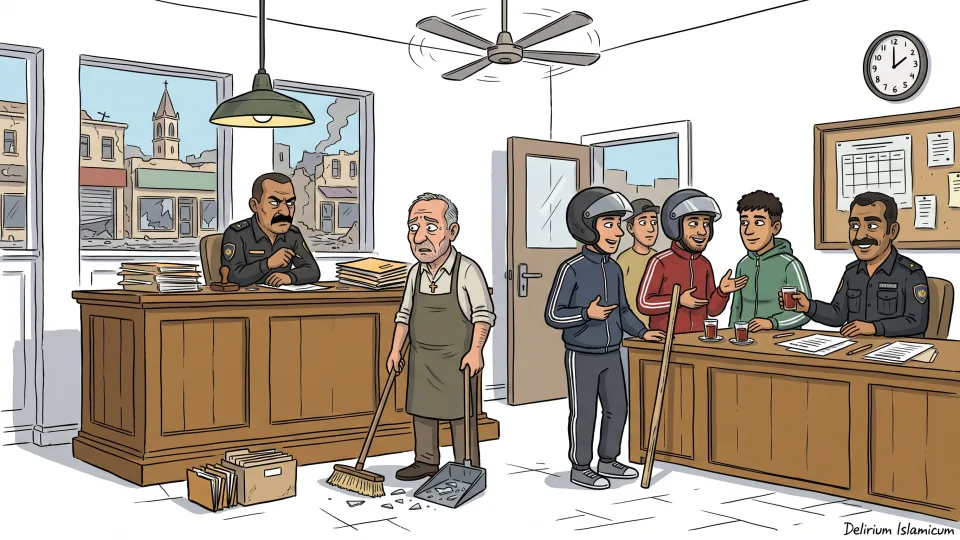
On October 3, a mob from a neighbouring Sunni town raided Suqaylabiyah, a Christian town in central Syria, once again. The security forces then summoned sixteen of its young men for questioning. The same week, at least ten Alawites were killed in two separate shootings. In the new Syria, justice is even-handed: it also takes an interest in the victims.
Wanted in The Hague: Afghanistan’s Ministers of No Education
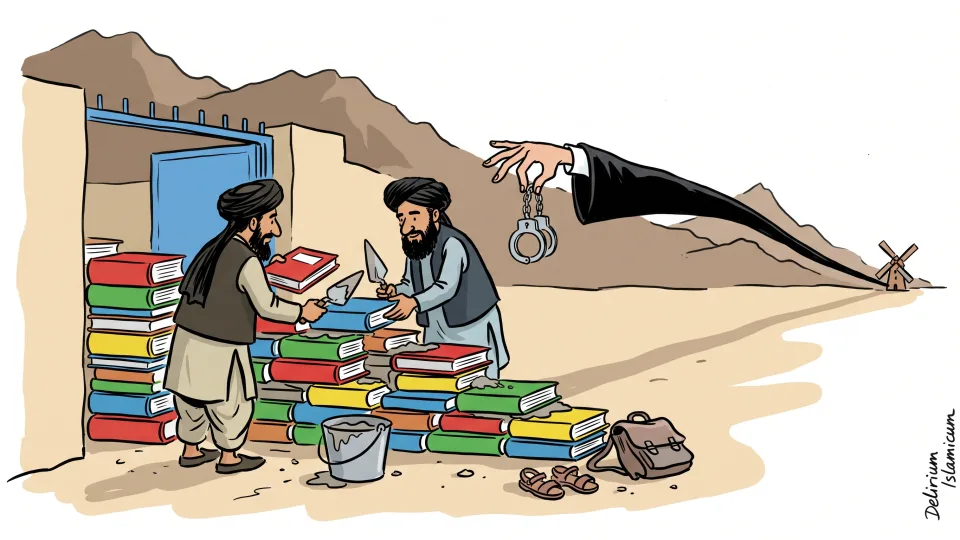
On October 5, the International Criminal Court unsealed arrest warrants against the Taliban’s supreme leader, his chief justice and his two education ministers, accused of persecuting women and girls. The same day, the UN Human Rights Council agreed that their treatment of women should shock humanity. The Taliban replied that only Sharia may judge them, as they interpret it.
Pakistan: No Ahmadi May Pose as a Muslim, Even Six Feet Under
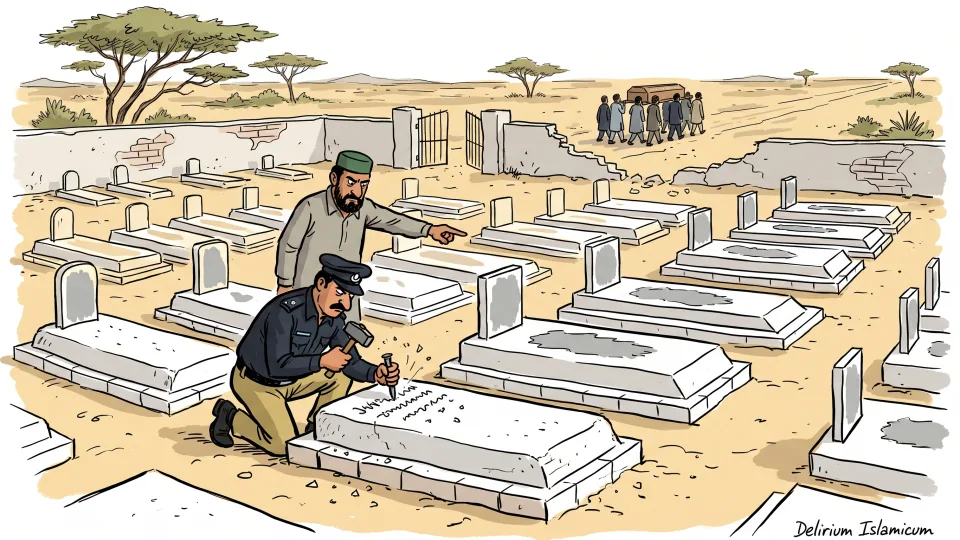
In September 2025, hardliners in a Pakistani village blocked the burial of an Ahmadi woman in the cemetery granted to her community in 1947, and the police booked some 30 Ahmadis. Pakistan’s own human rights commission has since documented police smashing Ahmadi tombstones. A year later, UN experts blame official complicity.


Comments
No comments yet