
Hymns to Merah, Answers from the Bench
In early October, French teenagers were filmed chanting a rap song celebrating Mohammed Merah and Salah Abdeslam, at a school blockade and on a church altar. The rapper goes on trial on October 21; his manager firmly condemns the glorification of terrorism. Meanwhile, appeal courts toughened the sentences of the Trèbes killer’s entourage and upheld 20 years for a Syrian Islamic State member over the kidnapping of French journalists.

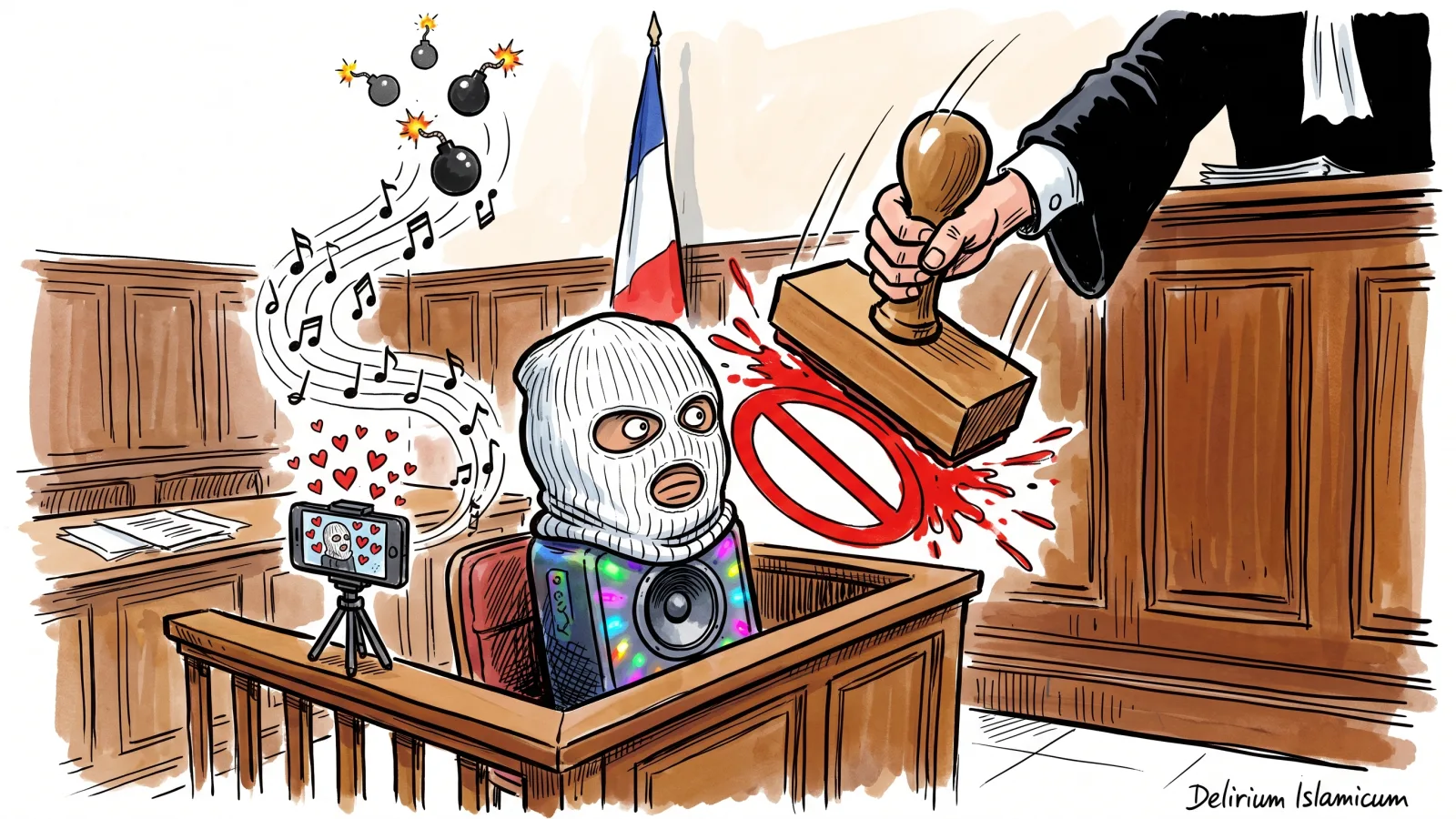
Merah at the blockade, Abdeslam at the altar
Since late September, French high school students have been blocking their schools over absent teachers and crumbling classrooms. On October 1, at a high school in Beaugency, near Orléans, some of them livened up the blockade with the chorus of "M*R*H", a song by the rapper Boro700 whose title is Mohammed Merah's surname with the vowels starred out. In 2012, Merah murdered three soldiers, then a teacher and three children at a Jewish school in Toulouse. Demanding teachers while chanting the name of a man who shot one dead: the irony seems lost on the choir. The National Rally MEP Matthieu Valet, who reported the video to prosecutors, noted that these chants "have nothing to do with the students' demands".
On October 7, three minors aged 16, 16 and 14 were taken into custody in a terrorism glorification inquiry; their phones revealed no other offence. For the two older ones, the Orléans prosecutor requested a "digital banishment" from Snapchat and TikTok: exile, 2026 edition. For the youngest, a ban on gatherings, in the middle of a protest movement.
On October 4, about ten children aged around 13 played the same song in the Saint-Hilaire church in Soullans, in Vendée, dancing and climbing onto the altar. The diocese of Luçon, which found objects knocked over and burn marks on pews, denounced "a serious attack on a place of worship" and closed the church pending a mass of reparation. The town filed a complaint and the juvenile prosecutor is investigating. The song boasts of a manhunt; online, some outraged citizens promptly called for one against the children. "They must be hunted down: address plus phone number," one wrote. The mayor, Vincent Jolly, asked people to stop sharing the video to protect the minors.
Firmly condemned, still on YouTube
Little is known about Boro700, who performs in a white balaclava marked V12: when your chorus is about dodging cameras like Merah, you dress for the part. Released on July 7, the song also has its narrator claiming to have shot the Bataclan, invoking Salah Abdeslam, the last survivor of the November 2015 commandos, and promising an uncooperative rapper a fate worthy of Hitler. It even targets Christian Estrosi and Éric Ciotti, the former and current mayors of Nice, rivals who for once share a verse.
Ciotti filed a complaint on August 3. Boro700 will be tried on October 21 by the 17th chamber of the Paris criminal court for glorifying terrorism and crimes against humanity and for conditional death threats; he is presumed innocent. Prosecutors opened a new inquiry after the school videos. The song has vanished from Spotify and Apple Music, but its YouTube clip had passed 134,000 views by October 9: YouTube is apparently still thinking it over.
"Boro700, his team and I firmly condemn any apologia or glorification of terrorism."— Boro700's manager, in a statement on October 9
The manager adds that what "certain young people" did reflects neither the rapper's values nor his team's. In Beaugency, all they did was sing his chorus. In the song, the narrator also wonders who, apart from Allah, could possibly stop him. The 17th chamber has scheduled its reply for October 21.
The caliphate's favourite app
Adults are not left out. In Savoie, a 22-year-old student charged on September 26 with glorifying terrorism is accused of spreading Islamic State propaganda online, from war chants to calls to jihad. Prosecutors wanted him detained, arguing that only prison would cut him off from his radical Islamist contacts. On October 9, the Chambéry investigating chamber left him free under judicial supervision. The same day in Lille, a young man with no criminal record was convicted for posting beheading videos and calls to fund the Islamic State on TikTok. Between two dance challenges, the caliphate keeps advertising.
Trèbes, remixed on appeal
On March 23, 2018, Radouane Lakdim, a 25-year-old offender on France's "S" security watchlist, killed four people in Carcassonne and Trèbes, among them the gendarmerie officer Arnaud Beltrame, who had swapped places with a hostage in a supermarket. The Islamic State claimed the attack. On October 7, ruling on appeal, the Paris special assize court gave his best friend, Samir Manaa, 32, 12 years, and his girlfriend at the time, Marine Pequignot, 26, 10 years, for terrorist criminal conspiracy. Prosecutors had sought 20 and 16. At first instance, she had received five years, two suspended, and he three, for weapons offences alone, although he had driven Lakdim to a gun shop to buy a knife two weeks before the attack. Both arrived free; both left in custody.
"That you did not share his radical ideology at the time is irrelevant."— The presiding judge, to Samir Manaa, on October 7
The court found that Pequignot knew of her boyfriend's deadly plans; her lawyer accuses it of yielding to passion. A third defendant, a friend accused of failing to report Lakdim, had also appealed but never showed up: France had meanwhile deported him to Morocco, where nobody can find him. Deporting an appellant before his appeal is one way to clear the docket.
The chemist who came to help
In June 2013, the Islamic State kidnapped four French journalists in Syria, Didier François, Édouard Elias, Nicolas Hénin and Pierre Torres, and held them until April 2014. Kaïs al-Abdallah, a 43-year-old Syrian nicknamed "Abu Hamza TNT", was studying chemistry in Göttingen when Syrian refugees who track jihadists recognized him. Germany dropped its case. France convicted him in 2025 over the abduction of Hénin and Torres. On appeal, he swore he had never belonged to IS. According to the advocate general, the only document on his computer was a nearly 4,000-page IS bomb-making manual, and GDN, a volatile substance usable in explosives and sold neither in France nor in Germany, was found on his passport. He admits attending a meeting with Hénin and Torres, who wanted their confiscated passports back, but denies any role in the kidnapping.
"I didn't ask why they were there, I came to help them."— Kaïs al-Abdallah, at his appeal trial
The advocate general, who mocked his talent for discretion, requested the maximum: 20 years. On October 12, the court upheld his conviction and sentence. Nicolas Hénin remains convinced he played a major part in ordering their kidnapping.
Diagnoses without examination
From Washington, Donald Trump told his followers that the French unrest is about Islam trying to take over the country. "This isn't about schools," he wrote, without evidence, Newsweek notes. On the Gatestone Institute's site, Guy Millière diagnoses "a sick country on a sick continent", undone by Islamization and a left-Islamist alliance, and prescribes Marine Le Pen.
The students' union wants 10 billion euros; the government offers 3,000 substitute teachers. More than 6,800 people, mostly minors, have been taken into custody. Emmanuel Macron says the issues deserve "time, consultations, discussion, and respect". The movement is about schools; a few of its youngest members just picked a child-killer for a soundtrack.
In 2018, Radouane Lakdim took hostages to demand Salah Abdeslam's release. In 2026, a chorus was enough to get his name out of prison and into a schoolyard.
Verses and hadiths related to this article
Sources
Countries
Read also
From Milton Keynes to Melbourne, the Caliphate Goes to Court
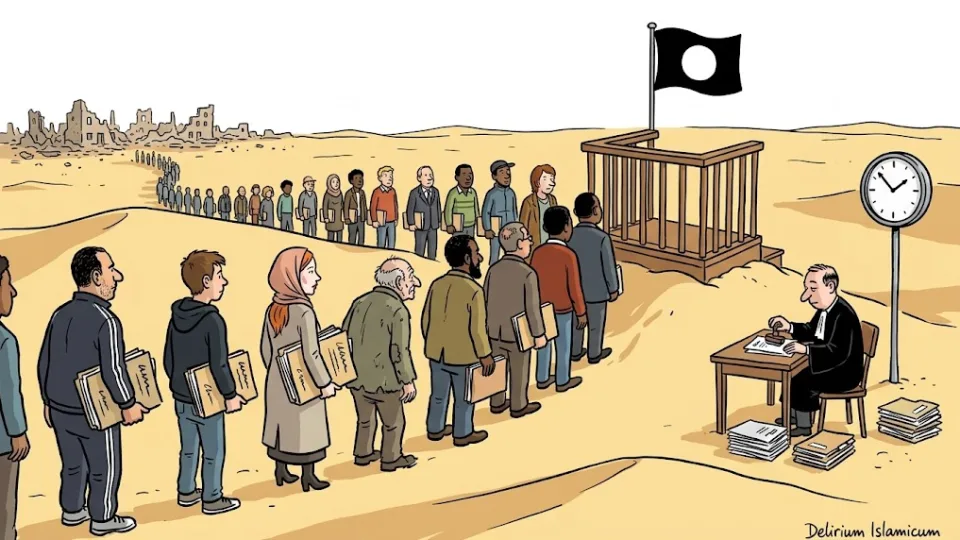
Between October 5 and 8, courts in Britain, Ireland, the United States and Australia dealt with four admirers of the Islamic State: a self-declared terrorist, a former soldier turned IS housewife, an 18-year-old accused of plotting a mass shooting and a 65-year-old alleged propagandist. In Florida, meanwhile, a judge must decide whether the state can brand CAIR a terrorist group. Each country has its own method, and none has run out of cases.
Islamic State in Germany: Salaried Veterans, Unpaid Volunteers
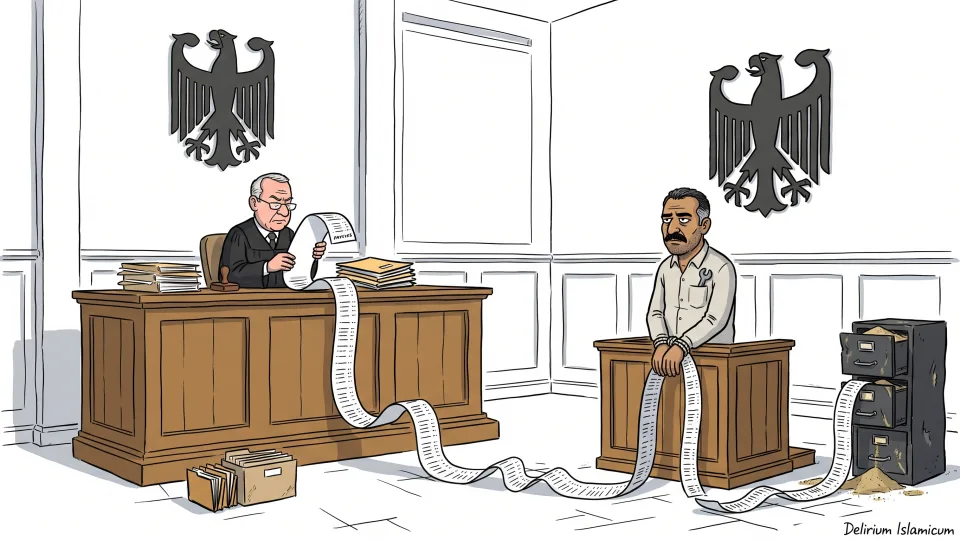
On October 6, a Munich court sentenced a former Islamic State workshop employee to three years and three months, convicted by the caliphate’s own payroll. Weeks earlier, a young IS sympathiser was arrested for allegedly planning an attack on a church in Bremen, with exactly one recruit. Germany is auditing the caliphate, one payslip at a time.
A Call to Arms, for Educational Purposes
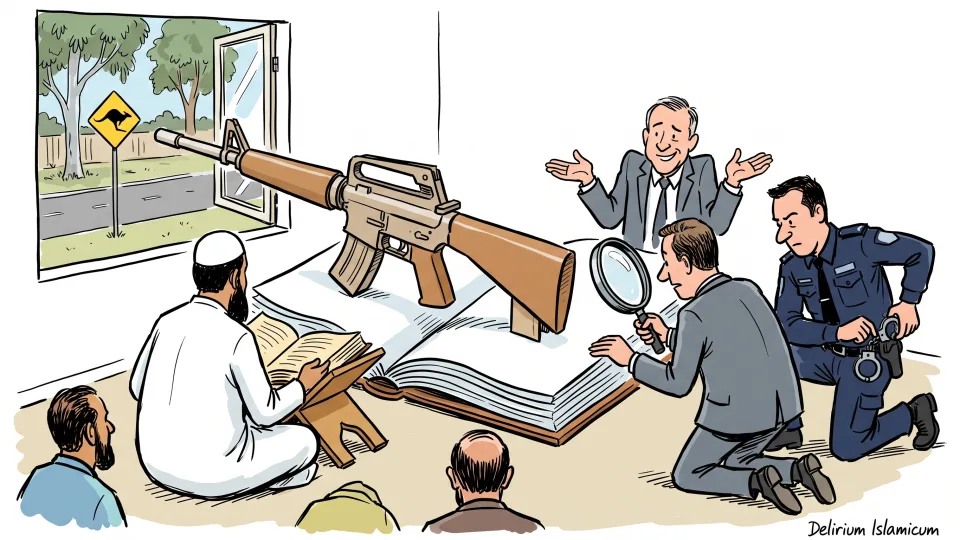
In a July sermon posted online, a Melbourne preacher told his followers not to take Jews and Christians for friends, and spoke of a duty to take up arms against the enemies of Allah. Ten months after the Bondi massacre, the clip has revived Australia’s debate on hate preachers. His defence: he was only reading a book.


Comments
No comments yet