
Shh, There's a Ceasefire
Since June, Abuja has reportedly been observing a secret truce with Boko Haram, sealed after an alleged five-billion-naira payment that the government denies making. In Adamawa, gunmen described as Boko Haram fighters spent seven hours killing twelve villagers and abducting a ten-year-old girl. Soldiers arrived twenty hours later. Discretion, at least, was assured.

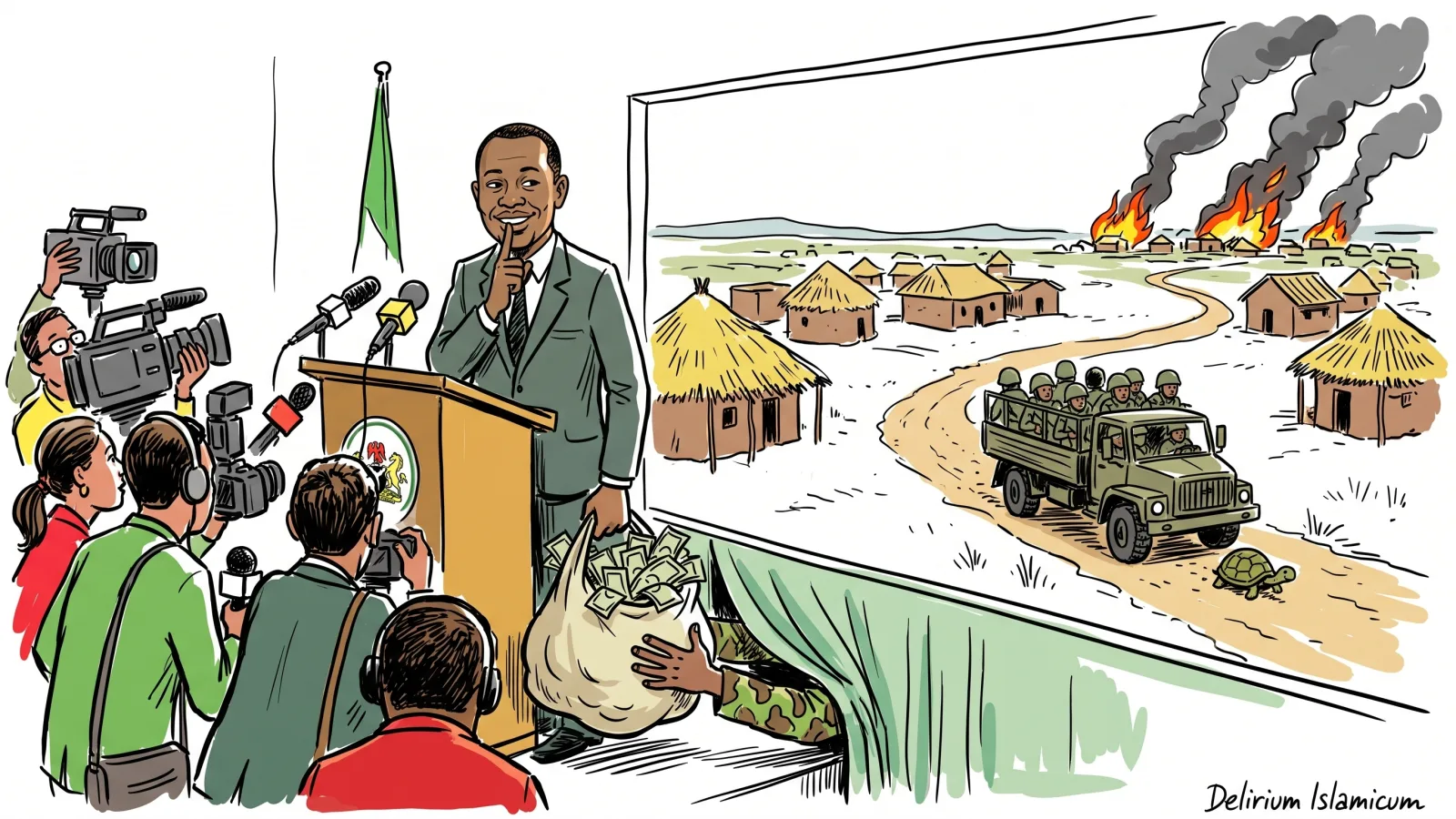
Peace, in strict confidence
Officially, Nigeria does not negotiate with Boko Haram, which it lists as a terrorist organisation, and President Bola Tinubu prefers to announce 30,000 new recruits and four new army divisions. In June, the army proudly announced that it had rescued 360 villagers abducted in March from Ngoshe, near the Cameroonian border, in an intelligence-led operation. According to an investigation by The New Humanitarian, they were in fact released after talks that reportedly included a payment of five billion naira, about $3.7 million, the very sum Boko Haram had publicly demanded. The government denies paying any ransom. Since then, a secret ceasefire has reportedly held with the faction led by Bakura Doro, and it could be extended by 40 days. It covers neither the other factions nor the rival Islamic State West Africa Province (ISWAP), and sources warn that Boko Haram may use the pause to move equipment into the Mandara Mountains.
Conflict researcher Malik Samuel suspects "a temporary, tactical ceasefire" that changes nothing in the course of the war. Around Ngoshe, the attacks have stopped. Elsewhere, nobody seems to have been told.
Meanwhile, in Adamawa
On the night of September 6, more than 50 gunmen on motorcycles, described by residents as Boko Haram fighters, rode into Nzangula, a farming village in Gombi. They shot, burned and looted from 8:45 p.m. until 4 a.m.: ten shops, three dispensaries, the local church. Twelve people were killed, ten men and two women, the state authorities confirmed. A girl of about ten, who had just started secondary school, was taken. Soldiers arrived 20 hours later. The police spokesman did not answer his phone.
Whether the attackers belonged to the faction that signed the truce, to another one, or to ISWAP, which claimed a massacre of 29 people on a football pitch in a nearby village in April, the villagers were not consulted. A week later, another attack killed four people in neighbouring Hong. The army, for its part, keeps impressive statistics: 1,106 Boko Haram and ISWAP fighters killed and 758 collaborators arrested since April 2025, according to its regional commander. In Nzangula, it was simply late.
"The gradual erosion of the state monopoly of violence."— Godwin Okoko, peace and conflict expert, on the Nzangula attack
A week in the life of the Middle Belt
Plateau State had its own weekend. On September 13, gunmen fired on a bus near Jos, killing nine passengers. On September 18, gunmen opened fire on a vegetable market in Mangu as traders packed up, killing three. That weekend, eight more people died in Barkin Ladi and Riyom, among them a pastor shot on his way to Sunday service. In Benue, six police officers were killed in four days in the same community: the police speak of bandits, witnesses of Fulani militias. In Niger State, more than 100 people were abducted in a single night. By TruthNigeria's count, the week ended with 41 dead and over 100 kidnapped.
A question of words
Boko Haram and ISWAP fight in the name of jihad, and churches and Christian villages are among their targets. They have also killed thousands of Muslims, and in the Middle Belt, land, ethnicity and religion are tangled together. Analysts quoted by TruthNigeria say officials avoid the religious framing for fear of feeding the narrative of Christian persecution ahead of the 2027 elections. The men who ransacked Nzangula's church showed no such reluctance.
In Nigeria, peace is a state secret. The killings, unfortunately, are public.
Sources
Countries
Read also
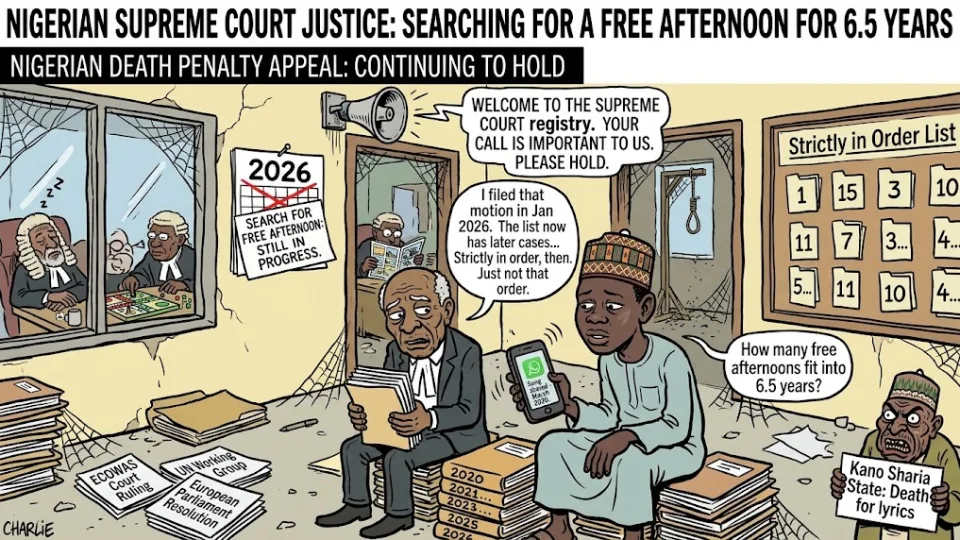
Your Death Sentence Is Important to Us. Please Hold.
Six and a half years after sharing a song on WhatsApp, a young Nigerian musician is still waiting for his country's Supreme Court to find a slot on its calendar.
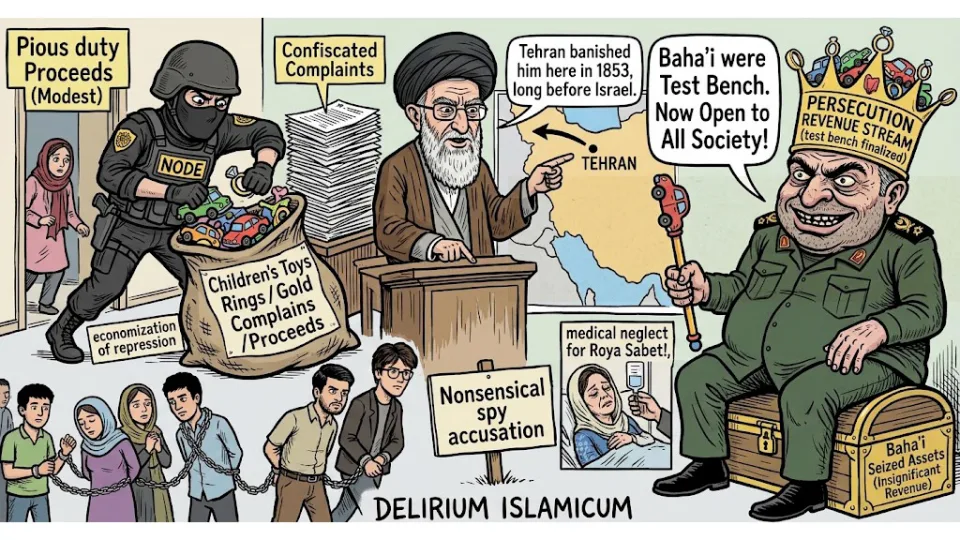
Iran Seizes the Rings, the Toys and the Complaints
Sixty-nine Baha'is behind bars, homes raided from Shiraz to Yazd, a woman sentenced to more than five years for offending Islam's sacred law, and security agents walking off with wedding rings and children's toys. In the Islamic Republic, persecuting a religious minority has become both a pious duty and a revenue stream. A modest one, economists say. It's the principle that counts.
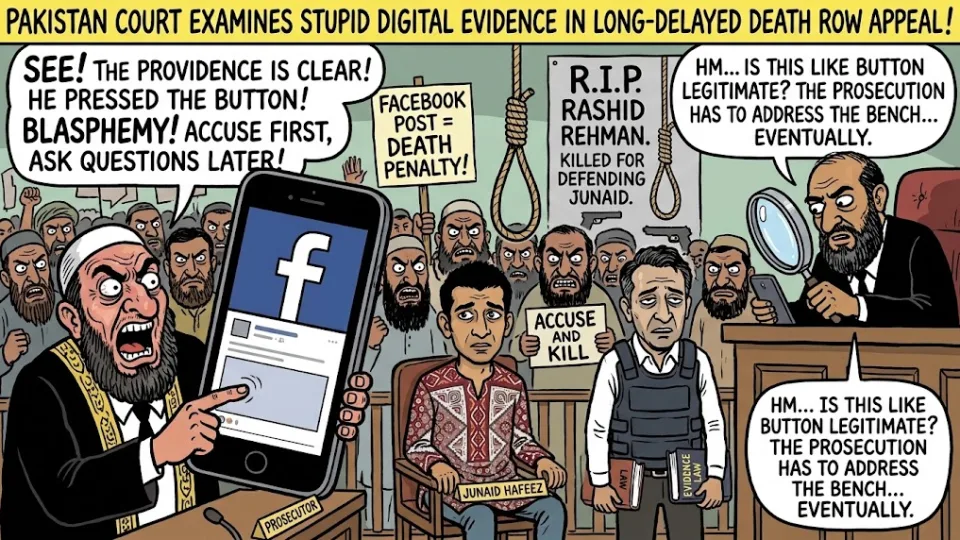
Lahore court finally asks whether Facebook posts count as proof in lecturer’s blasphemy appeal
A Pakistani court has asked prosecutors to justify the admissibility and authenticity of the digital evidence used to convict Junaid Hafeez, a former lecturer on death row for blasphemy since 2019, whose appeal has been pending since 2020.