
Yemen's Houthis, Equal-Opportunity Persecutors
Christians dragged from their homes on Christmas Eve, Baha'is made to disappear, imams replaced and mosques turned into barracks: in the part of Yemen they control, the Houthis go after those who don't share their faith, and plenty who do. In a country gripped by hunger, the movement's most reliable public service remains the arrest.
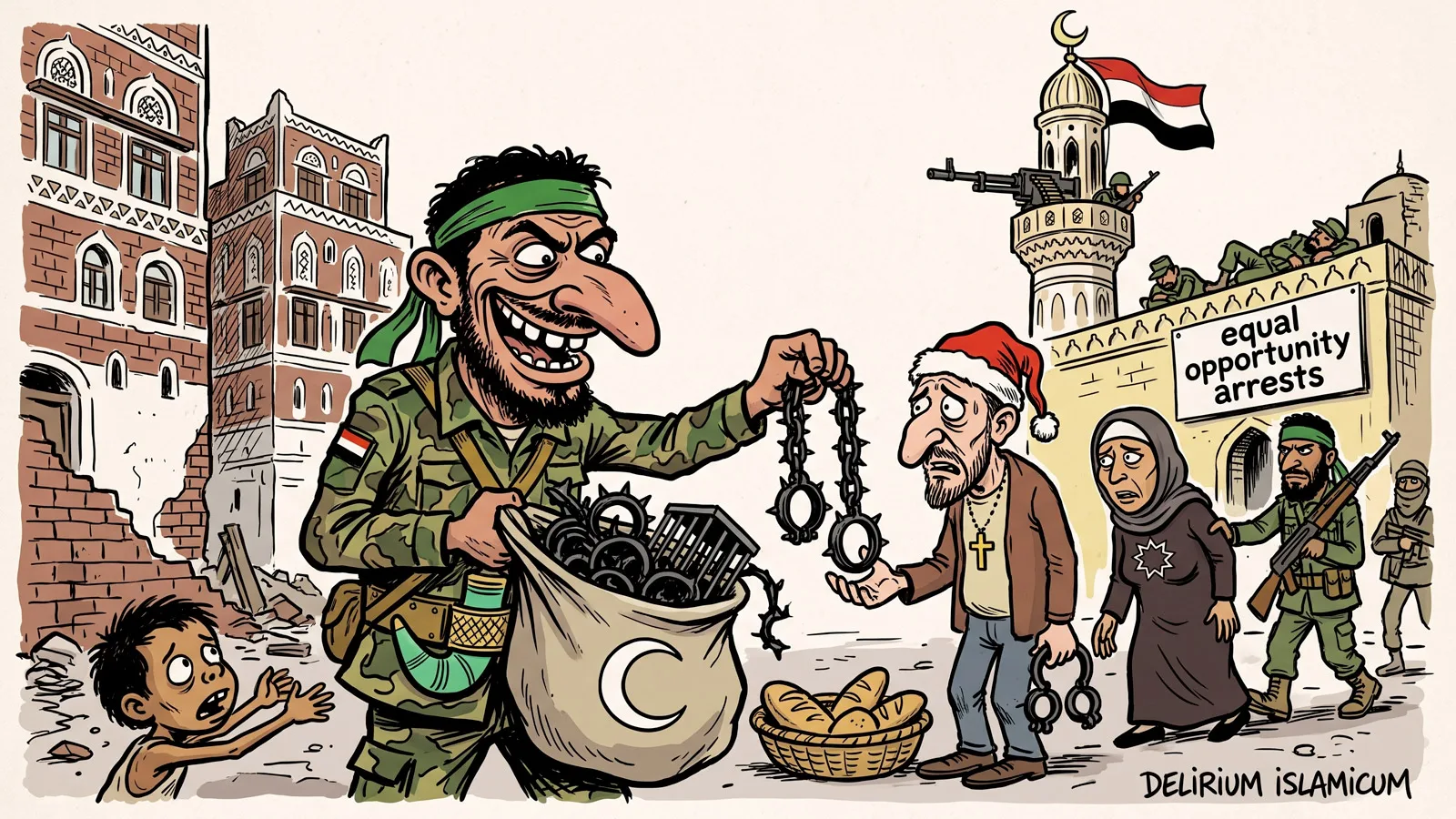
Christmas Eve, Houthi style
The campaign began in late November 2025. Seven Yemeni Christians were detained in early December, then the Houthis widened the sweep on December 24. Christmas Eve, of all nights. By January 12, Human Rights Watch had counted more than 20 Christians detained in Sanaa, Ibb and other Houthi-held provinces; the National Council for Minorities in Yemen speaks of dozens.
The method never varies: no warrant, no identification, doors broken down, people seized at home or in the street, and no reason given. Most families get no news, including those of detainees with heart disease or diabetes. Under international law, this has a name: enforced disappearance.
Fifty, and counting
The count has kept growing. Rights groups and local sources cited by the Irish charity Church in Chains report more than fifty Christians detained over the winter, and Open Doors says three church leaders were arrested on April 11 and 12. Exact figures are impossible to verify. What is known: Yemen's Christian community, once estimated at 41,000, has shrunk to a few thousand, most of them converts from Islam worshipping in secret, in a country where leaving Islam is legally a capital offence.
"When someone is taken, they could vanish for months."— A Yemeni Christian, quoted by Church in Chains
Even aid has a religion test. In 2025, the US Commission on International Religious Freedom reported that the Houthis discriminated against Christians and Baha'is in distributing aid, and that Houthi hospitals refused to treat Christians in several cases.
Mosques into barracks
Christians are not alone. Human Rights Watch documented the enforced disappearance of 17 Baha'is in 2023, after years of systematic arrests, and Yemen's tiny Jewish community has long been persecuted. In August, the Yemeni Women Empowerment Foundation went further. Its report, carried by the Aden-based Saba news agency, lists 4,651 Houthi violations against mosques, clerics and religious minorities in 14 provinces since 2014: 311 people killed, 679 abducted or detained, 143 tortured, 13 of whom died. Add 938 imams and preachers forcibly replaced, 491 mosques converted into barracks, 114 into operations rooms, 902 attacked or desecrated and 832 mosque libraries confiscated.
The report reaches us through the news agency of the government at war with the Houthis, hardly a neutral referee. Still, for a movement whose slogan promises death to America, death to Israel, a curse on the Jews and victory to Islam, turning nearly 500 mosques into barracks is an original way to celebrate.
Champions of justice, abroad
The Houthis like to present themselves as champions of justice against Western oppression. At home, they have spent the past year and a half arresting hundreds of people, from UN staff and journalists to human rights defenders, while Yemenis face alarming levels of hunger. Human Rights Watch researcher Niku Jafarnia sums it up:
"Those who oppose injustice abroad should not be carrying out injustice at home."
In Houthi Yemen, the only thing handed out without religious discrimination is the arrest. The warrant, they don't even bother to show.
Sources
Countries
Read also
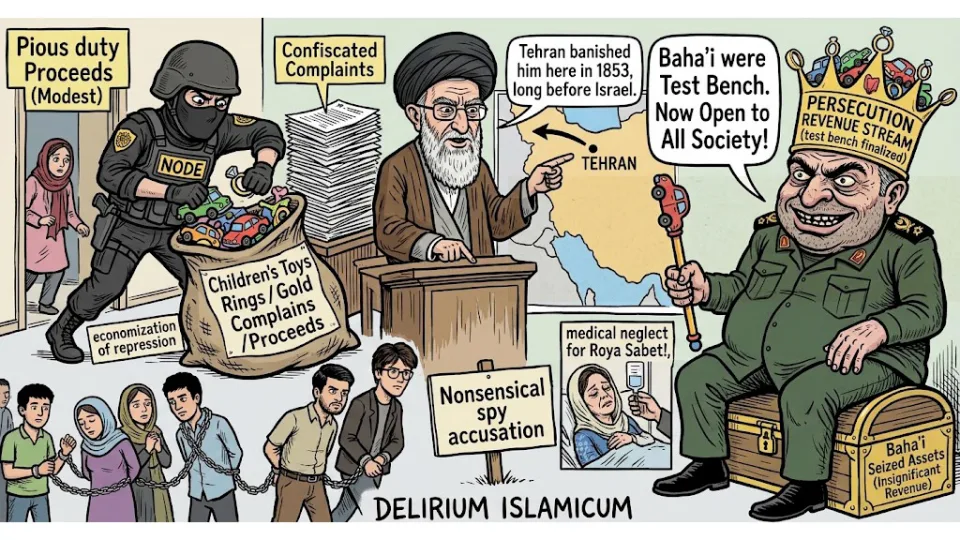
Iran Seizes the Rings, the Toys and the Complaints
Sixty-nine Baha'is behind bars, homes raided from Shiraz to Yazd, a woman sentenced to more than five years for offending Islam's sacred law, and security agents walking off with wedding rings and children's toys. In the Islamic Republic, persecuting a religious minority has become both a pious duty and a revenue stream. A modest one, economists say. It's the principle that counts.
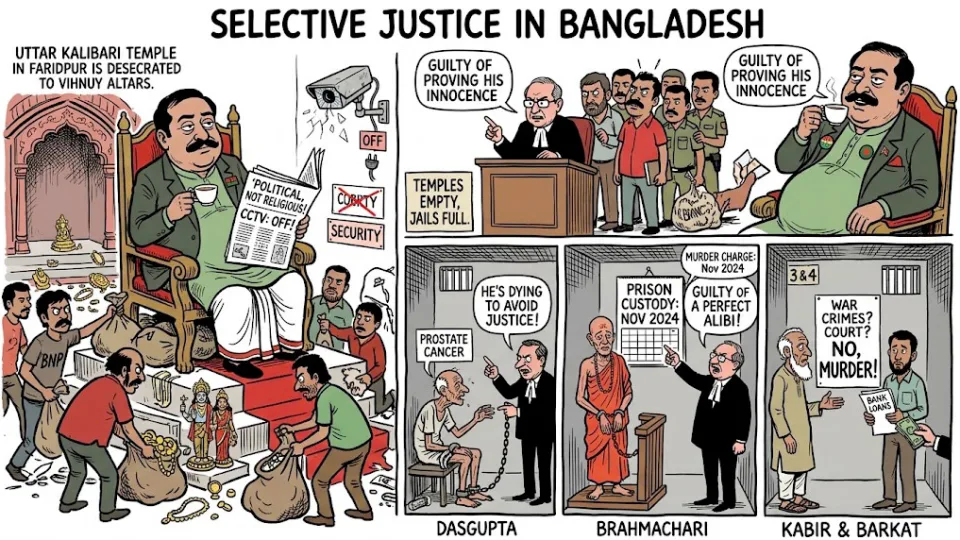
Idols Stolen, Advocates Jailed, Cameras Off
In Faridpur, thieves made off with a Kali idol and its gold while the temple's cameras were out of order. In Kolkata, Indian rights groups counted more than a hundred minority members killed in Bangladesh since early 2025 and four of their defenders jailed or hounded. Dhaka has changed governments. Its Hindus are still waiting for the change.
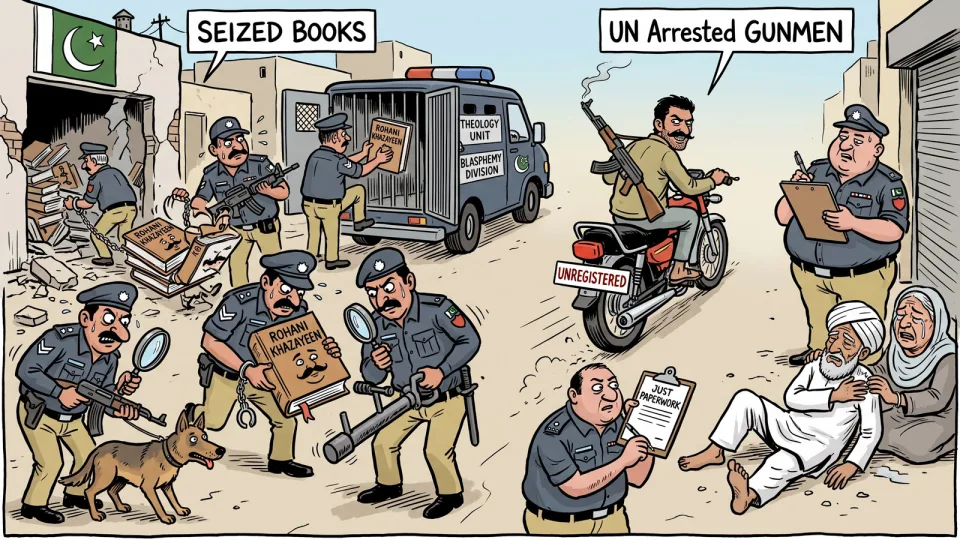
Pakistan Seizes the Books, Not the Gunmen
In September alone, one Ahmadi was shot dead and two others were wounded in Pakistan's Punjab province, with no arrests reported. Meanwhile, the country's Federal Constitutional Court found the time to uphold a ban on the community's sacred texts. Priorities.