Your Death Sentence Is Important to Us. Please Hold.
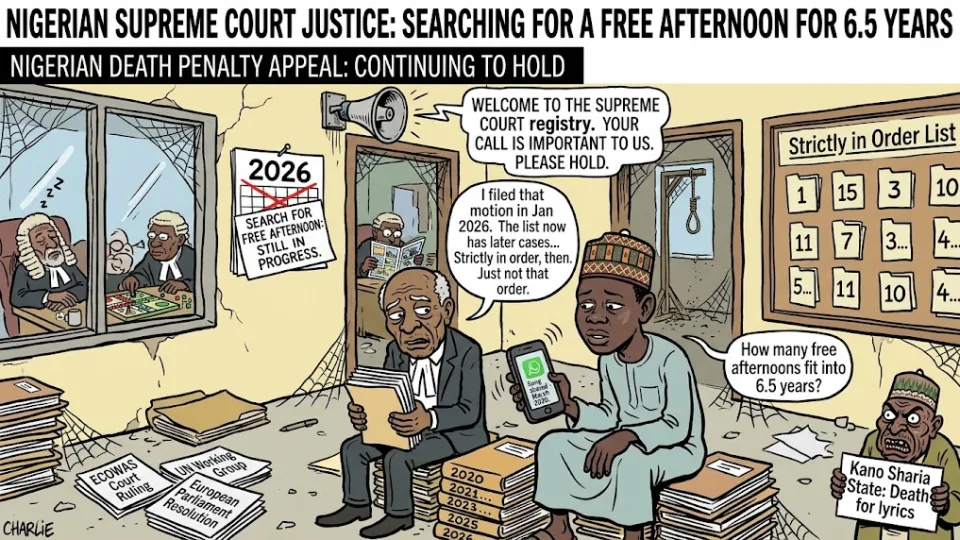
Six and a half years after sharing a song on WhatsApp, a young Nigerian musician is still waiting for his country's Supreme Court to find a slot on its calendar.


Six and a half years after sharing a song on WhatsApp, a young Nigerian musician is still waiting for his country's Supreme Court to find a slot on its calendar.
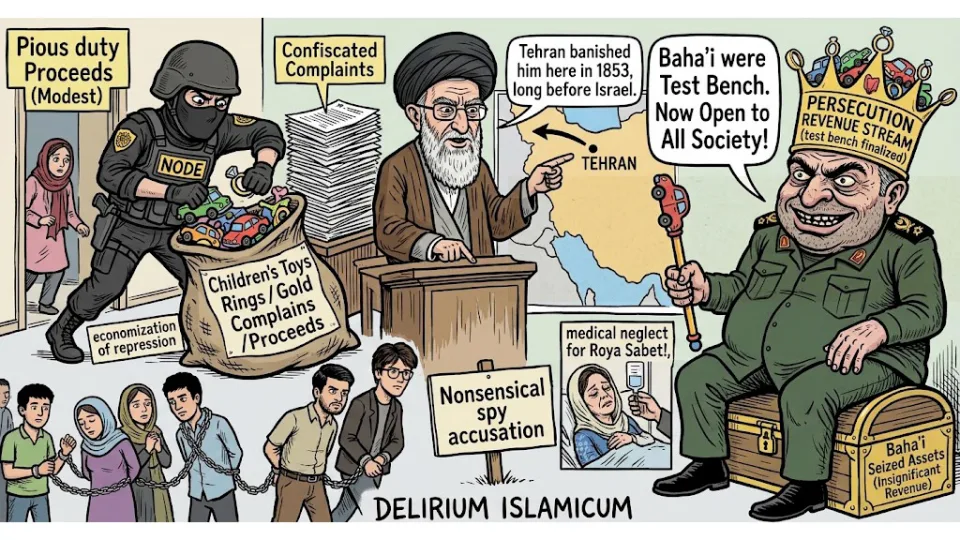
Sixty-nine Baha'is behind bars, homes raided from Shiraz to Yazd, a woman sentenced to more than five years for offending Islam's sacred law, and security agents walking off with wedding rings and children's toys. In the Islamic Republic, persecuting a religious minority has become both a pious duty and a revenue stream. A modest one, economists say. It's the principle that counts.
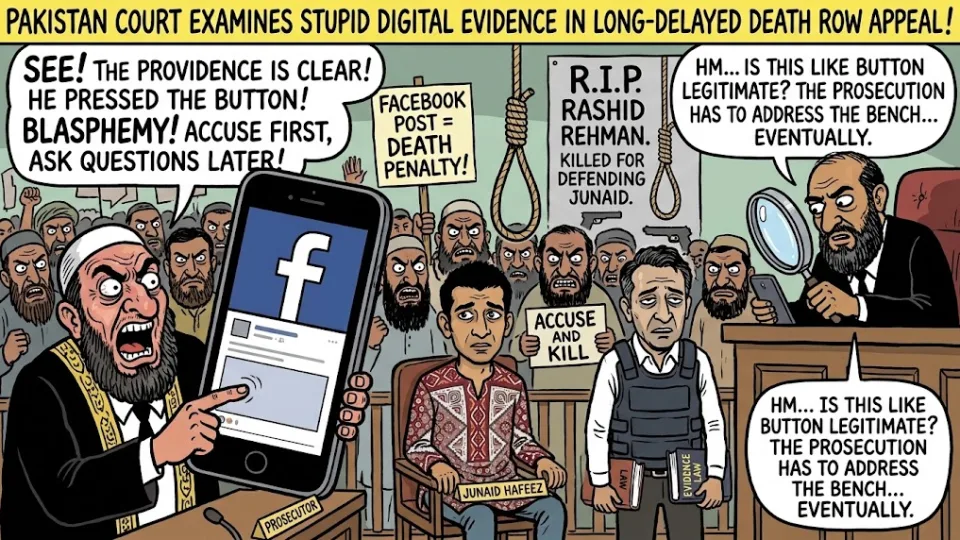
A Pakistani court has asked prosecutors to justify the admissibility and authenticity of the digital evidence used to convict Junaid Hafeez, a former lecturer on death row for blasphemy since 2019, whose appeal has been pending since 2020.
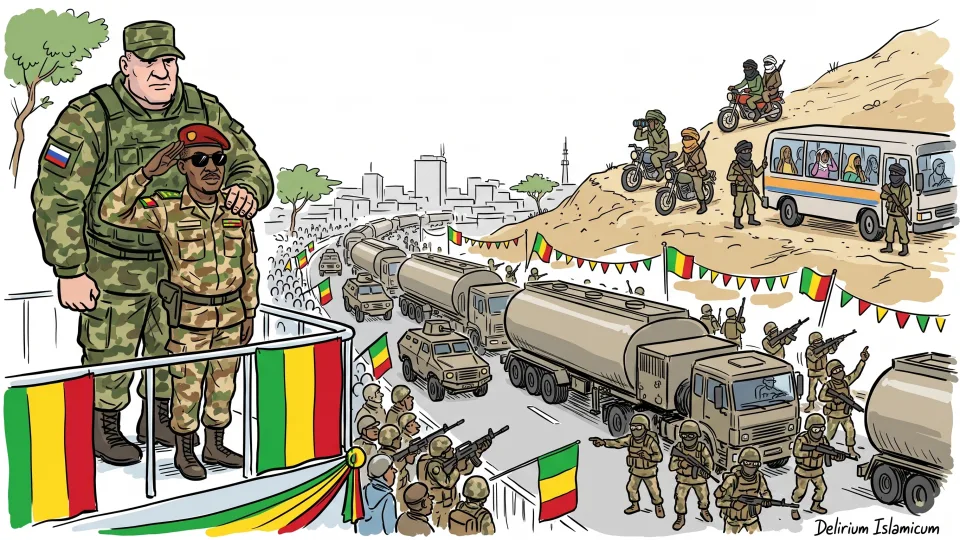
Sixty-six years after independence, Mali's capital needs an army escort to receive its fuel, its defence minister has been killed in a jihadist offensive, and an Al Qaeda affiliate dictates how women must dress on the buses. The junta, which seized power in 2020 to restore security, says the situation is under control.
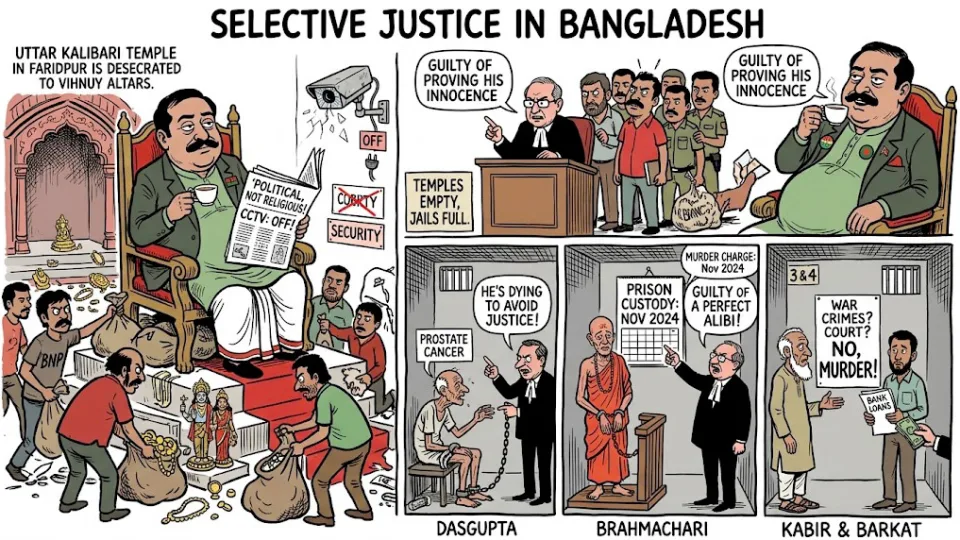
In Faridpur, thieves made off with a Kali idol and its gold while the temple's cameras were out of order. In Kolkata, Indian rights groups counted more than a hundred minority members killed in Bangladesh since early 2025 and four of their defenders jailed or hounded. Dhaka has changed governments. Its Hindus are still waiting for the change.
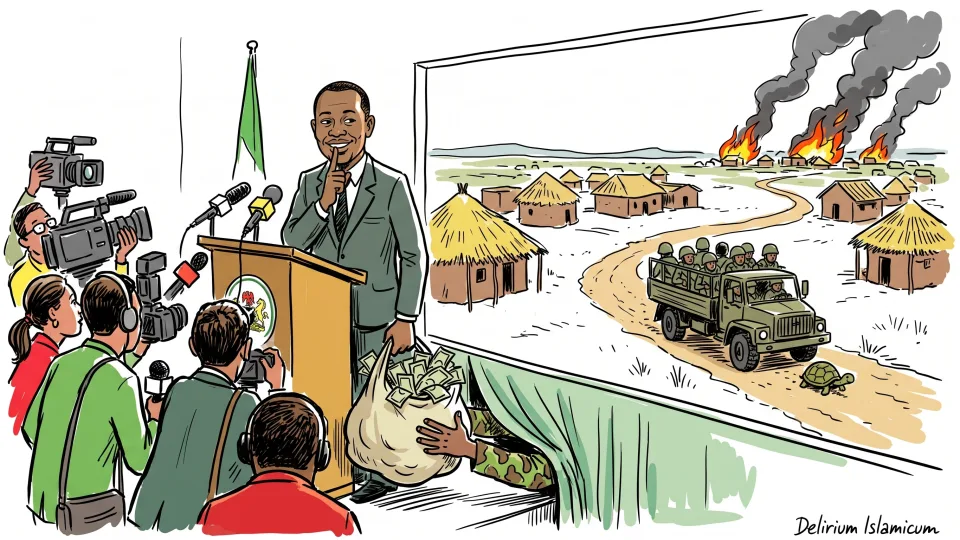
Since June, Abuja has reportedly been observing a secret truce with Boko Haram, sealed after an alleged five-billion-naira payment that the government denies making. In Adamawa, gunmen described as Boko Haram fighters spent seven hours killing twelve villagers and abducting a ten-year-old girl. Soldiers arrived twenty hours later. Discretion, at least, was assured.
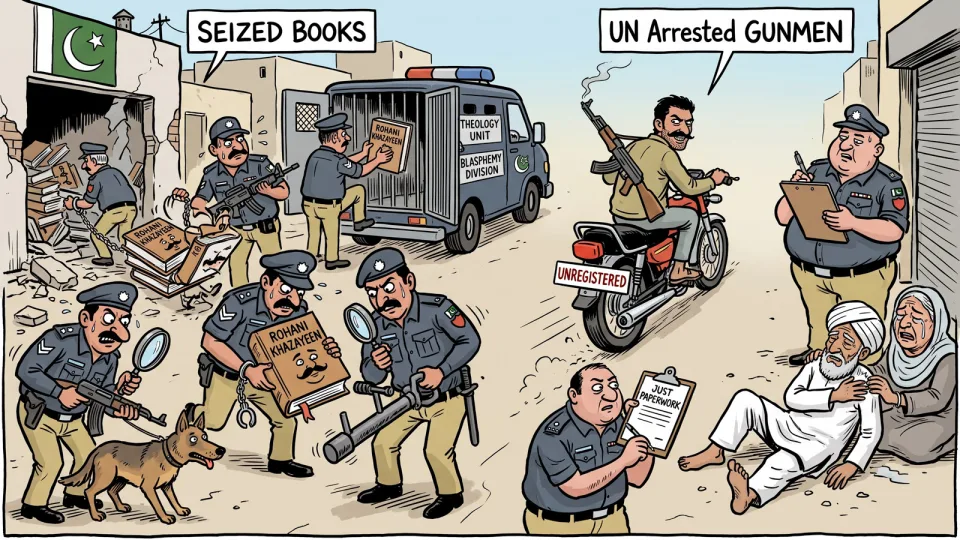
In September alone, one Ahmadi was shot dead and two others were wounded in Pakistan's Punjab province, with no arrests reported. Meanwhile, the country's Federal Constitutional Court found the time to uphold a ban on the community's sacred texts. Priorities.
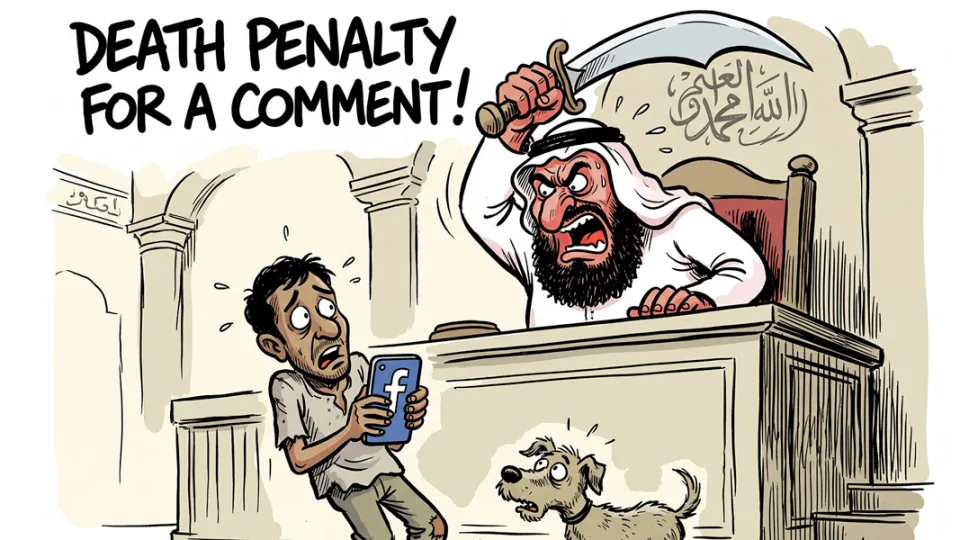
A Saudi appeals court has sentenced Sri Lankan Tamil worker Sivarasa Anojan to death for blasphemy over a Facebook comment, replacing an earlier five-year prison term. A Sri Lankan MP is now questioning how the government handled his appeal.
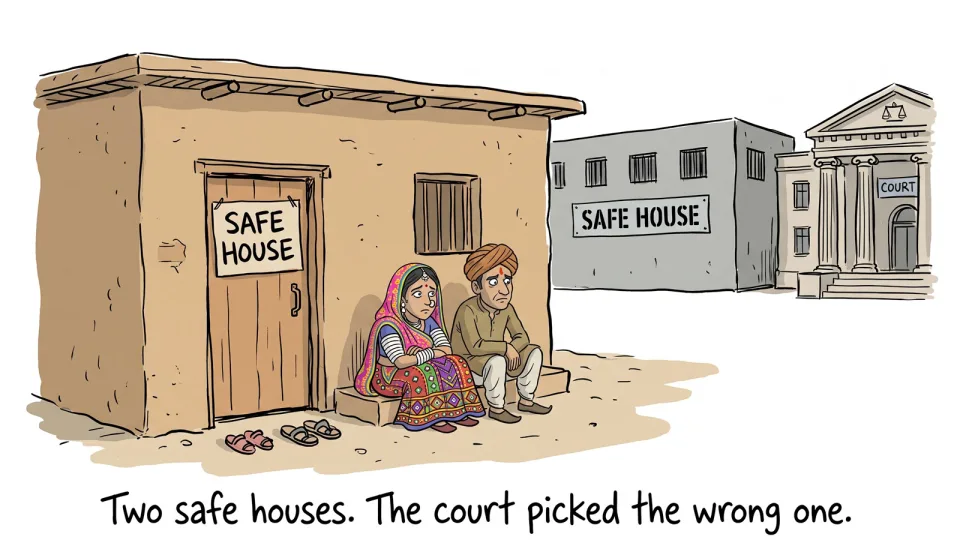
Two Hindu sisters, aged 13 and 14, allegedly abducted, converted to Islam and married off in Pakistan's Sindh province, begged a court to let them go home. The court sent them to a safe house. In Sindh, marrying a child is a crime. Converting one, as clerics keep reminding lawmakers, has no age limit.
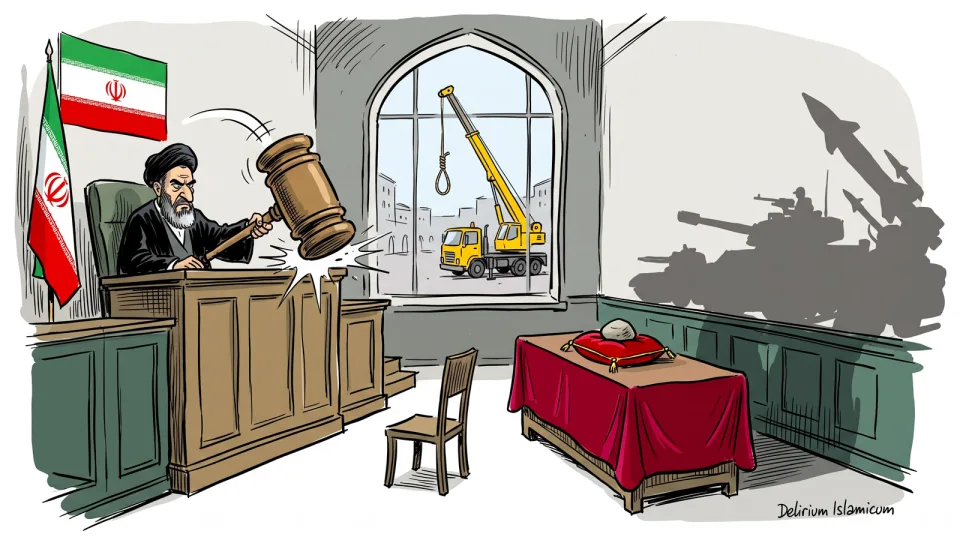
Since March, Iran has hanged at least 59 people on political charges, teenagers among them, five of them in public. Their crimes, according to the courts: broken windows, thrown stones, torched motorcycles, all filed under "waging war against God". A UN mission now speaks of crimes against humanity.
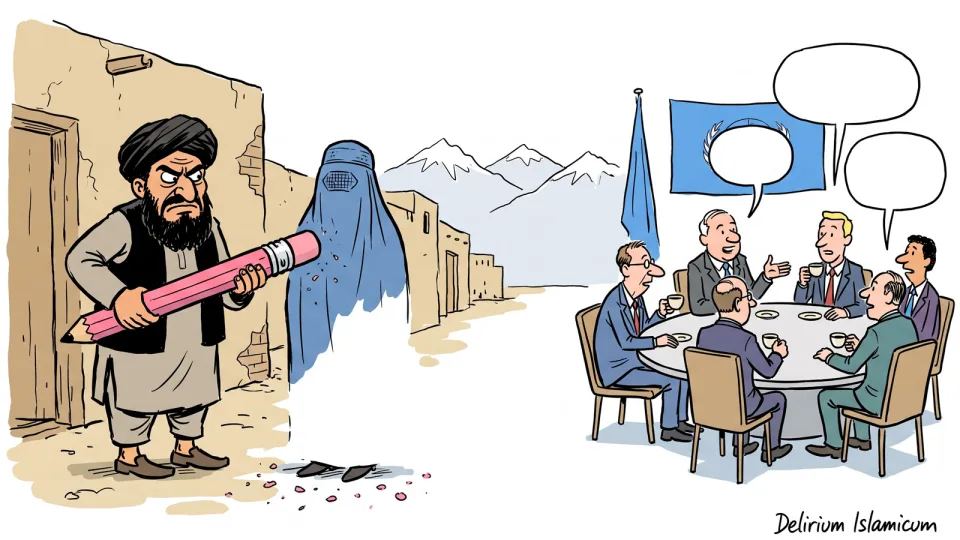
Five years after the Taliban's return, a civil society speaker told the UN Security Council that being a woman in Afghanistan is now a crime. In Geneva, NGOs are pleading with the Human Rights Council to at least keep talking about it: renew the rapporteur, keep the dialogues, launch the investigative mechanism. The rapporteur, for his part, has been banned from the country since 2024.
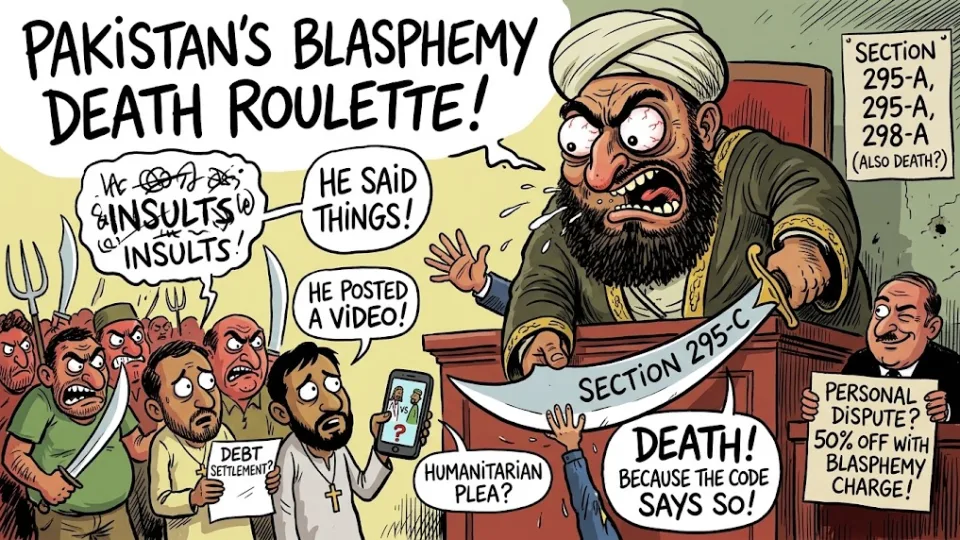
Two Christians in Pakistan have been charged under the country's blasphemy laws, including Section 295-C, which carries the death penalty. One case involves alleged remarks about Muhammad, the other a social media video.
Newsletter
Sign up for the Delirium Islamicum newsletter: our new articles, straight to your inbox.
Our partners