Too Young to Marry, Old Enough to Convert
Two Hindu sisters, aged 13 and 14, allegedly abducted, converted to Islam and married off in Pakistan's Sindh province, begged a court to let them go home. The court sent them to a safe house. In Sindh, marrying a child is a crime. Converting one, as clerics keep reminding lawmakers, has no age limit.
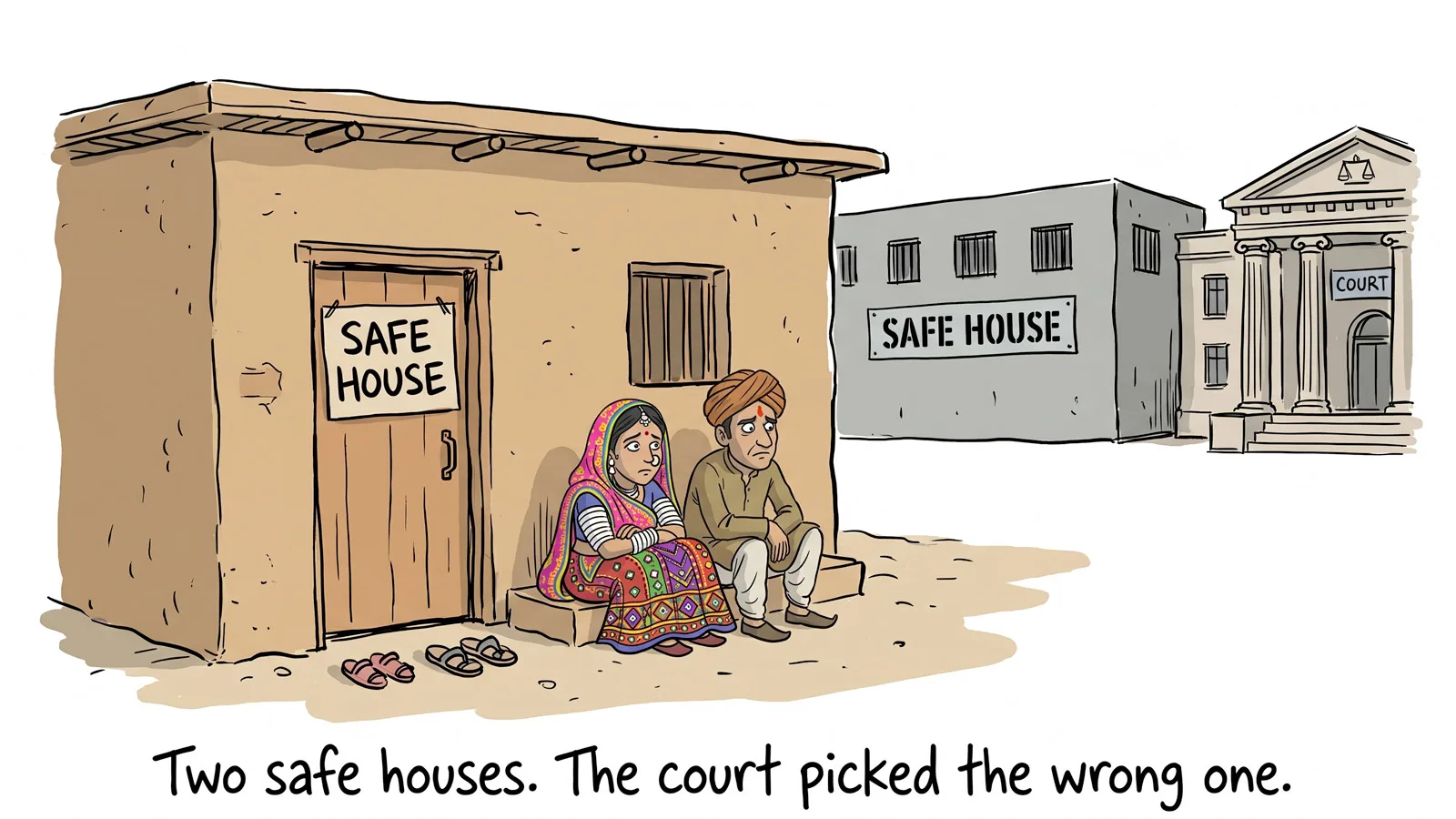
The family's account is brutally simple. Two sisters from the Kachhi Kolhi community, aged 13 and 14 according to minority-rights campaigners, were taken from Ibrahim Colony in Tando Allahyar district, converted to Islam and married to two Muslim men. Brought before a court in a kidnapping case, they asked to go back to their parents. The court refused and sent them to a safe house, for two days according to the US-based group Sindh Renaissance. A video shot outside the courthouse shows them sobbing.
"We want to go home."— The two sisters, outside the court in Tando Allahyar
In theory, a shelter lets a girl speak free from pressure on either side. In practice, these two had already spoken, loudly, on the courthouse steps. Days later, Pakistani journalist Veengas reported that a 14-year-old Hindu girl had been abducted in the same district on September 9, and, citing reports, that six Hindu minors there had been abducted and converted in ten days. To be fair to the court, nothing has yet been established by public police or court documents: not the ages, not the abduction, not the conversions, not the marriages. That is exactly why activists want the sisters heard away from their alleged husbands, religious figures and intermediaries.
Children, says the law
On paper, Sindh could not be clearer. Its Child Marriages Restraint Act of 2013 sets the minimum age of marriage at 18 for both sexes and makes arranging or facilitating a child marriage a non-bailable offence. If the sisters' ages are confirmed, these were not weddings but crimes.
"CHILDREN. Not brides. Not converts."— Ayesha Gill, Pakistani activist
The law, however, rarely makes it into the courtroom. In April, Pakistan's Catholic justice and peace commission complained that judges do not consistently apply the ban on marriage under 18, and UN experts noted that courts repeatedly accept dubious marriage and conversion papers, even when official records contradict them. Yet, as those experts point out, free consent is "not legally possible when the victim is a child." Tando Allahyar has seen this before: in July 2025, three girls whose families had reported them kidnapped told the Sindh High Court they had converted and married of their own free will, according to the Human Rights Commission of Pakistan.
Old enough to convert
A 13-year-old cannot legally marry in Sindh. Changing religion, however, has no minimum age. In 2016, the Sindh Assembly unanimously passed a bill setting 18 as the age for conversion. Religious parties protested, threatened to besiege the assembly, and the bill never became law. In 2021, a federal anti-forced-conversion bill met the same fate, after the Council of Islamic Ideology, the constitutional body that checks laws against Islamic law, declared the age limit un-Islamic.
"There is no age limit for conversion in Islam."— Qibla Ayaz, then chairman of the Council of Islamic Ideology, 2021
The council does insist that forced conversion is forbidden. It simply sees no reason a child should be too young to choose. The religious affairs minister of the day added that such cases were very few. Back in 2016, a women's rights activist noted that Pakistan sets a minimum age for a driving licence. For faith, it seems, no licence is required.
Hundreds of cases, one province
The sisters are no anomaly. Centre for Social Justice data cited by Voice of Pakistan Minority recorded 421 cases of abduction, conversion and marriage of minority girls and women between 2021 and 2024: 282 of them Hindu, 72 percent in Sindh. UN experts reported in April that in 2025, about 75 percent of victims of forced conversion through marriage were Hindu and 25 percent Christian, with almost 80 percent of cases in Sindh, home to most of Pakistan's 3.9 million Hindus. The most exposed are poor families from the Kolhi, Bheel and Meghwar communities, with little access to police, courts or lawyers.
The law is clear, the UN is clear, and two girls on a courthouse step were very clear. In Sindh, the only thing still unclear is why they are not home.
Countries
Read also
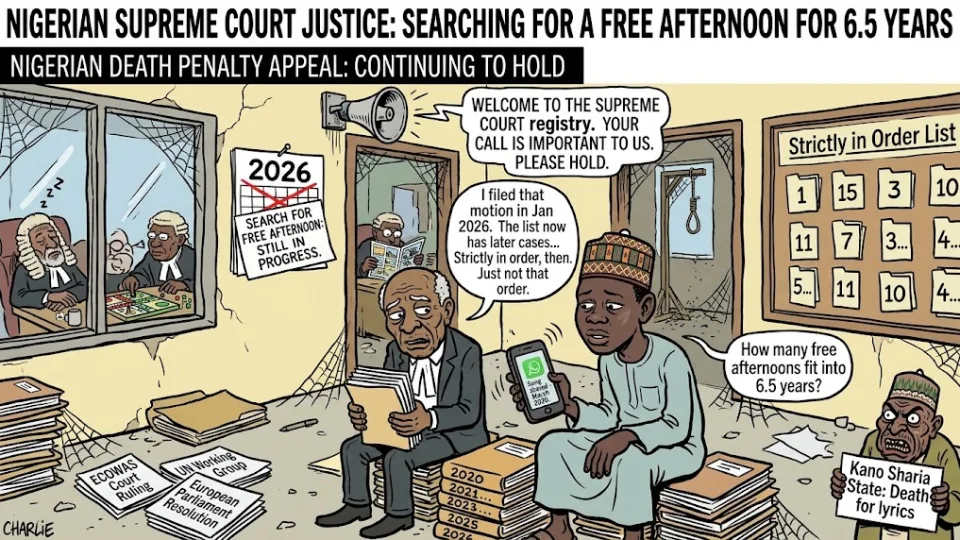
Your Death Sentence Is Important to Us. Please Hold.
Six and a half years after sharing a song on WhatsApp, a young Nigerian musician is still waiting for his country's Supreme Court to find a slot on its calendar.
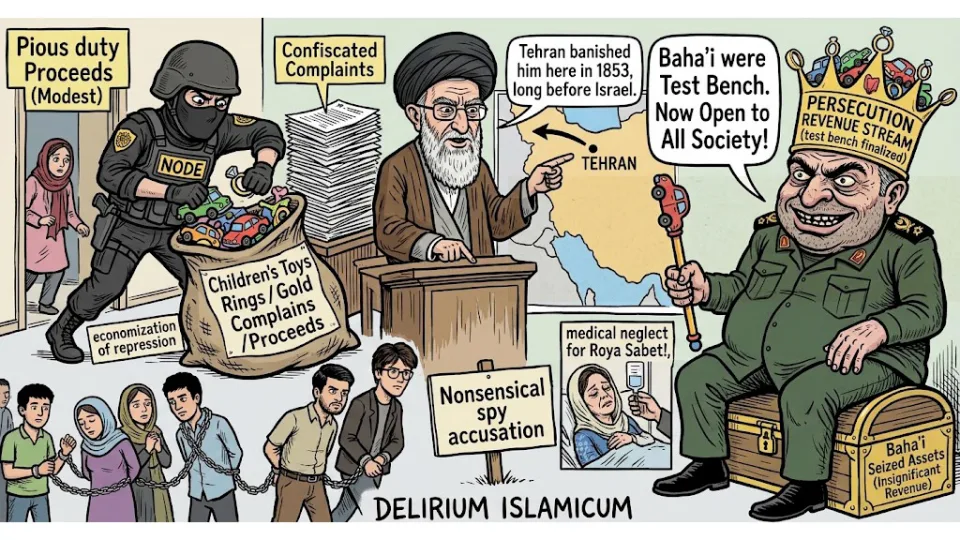
Iran Seizes the Rings, the Toys and the Complaints
Sixty-nine Baha'is behind bars, homes raided from Shiraz to Yazd, a woman sentenced to more than five years for offending Islam's sacred law, and security agents walking off with wedding rings and children's toys. In the Islamic Republic, persecuting a religious minority has become both a pious duty and a revenue stream. A modest one, economists say. It's the principle that counts.
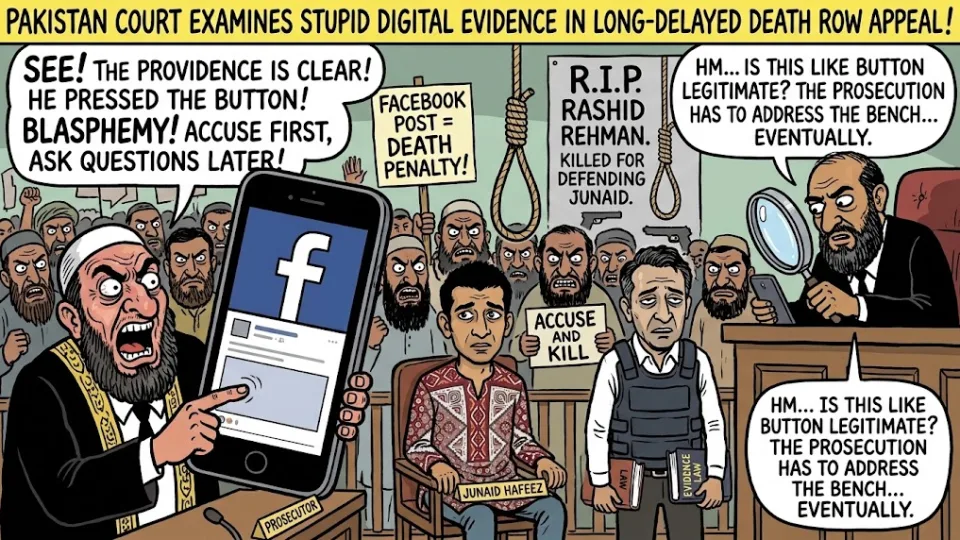
Lahore court finally asks whether Facebook posts count as proof in lecturer’s blasphemy appeal
A Pakistani court has asked prosecutors to justify the admissibility and authenticity of the digital evidence used to convict Junaid Hafeez, a former lecturer on death row for blasphemy since 2019, whose appeal has been pending since 2020.