Quebec’s Secularism 2.0: God Now Needs a Municipal Permit
After a pro-Palestinian group held Sunday prayers outside Montreal’s Notre-Dame Basilica, Quebec banned collective prayer in its streets and parks unless a municipality grants a permit. Since September, prayer rooms have also vanished from its universities and from Montreal’s transit agency. The ban’s best-known casualty so far: a Catholic procession that does not even pray.

Sunday service on Place d'Armes
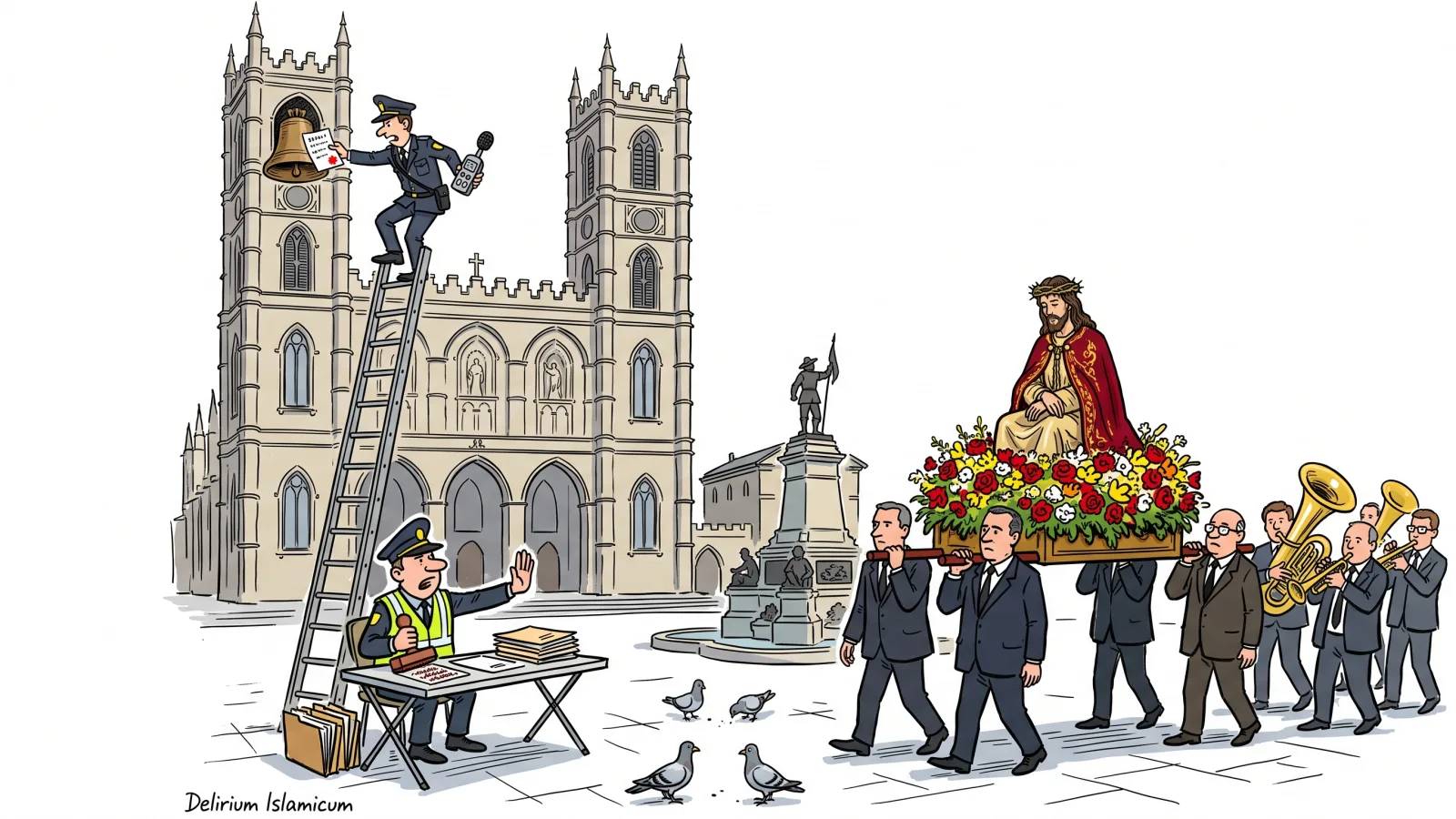
For more than half a year in 2025, the pro-Palestinian group Montreal4Palestine held Sunday protests outside Montreal's Notre-Dame Basilica, complete with a public Muslim prayer. A viral video claimed the basilica rang its bells to drown out the worshippers: AFP checked, and the carillon simply rings every hour. Premier François Legault had already said that people who want to pray should go to a church or a mosque. His secularism minister, Jean-François Roberge, called street prayers a "provocation".
The experts had a simpler idea
The government's own secularism committee did not recommend a ban: municipalities, it found, already had the powers to deal with street prayer. Its co-chair, Christiane Pelchat, said street prayer was not a problem in Montreal. The only troublesome one, outside Notre-Dame, looked to her more like a political prayer for the Palestinian cause than a real one. The real problem, she said, was that the city did not enforce its own bylaw against unauthorized street demonstrations.
Secularism 2.0
Quebec legislated anyway. On April 2, Roberge's Coalition Avenir Québec passed Bill 9, which he calls "Secularism 2.0", with the support of the Parti Québécois. The Liberals and Québec solidaire voted against it. No public road or park may now be used for collective religious practice unless a municipality makes an exception, case by case, for a short event open to all. Anyone who organizes or joins one faces a fine of $125 to $375, or $375 to $1,125 for an organization. The law overrides both the Canadian and the Quebec charters of rights, shielding it from most court challenges.
Universities are not churches, except four
Since September 1, prayer rooms are also banned in public institutions, from CEGEPs to universities.
"CEGEPs and universities are not temples or churches."— Jean-François Roberge, Quebec's secularism minister, November 2025
The law nonetheless names four campus chapels where worship remains allowed: Loyola at Concordia, Marie-Guyart at Laval, Birks at McGill and St. Mark's at Bishop's. At the Université de Montréal, people who want to pray will be asked to leave campus. Montreal's transit agency, the STM, keeps its four wellness rooms open for meditation, relaxation and yoga, which has apparently been declared secular. Employees who want to pray may leave the property, on their unpaid break.
The procession that does not pray
In May, the Plateau-Mont-Royal borough refused a permit to the Portuguese Senhor Santo Cristo procession, a Catholic tradition marking its 60th year in Montreal, which had applied in February, before the law even passed. Its organizers pointed out that it is a silent march with a band, and no prayers. But the law covers any action that may manifest a belief "in fact or in appearance".
"Collective religious practices, including processions, are no longer permitted on public property."— Plateau-Mont-Royal borough, email to the organizers, May 2026
The police let the march go ahead on May 17. More than 4,000 people took part, about twice the usual crowd. That same Sunday, the LaSalle borough had authorized a Sikh parade. The Plateau's own mayor said the law creates confusion, and the Catholic archbishop of Montreal has called for its withdrawal.
Consensus, Quebec style
On October 5, the Parti Québécois, which voted for the law, won the provincial election and will form a minority government. Its leader, Paul St-Pierre Plamondon, once called public prayers an "appropriation of public space by religious fundamentalists" and now pledges to defend the Quebec consensus on secularism. The Liberals, who voted against the law, will not touch it either. "My God," their leader Charles Milliard exclaimed, before explaining that municipalities already have all the powers they need. The Montreal police, for their part, did not say how they would enforce the ban.
Over Place d'Armes, the basilica's bells still ring every hour. For now, without a permit.
Sources
Countries
Keywords

Read also
Caliphate Closed, Says Trump. Dresden Man Accused of Trying to Join
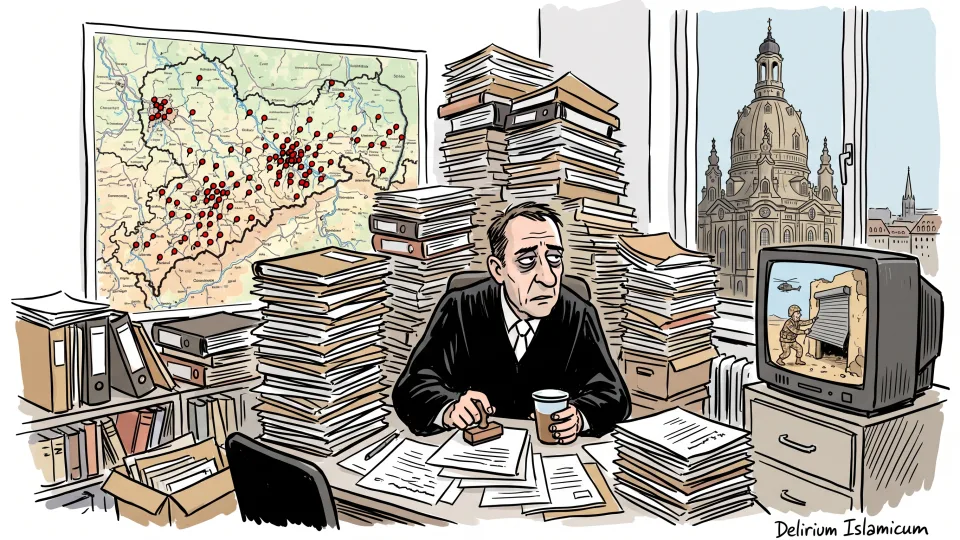
The last American troops left Iraq on September 30, a departure Donald Trump hailed as the end of the caliphate. Two days later, special forces arrested a 37-year-old man in Dresden, accused of trying to join the Islamic State and of preparing a terrorist offence. The population, prosecutors assure, was never in concrete danger.
From Caliphate to Pylons: ISIS's Downsized Jihad
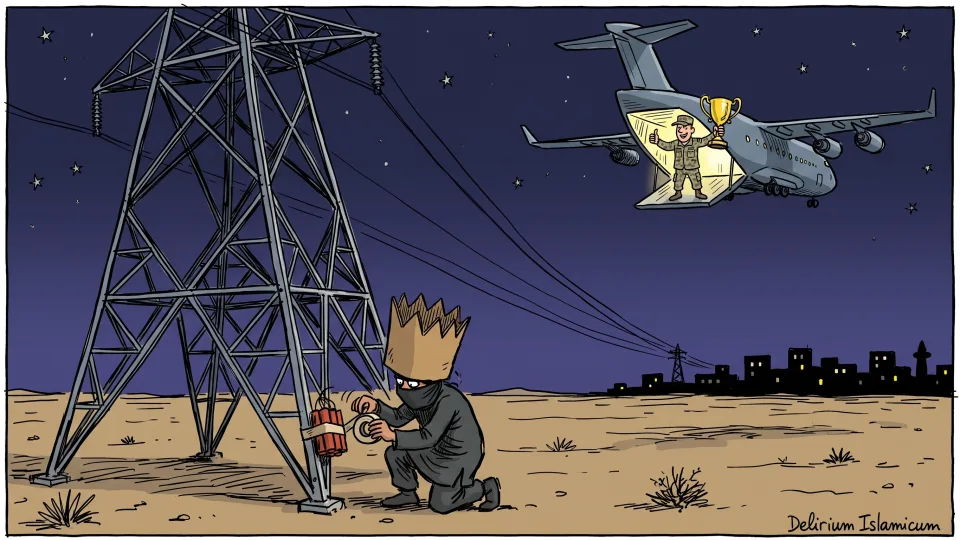
In 2014, ISIS proclaimed a caliphate from Mosul. On September 18, 2026, suspected ISIS militants blew up a power pylon in Iraq's western desert, and security forces reached the site eight hours later. Twelve days on, Washington formally ended the mission that, it says, defeated ISIS in Iraq.
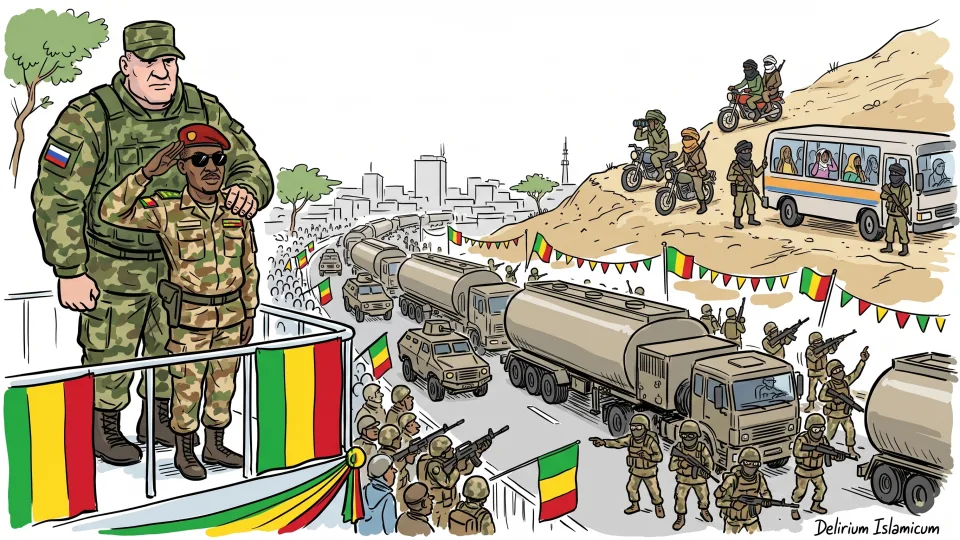
Mali Celebrates Its Independence, Under Military Escort
Sixty-six years after independence, Mali's capital needs an army escort to receive its fuel, its defence minister has been killed in a jihadist offensive, and an Al Qaeda affiliate dictates how women must dress on the buses. The junta, which seized power in 2020 to restore security, says the situation is under control.